Most industry awards programs arrive after a category has already become fashionable. The Nordic Data and AI Readiness Awards, known as DAIR, did the opposite. They were created to recognize data, analytics, and AI functions at a point when those functions were established and growing inside Nordic organizations, but largely unnoticed and unglorified, well before generative AI turned the entire category into a mainstream topic. The intent was straightforward: celebrate the practitioners who were quietly building the foundation, because they were also the people most concerned with the real risks and opportunities of the technology, and the ones actually laying the groundwork everyone else would eventually build on.
A fifth edition, and a deliberate pause
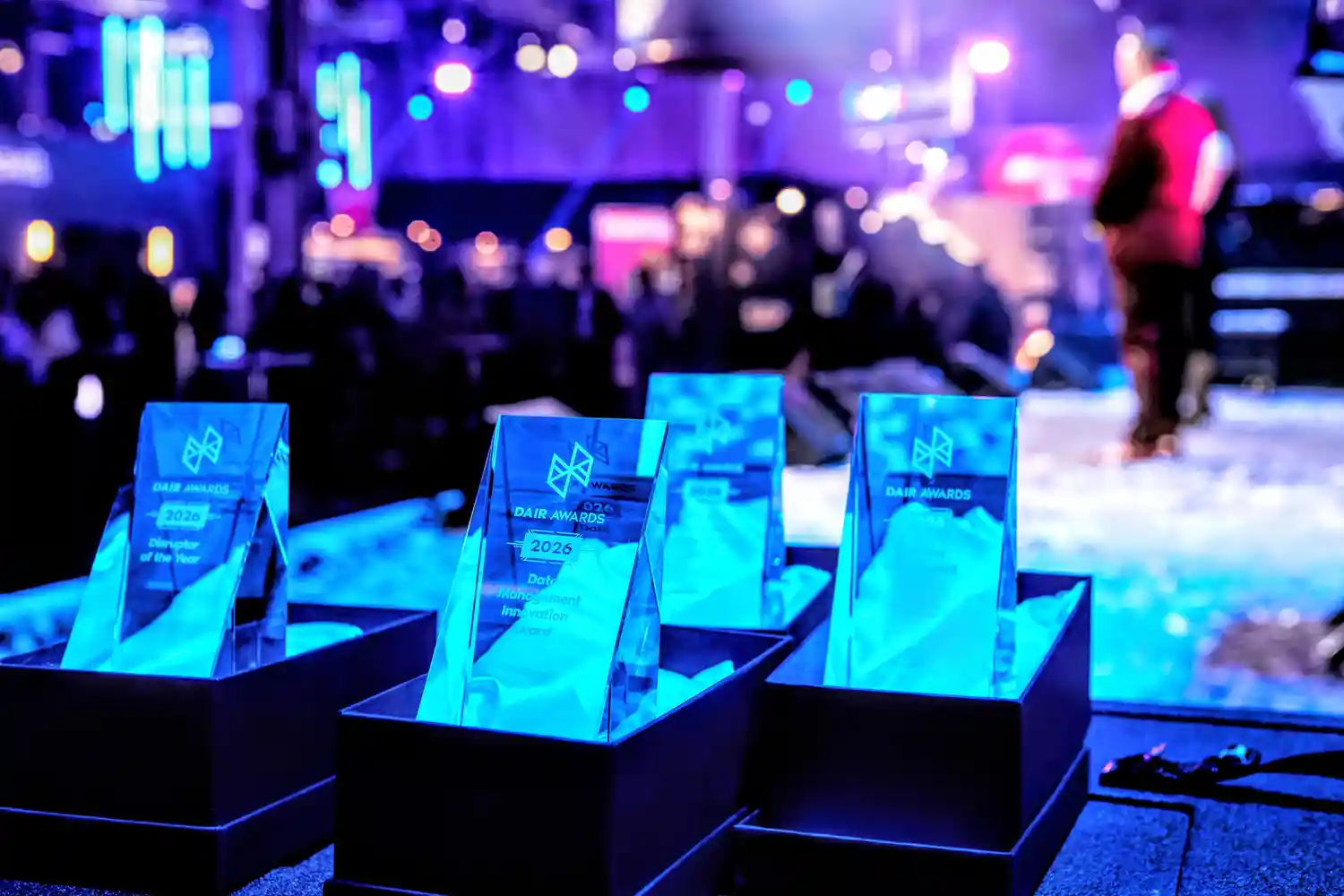
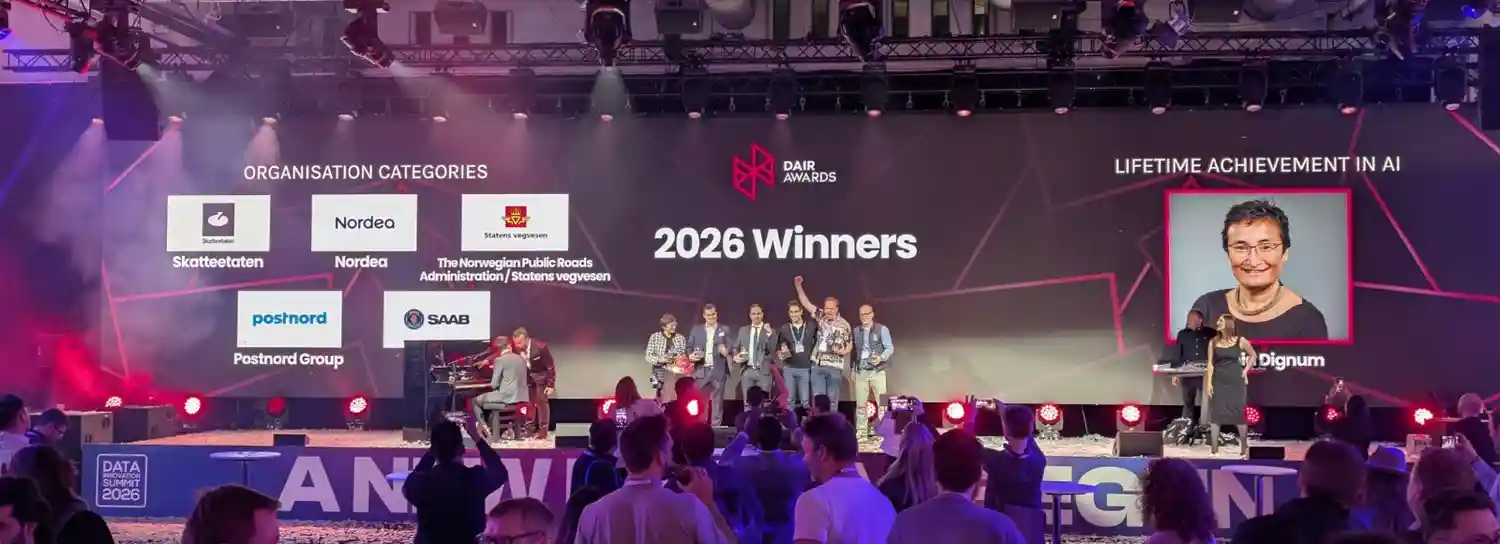
The 2026 ceremony, held at Kistamässan in Stockholm, marked the fifth edition of the DAIR Awards. Between the fourth and fifth editions sits a year the organizers describe candidly as a leap year: the awards were not executed in 2025 at all, because the program was in the process of being restructured. For its first four editions, DAIR Awards ran as a standalone identity, separate from any single event. Starting with the fifth edition, it moved to run in direct connection with the Data Innovation Summit, a decision made specifically to consolidate effort and increase the scale of company involvement rather than to fold the awards quietly into a bigger event’s schedule. Pausing a running awards program for a year in order to relaunch it properly, instead of simply rebranding on the fly, is not a typical move for an events business chasing annual continuity, but it reflects the same instinct that shaped the underlying platform from the beginning: build for the community’s actual needs, even if that means slowing down first.
What the categories reward, and how that has changed
Across its first four editions, DAIR ran two parallel tracks. Individual categories recognized specific practitioners, including awards for Data Management Professional of the Year, Analytics Professional of the Year, Data Science Professional of the Year, Machine Learning Professional of the Year, Artificial Intelligence Professional of the Year, Data Engineering Professional of the Year, Responsible AI Professional of the Year, and Data and AI Community Voice of the Year, alongside a standing Lifetime Achievement in AI honor. Organizational categories ran in parallel, covering data and AI transformation excellence, data management innovation, technical AI innovation, generative AI excellence, and AI-driven business excellence in both the private and public sectors.
Starting with the fifth edition, the structure was deliberately simplified. The individual practitioner categories have been folded down to a single, more concentrated recognition, the Lifetime Achievement in AI award, sitting alongside a full slate of organizational categories. That’s a meaningful editorial choice rather than a cost-cutting one: it sharpens the program’s focus onto organizations that have demonstrably operationalized data and AI at scale, while preserving exactly one category dedicated to recognizing a career’s worth of contribution to the region’s data and AI maturity, rather than spreading individual recognition across nine separate job functions every year.
Judged at arm’s length from the organizer
One detail matters more than any category description: Hyperight, which created and runs the awards, has no influence over who wins. Winners are decided by an independent practitioner jury, and the current judging panel reads like a cross-section of the Nordic data and AI leadership community rather than a list of conference sponsors. It includes Anna Felländer, Co-Founder and President of Asenion; Tonia Sideri, Vice President of AI & Automation at Novo Nordisk; Ulla Kruhse-Lehtonen, CEO of DAIN Studios; Jakob Mainz, Director of AI Governance at Novo Nordisk; Luba Weissmann, AI & Data Director at Epiroc; Mikko Muurinen, Head of Data & AI at Helen; Linda Borelius, SVP of Data Sweden at Solita; and Risto Karinkanta, Head of ESG & Structured Finance Tools at Nordea, among others drawn from organizations including Nordea, Cognizant, Sweco, and JP/Politiken Media Group. That the judging panel is built entirely from working practitioners at operating companies, rather than from Hyperight staff or event sponsors, is what allows the awards to function as an actual community benchmark rather than a marketing exercise dressed up as one.
The 2026 addition: a published readiness index
The fifth edition introduced something the program had never had before: a published Data and AI Readiness Index, developed alongside the Data Innovation Summit’s own research arm and made available publicly rather than kept as ceremony material. That index draws on one of the more substantial datasets assembled anywhere in the European data and AI conference landscape, built from 3,010 delegates representing 936 companies across 51 countries, 405 Call for Speakers submissions from 270 organizations, 392 editorially validated agenda sessions, and 94 exhibiting vendors, cross-referenced against pre-event maturity self-assessments and the actual questions senior practitioners submitted for panels and roundtables. 
The headline finding from that first index is itself a useful corrective to how AI progress usually gets discussed. Across every one of those datasets, the dominant maturity stage in the Nordic and adjacent markets is neither early-stage experimentation nor visionary transformation, but something in between called Established, the stage where organizations have moved past pilots and are actively trying to scale, govern, and integrate data and AI capabilities across the enterprise. In the validated summit agenda specifically, 71.7 percent of sessions aligned with that Established stage, compared with just 12.0 percent at Leading and 4.8 percent at Visionary maturity. The index also surfaced a consistent gap between how organizations describe their own progress and what the underlying data actually supports: nearly half of speaker submissions were framed around artificial intelligence and generative AI specifically, yet the validated, editorially filtered agenda placed greater weight on data governance, operational efficiency, and platform architecture, the less glamorous work that determines whether the AI layer on top of it actually functions at scale.
Why an awards program with a research arm matters
Most regional technology awards operate on nomination and vote counts, with judging panels that lean heavily on event sponsors or the organizing company’s own staff. DAIR’s combination of an arm’s-length practitioner jury and, as of 2026, a published, methodologically documented readiness index built from real delegate, speaker, and agenda data, sets it apart in a fairly specific way: it isn’t just naming winners, it’s publishing the evidence base that makes the region’s own claims about its data and AI maturity checkable rather than aspirational. An organization that wins a DAIR award in 2026 is being recognized against a documented backdrop showing that most of its Nordic peers are still working through the same execution-stage challenges, which gives the recognition a level of context that a standalone trophy rarely carries.
That combination, practitioners founded to celebrate practitioners, judged by practitioners, and now measured against a practitioner-sourced readiness index rather than a vendor survey, is what keeps DAIR positioned less as a marketing add-on to a conference and more as one of the more credible, ongoing scorecards for how the region’s data and AI functions are actually progressing, year over year.