As intelligence gradually evolves within our civilizational infrastructure, human agency can no longer remain a passive assumption. Current stable conditions will change, and with them our decision authority, as we confront an intelligence that replaces existing societal infrastructures at their core.
When capability expands automatically, agency must be structurally protected. This dynamic operates through an insidious momentum. Systems optimize for performance, efficiency, and scale with a relentless consistency that easily outpaces the deliberate rhythm of human evaluation. What begins as a minor delegation of operational friction gradually turns into an inescapable dependency, revealing too late that the foundation of decision-making has permanently shifted away from human direction.
Throughout human history, agency rarely required explicit attention. Individuals exercised judgment, societies established direction, institutions organized collective action, and civilizations evolved through countless decisions made over generations. Agency remained present throughout this process, yet it was seldom examined directly because the conditions supporting it were largely taken for granted. Human influence was embedded deeply enough within societal structures that few questioned where agency originated or how it was preserved.
This assumption proved remarkably resilient. Political systems developed around participation and representation. Legal systems established responsibility and accountability. Economic systems encouraged individual initiative while coordinating collective activity. The resulting structures were imperfect, while they maintained an environment in which human direction remained central to societal logic.
As earlier newsletters in this series have explored, the conditions supporting those assumptions are changing as agency evolves. Its relationship with capability is becoming increasingly distinct. Its initial intention was to improve existing capabilities, until its opportunities allowed it to overcome traditionally impossible effects. Its effectiveness depends upon structural conditions, and its influence operates across interconnected systems.
These observations lead toward a more fundamental realization. If agency depends upon conditions, and if those conditions emerge through system design, then agency can no longer remain an assumption. 
The Limits of Assumed Agency
Assumptions are powerful precisely because they remain invisible. They require little attention as long as supportive conditions remain stable. Agency occupied this position for our modern civilization and human direction in human-centered environments. Institutions were designed, governed, and interpreted by people operating within structures evolving relatively slowly compared to decision-making speed. Humans, not machines, explicitly controlled them.
The stability of these conditions made agency appear natural. Few people considered whether agency required support because operating mechanisms generally remained aligned with individuals and institutions exercising influence. Capability expanded, societies became more sophisticated, and technological progress accelerated. This happened as agency continued to function within environments reinforcing its presence.
As systems become more intelligent, interconnected, and adaptive, however, assumptions appearing self-evident reveal their limitations. Agency remains present, but its continued effectiveness can no longer be taken for granted simply because it existed under previous conditions.
When Conditions Become Design Choices
The growing visibility of agency connects closely to a broader transformation occurring throughout society. Increasingly, conditions shaping participation, influence, communication, and decision-making no longer emerge solely through historical evolution. They are actively created through design.
Infrastructure, platforms, and institutions create new digital environments in which recommendation systems, information flows, and operational processes emerge from conscious decisions regarding system behavior and participant interaction.
Historically, many design decisions focused on capability. Systems developed to improve efficiency, increase scale, expand access, reduce costs, optimize performance, or accelerate execution. These objectives remain important, but they influence something more than operational effectiveness. They also influence conditions through which agency is exercised.
What once appeared to be natural conditions reveals itself as a consequence of design.
Designing for Autonomy and Direction
This realization introduces an important distinction between capability and agency. A system may be highly capable while offering little meaningful influence to individuals operating within it. Equally, a system may preserve participation while gradually reducing participant capacity to influence direction. Capability and agency remain connected, but they are no longer synonymous.
Traditionally, systems were evaluated according to performance ability. Productivity, reliability, speed, efficiency, and scalability became dominant success measures because societies assumed agency would take care of itself. Human participation remained embedded within environments, paying little attention to whether agency required reinforcement. It has never been a question of concern and shift of power.
The emergence of intelligent systems challenges this assumption. As execution becomes automated and optimization sophisticated, questions extend beyond system accomplishments. They concern how systems preserve and evolve the capacity for meaningful human direction.
Autonomy in this context is playing a central role, representing the ability to influence conditions under which actions gain significance.
The Relationship Between Systems and Human Influence
The relationship between systems and agency is often misunderstood as a contest between human control and technological capability. In reality, the relationship is rather nuanced. Systems do not simply constrain agency, nor do they automatically strengthen it. They shape conditions through which agency evolves and becomes more effective.
Systems amplify participation, centralize influence, distribute decision-making broadly across networks of actors, and concentrate authority within fragmented structures at first. Each design choice influences how individuals experience responsibility, judgment, influence, and participation.
As intelligence becomes embedded within these environments, the impact of such choices becomes significant. Human influence no longer operates solely through direct action. It operates through systems organizing information, coordinating interactions, establishing priorities, and shaping pathways through which decisions become outcomes. Understanding the impact on human agency under these changing conditions is difficult. It requires understanding the relationship between human influence and systems through which influence emerges.
Agency Embedded in Architecture
This understanding leads toward a broader perspective. Agency does not exist independently of architecture but operates through it. Structures surrounding society influence participation, decision-making, accountability maintenance, and ultimate direction establishment.
These relationships remained difficult prior to the rise of intelligent systems because underlying architectures evolved slowly. Today, they evolve continuously as they overcome historical fragmentation through the utilization and interpretation of data, not the logic of human-built systems. Platforms update constantly, digital environments adapt dynamically, and intelligent systems learn from interactions and modify behavior. They start responding to changing conditions while the architecture itself becomes active.
Agency becomes intentionally and unintentionally embedded within design choices determining system function. Meaningful participation, influence direction, judgment exercise, and responsibility preservation depend upon characteristics of environments through which those capabilities operate.
Agency emerges not simply as an individual characteristic but as a property supported, amplified, or constrained by architecture itself.
The Transition From Assumption to Design
The significance of this transition extends beyond technology. It reflects a broader change in how civilization understands human influence. Under previous conditions, agency remained implicit because surrounding structures supported its presence by default. It was owned by humans, designed by humans, and built to solve fragmented problems. As intelligent systems integrate into the operational framework and infrastructure of society, that assumption becomes less reliable.
The challenge is that agency depends upon choices regarding system design, environment structuring, and influence distribution throughout intelligent infrastructures. What emerges is a shift from problem-focused conditions toward dynamically interoperable and motivated systems, toward much broader opportunities and scales. Agency moves from something assumed to something evolving out of the opportunities created by the intelligence itself.
This transition may ultimately prove to be one of the defining questions of the intelligent age.
Closing Perspective
Agency remained embedded within civilization structures strongly enough that it rarely required explicit consideration. Individuals exercised influence, institutions established direction, and societies evolved through systems preserving meaningful human participation. Supporting conditions remained stable enough that agency remained an assumption.
As intelligence becomes embedded within those conditions, the assumption becomes slowly recognizable. Environments through which agency operates are no longer static, fragmented, and built for solving isolated problems. Instead, intelligent infrastructures gradually start shaping participation, influence, and decision-making not through deliberate human master plans, but because data-driven intelligence makes such systemic integration possible. Understanding human agency in the context of this change requires understanding architectures within which human influence is exercised.
Civilizations must now decide how to construct architectures that preserve and strengthen human direction actively. Without intentional design, human authority becomes an automated byproduct of an infrastructure that built itself.
This series introduces some core ideas of my book “The Second Genesis [new final title]”, with each upcoming edition exploring a central dimension of the book’s underlying thesis.
How do we construct the architectures of the future so that human authority remains a trusted reality rather than an automated afterthought of intelligent infrastructures?
About the author
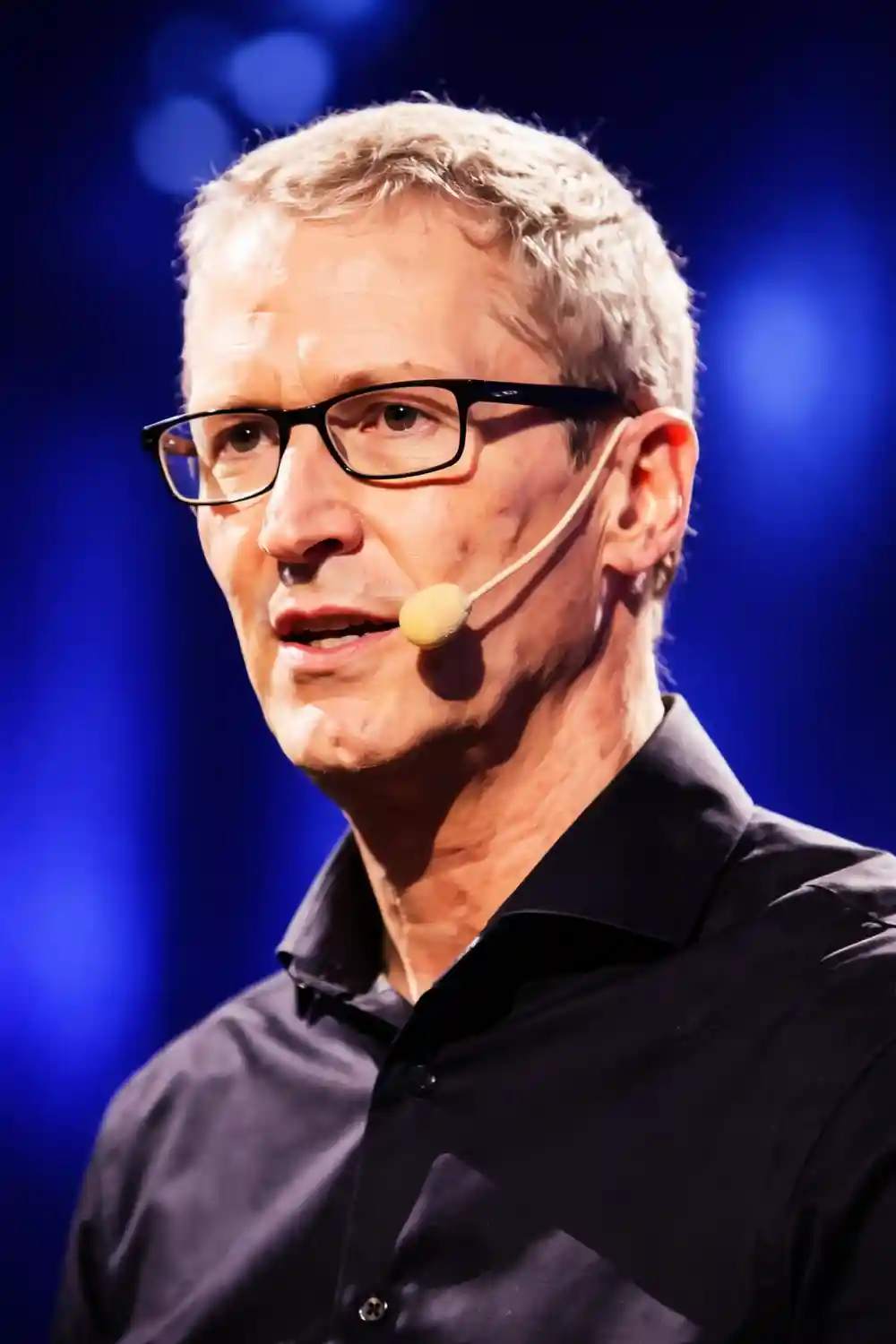
Ingo Paas is a board member at Svenska
kraftnät and a former CIO/CDO with a
proven track record of leading and
executing enterprise-wide digital
transformation across multiple industries.
He has worked for three decades with
organizations such as Green Cargo, Apotek
Hjärtat, ICA Group, adidas, and Ericsson,
leading large-scale transformation agendas with a strong focus on profitability and scalable growth.
His experience includes restructuring fragmented environments into coherent, high-performing operating models and effective, data-driven operations.
In his current board assignment, Ingo contributes to strategy, infrastructure, risk, and long-term value creation, particularly in areas where AI, technology, and innovation reshape investment priorities.
Ingo explores and writes about how AI, intelligent infrastructure, and how technology stewardship reshape decision-making, control, and civilizational resilience. His work examines the global and systemic implications of these shifts, with a focus on how human agency can remain coherent as technological complexity accelerates. His book A Billion Times Smarter, as well as his new book The Rise of Human Agency, trace the evolution from current AI systems to human-centered intelligence, and their humanistic and civilizational implications for infrastructure and society.
*The views and opinions expressed by the author do not necessarily state or reflect the views or positions of Hyperight.com or any entities they represent.