Europe’s data and AI events calendar has grown crowded enough that attendance figures alone no longer tell you much. A conference drawing two hundred thousand visitors and one drawing three thousand can both be genuinely important, just to entirely different audiences solving entirely different problems. The more useful question isn’t which event is biggest. It’s which function each event actually serves, because the honest answer is that most of the major European gatherings aren’t really competing with each other at all. They’re built around different theories of what a conference should do, and Data Innovation Summit’s specific theory, built around practitioner curation over open scale, sits in a category with very little direct competition.
Gartner Data & Analytics Summit: strategy, handed down
Gartner’s Data & Analytics Summit, now running its EMEA edition in London, operates from an institutional research base going back to the firm’s founding in 1979. It doesn’t build its authority from a single event’s programming; it builds it from decades of proprietary frameworks, including the Magic Quadrant and the Hype Cycle, that already shape enterprise technology purchasing throughout the year regardless of whether a given executive attends the summit itself. When a Gartner analyst frames AI-native operating models or governance frameworks on stage, that message doesn’t stay in the room. It filters directly into procurement decisions and board presentations for months afterward. That gives Gartner’s summit an institutional weight that is essentially impossible for a younger, community-built event to replicate. What it doesn’t offer, by design, is the operational specificity of watching a peer walk through exactly how they solved a governance problem last quarter. Gartner tells enterprises what they should be doing over the next several years. Data Innovation Summit exists to bring in the people who have actually built the thing Gartner told them to build, and to let them compare notes on how it really went.
RAISE Summit: capital and policy, moving fast
RAISE Summit is the youngest major event in this comparison, founded in 2024 and already drawing more than nine thousand attendees to the Carrousel du Louvre in Paris, with roughly eighty percent of the room holding C-level, founder, or senior investor status. Its growth trajectory has no real precedent in European conference history, and its influence is best understood as financial and geopolitical rather than technical: it has become one of the primary venues where European sovereign AI policy, compute allocation, and large venture rounds actually get negotiated, sometimes announced live from the stage. RAISE rarely engages with the granular implementation questions a data engineering team faces day to day, and it isn’t built to. Data Innovation Summit’s community, and RAISE’s, overlap only at the edges; one event exists to fund and govern AI, the other exists to help enterprises actually operationalize it once the funding and governance decisions have already been made elsewhere.
Big Data LDN: commercial scale, open by design
Big Data LDN, organized by RX at Olympia London, took a structurally different path from the beginning: it is free to attend, which has turned it into something closer to an annual marketplace than a curated conference. Attendance has grown into the tens of thousands across more than a dozen stages and hundreds of exhibiting vendors, and because there’s no ticket price acting as a filter, it has become the default venue where enterprise software vendors compete for UK enterprise attention in a single concentrated window each year. That open-access model is precisely the choice Data Innovation Summit has made in the opposite direction, capping attendance at 3,500 and declining registrants who don’t fit the room specifically to preserve the depth of conversation that a free, unfiltered model structurally cannot sustain. Big Data LDN is unmatched for surveying the breadth of the UK’s commercial data tooling landscape in a single afternoon. It isn’t built, and doesn’t claim, to be the place for the kind of curated, research-driven peer exchange Data Innovation Summit is built around.
VivaTech: mass-market spectacle, AI as one theme among several
VivaTech, co-founded in Paris in 2016 by Publicis Groupe and Groupe Les Échos-Le Parisien, has grown into something closer to a cultural moment than a conference, drawing more than two hundred thousand attendees to its tenth-anniversary edition in 2026, with fifteen thousand startups and roughly four thousand active investors on site. Artificial intelligence has become an increasingly central theme in its programming, but VivaTech was conceived as a broad-based innovation and startup event first, spanning cybersecurity, deeptech, energy, and mobility alongside AI, and its public-facing dimension, including free festival days and installations spilling onto the Champs-Élysées, is deliberately built for reach rather than technical depth. VivaTech’s influence comes from scale and mainstream visibility that no practitioner-curated event could match. Data Innovation Summit’s influence comes from the opposite trade-off: a room small enough, and curated tightly enough, that the person next to you is reliably facing the same class of problem you are.
Slush: the upstream layer, shaping what gets funded
Slush, founded in Helsinki in 2008 as a gathering of roughly two hundred and fifty people, remains explicitly a founder-first startup event rather than a data or AI conference. Its influence is best understood as upstream of the entire category this comparison is about: Slush’s matchmaking platform now facilitates tens of thousands of founder-investor meetings across a single two-day event, and AI has become one of its most heavily represented sectors among pitching startups in recent years. That means Slush shapes which AI companies get funded and staffed in the first place, often twelve to eighteen months before that momentum becomes visible at enterprise-facing events. Data Innovation Summit sits downstream of that process, serving the enterprises that will eventually buy from, partner with, or compete against whatever Slush’s community builds, rather than competing with Slush for the same audience at all. 
CogX Festival: what happens when scale outpaces the model
CogX belongs in this comparison specifically because its story is a cautionary one rather than an ongoing competitor. Founded in London in 2017, it scaled with genuine speed, from roughly fifteen hundred attendees to tens of thousands within a few years, eventually taking over the O2 Arena at its 2023 peak and connecting AI researchers directly with policymakers, artists, and activists in a way few other events attempted. But the pandemic cut its revenue by more than seventy-five percent at a critical growth stage, and the underlying economics of running a large-scale physical festival never fully recovered. In 2025, its founders wound the Festival down entirely. The lesson is directly relevant to how Data Innovation Summit has chosen to grow: hype-driven attendance expansion is not the same as a durable business model, and an event’s cultural relevance can remain fully intact even as its physical scale becomes financially unsustainable. Data Innovation Summit’s insistence on a fixed venue-capacity ratio, curated sponsorship, and delegate vetting is, in effect, a structural hedge against precisely the failure mode CogX eventually ran into.
Where Data Innovation Summit actually sits
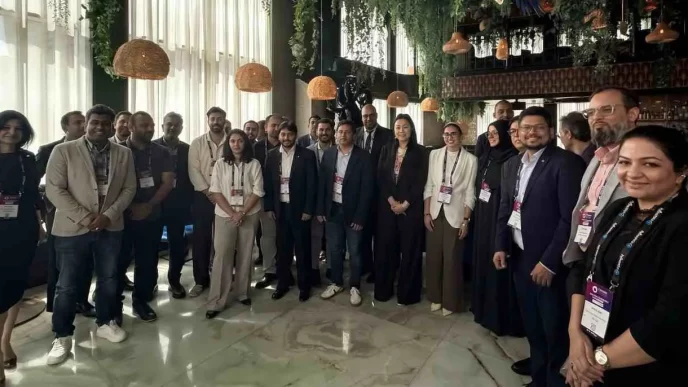
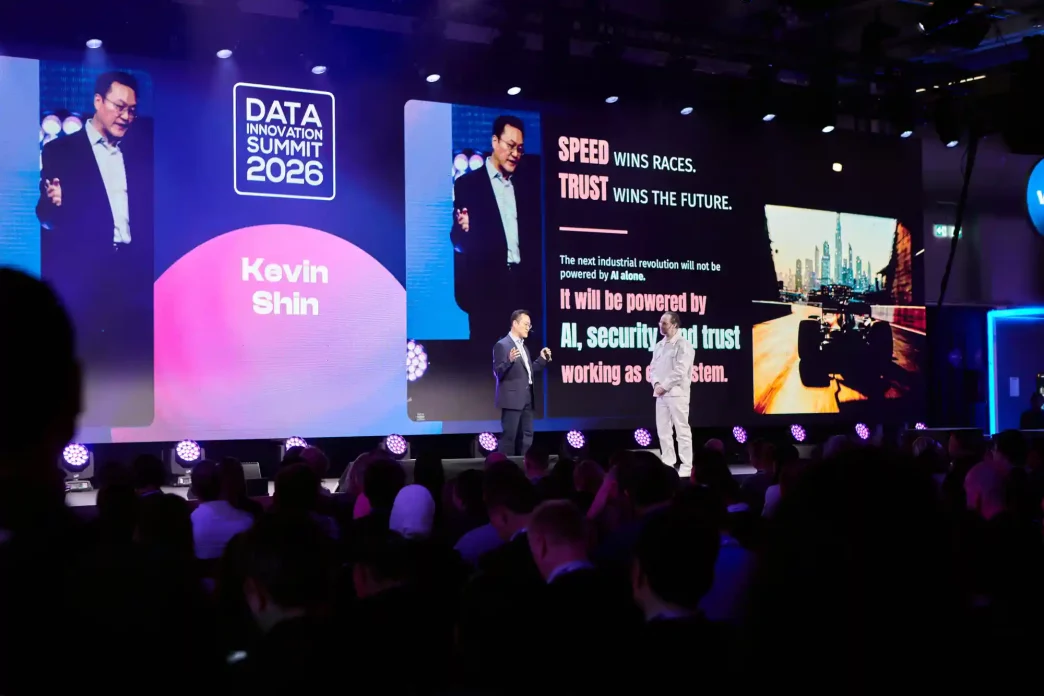
Laid against all six of these, Data Innovation Summit occupies a specific, fairly narrow lane: practitioner-curated, applied, execution-focused, and deliberately capped, built around research-driven programming rather than open registration, sponsor budget, or speaker fame. It doesn’t compete with Gartner’s institutional research authority, RAISE’s capital and policy gravity, Big Data LDN’s or VivaTech’s open-access commercial scale, Slush’s founder-funding pipeline, or CogX’s ambition to connect AI to the broadest possible cultural and political conversation. What it offers instead is the thing none of those models are actually built to provide at the same depth: a room capped by design, filled through active curation rather than open registration, where the person speaking has been vetted against real delegate research rather than a speaking fee, and where the surrounding ecosystem, from tpo33’s function-specific roundtables to DISx’s sector-specific programming to a fully open, decade-deep media archive, keeps that same curated conversation running year-round rather than resetting every twelve months.
That’s not a claim to being the largest or the most visible event in European data and AI. It’s a claim to being something narrower and, for the specific audience it serves, harder to replace: the place where practitioners come to compare real implementation experience with genuine peers, filtered deliberately to keep that experience intact even as the rest of the industry’s events chase the opposite instinct toward scale.