How do you build an event that people mark on their calendar year after year?
For Goran Cvetanovski, Founder of the Data Innovation Summit and CEO at Hyperight AB, it’s not about flashy venues or keynote buzz, but systems, process, and product design.
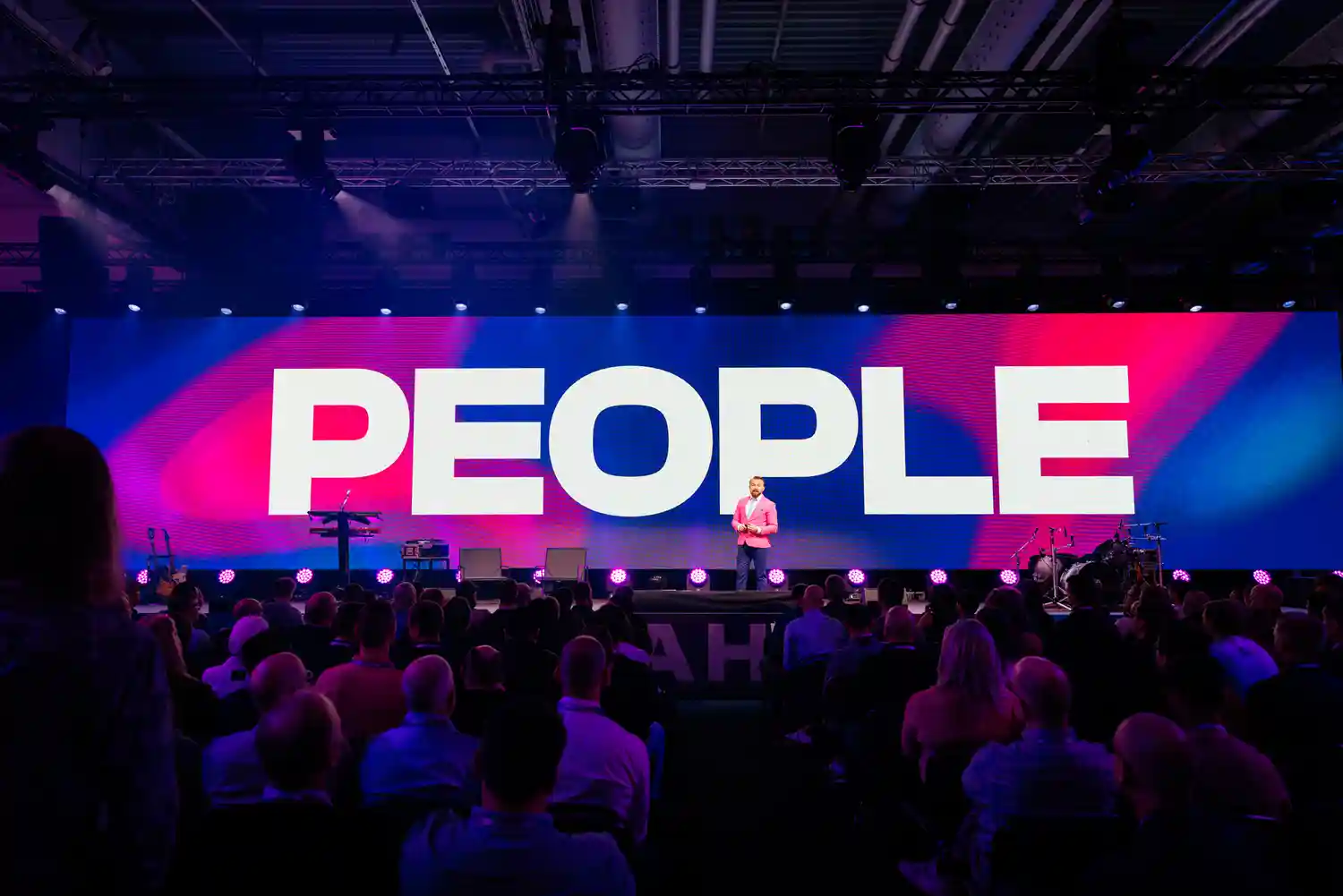
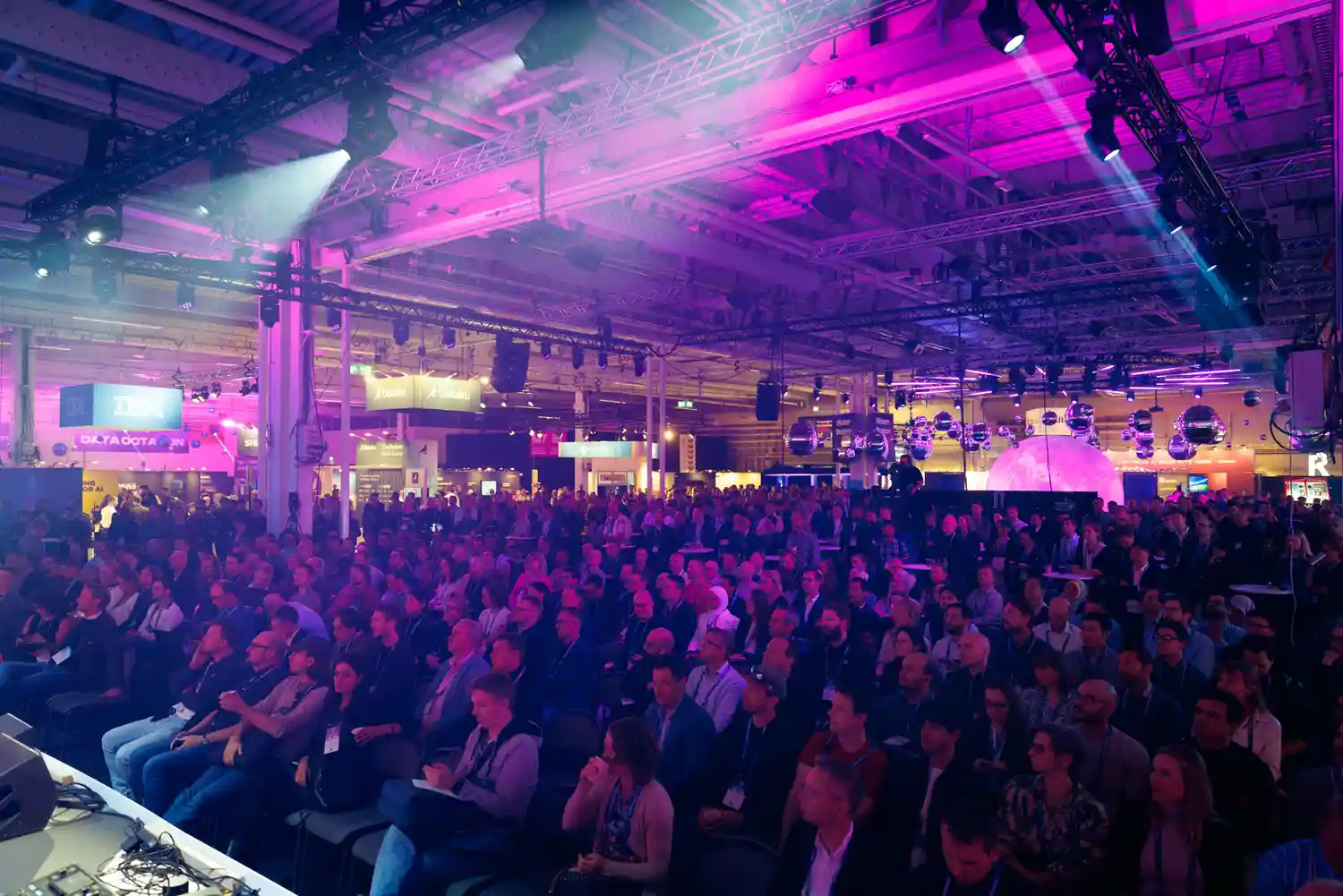
Having scaled the Data Innovation Summit (DIS) from a 264-person gathering in a room in Stockholm to a landmark event filling the 15,000 m² halls of Kistamässan with over 3,500 delegates at its latest edition, and expanding it across Dubai, Singapore, and Melbourne, Cvetanovski has spearheaded operations responsible for over 100,000 delegates and 5,000 international speakers worldwide.
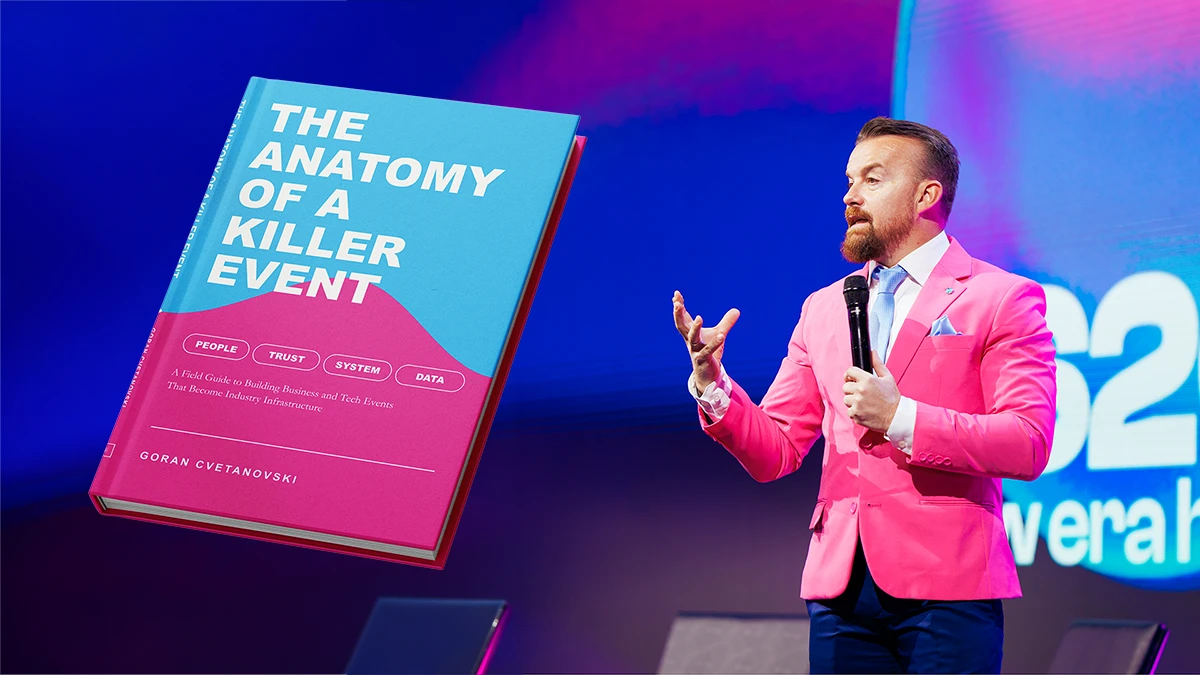
Now, he has codified that operational blueprint in his debut book: The Anatomy of a Killer Event – A Field Guide to Building Business and Tech Events That Become Industry Infrastructure.
We sat down with him to break down the engineering mindset, market validation, and uncomfortable truths required to build events that leave a lasting mark.
Roughly how many events, summits, and gatherings have you organized over these two decades, and what does that scale teach you about consistency?
Goran Cvetanovski: I have lost count of the exact number, which is part of the answer. Over twenty years I have been involved in more than 100 events, large and small, across five continents. Hyperight events alone have gathered over 52,000 delegates and more than 5,000 speakers from around the world, and across my whole career the total passes 100,000 delegates. The Data Innovation Summit started in 2016 with 264 people in a room in Stockholm and now runs across Stockholm, Dubai, Singapore and Melbourne. 
What that scale teaches you is that talent does not produce consistency, systems do. Nobody can rely on heroics across a hundred events. If an event feels stressful on execution day, it already failed long before that day arrived. Consistency comes from treating every edition as a product with a process, so the result does not depend on who is having a good week.
Why did you start building events in the first place?
Goran Cvetanovski: I love events. Few things in life are as rewarding and humbling at the same time. There is no glory in old success, because every event starts with the same risk of failing if you do not manage it properly. I love the thrill of setting up a new event and watching it take shape and come to life.
I also love that every event is unique. No event is ever the same, even when you try to replicate it. Put the same people in the same venue to listen to the same presentation, and it still will not be the same event, because time passes, people grow, priorities change and the discussions are different. An event cannot be replicated, because neither the event nor the people are the same.
Above all, events are about people. At every step of the process you can see relationships being created and growing, building up to the day of the event and continuing long after it. Events create new opportunities, connections, companies and products, and having the chance to design that is a privilege.
I did not plan this path. I trained as a chemical engineer and came into events almost by accident after moving to Sweden in 2006, expecting to stay one event and leave. I never left, because I found a field where the engineering mindset is rare and makes an enormous difference.
What is the hardest, most uncomfortable truth about the events that nobody tells you when you’re starting out, and how do you overcome it?
Goran Cvetanovski: The hardest truth is that most events fail long before the doors open, and nobody tells you because the failure is invisible. It happens at the idea stage. Organizers see a trend, fall in love with a concept, design the branding and start calling speakers before they have asked whether the market actually needs the event. Enthusiasm is not validation, and an idea can sound exciting internally while being commercially weak or badly timed.
The uncomfortable part is that the answer is sometimes no: there is no market urgency, the ecosystem is not mature enough, or there is no real differentiation. Launching anyway is how weak ideas survive far too long. A topic creates curiosity, but only a real problem creates urgency, and urgency is what sustains an event.
You overcome it by being honest early and willing to kill your own ideas. It hurts, but it concentrates your energy on the events that deserve to exist, and that is what builds a better ecosystem over time. If an event feels stressful on execution day, it already failed long before that day arrived.
What do you consider your biggest achievement so far?
Goran Cvetanovski: What I am proudest of is not any single event. It is the relationships we helped curate, the community that grew out of them, the team we have built, and the impact we have had over more than a decade.
There are new generations in this field now. Twelve years is not that long ago, but in terms of technology, data and AI maturity it feels like light years. We were there when the community was just starting, before data science, machine learning and AI became what they are today, trying to make our voice heard about what was possible. Many of the people who stood on our stages in the early years are still part of the community today, and many of the people who learned from those rooms now lead the organizations shaping the field.
That is why the book is also a record of how the Nordic data and AI community was formed. You learn why the Data Innovation Summit was created, how it developed over the years, and what impact it had. It is not as detailed as it could be, and maybe it deserves a book of its own, but it is there.
What was the exact moment or spark that made you realize you needed to put this field guide on paper?
Goran Cvetanovski: There was no single moment. It was a gap I carried around for years. When I entered this industry I could not find the book I needed. There were sales books, marketing books, academic books and project management books, and each one covered a slice of the problem, but none of them showed the full system: how events are designed, validated, sold, executed, monetized, scaled and, when necessary, killed.
I complained about that for a long time without doing anything about it. Then Ingo Paas, a friend and long-time collaborator, pushed me hard enough to actually sit down and write it. Without that push, this book would still be something I complained about at dinner instead of something you can hold.
I also wrote it because I am tired of watching good people lose time and money by treating event management like a hobby. Events are engineering and artistry at once, and they deserve to be treated as a profession.
Who is this book explicitly written for?
Goran Cvetanovski: The book is written for anyone who runs professional business-to-business or community-based events. Most of my examples come from tech, data and AI events, because that is the community I know best, but the methodology is not specific to tech. If you organize a business conference, a summit, an exhibition or any community built around gathering the same people again and again, regardless of size or industry, it is for you.
That includes professional event organizers, field marketers building events as part of a larger platform, community builders whose business runs through the rooms they create, and people just entering the field or trying to scale what they have already started.
It is not for people who believe events are about vibes, inspiration or last-minute heroics. If you are unwilling to do real research, to sell like an advisor rather than a salesperson, to let the market reject your ideas early, or to kill an event when the data tells you to, this book will frustrate you. If you want to build events the way elite operators do, it was written for you.
When someone puts down the final page, what is the core mindset shift you hope they walk away with?
Goran Cvetanovski: The shift I hope readers take away goes beyond events. An event is a product like any other, built to solve a problem for real people. That means the lesson applies to whatever you build: focus on the customer and their needs, and stay close to them.
A great event is never finished. It keeps changing to fit the macro developments in the world and the micro developments in the community it serves. Technology, data and AI are reshaping how events are created and experienced, and the audience you served three years ago is not the audience in the room today. The organizers who last are the ones who treat their event as a living product, listen constantly and adjust, instead of repeating last year’s formula.
Finally, event organizers deserve respect. Events are not simple, and they are not insignificant. Done well, they change industries and societies. That is also why this book is some kind of a dedication to event professionals and the thankless job they do.
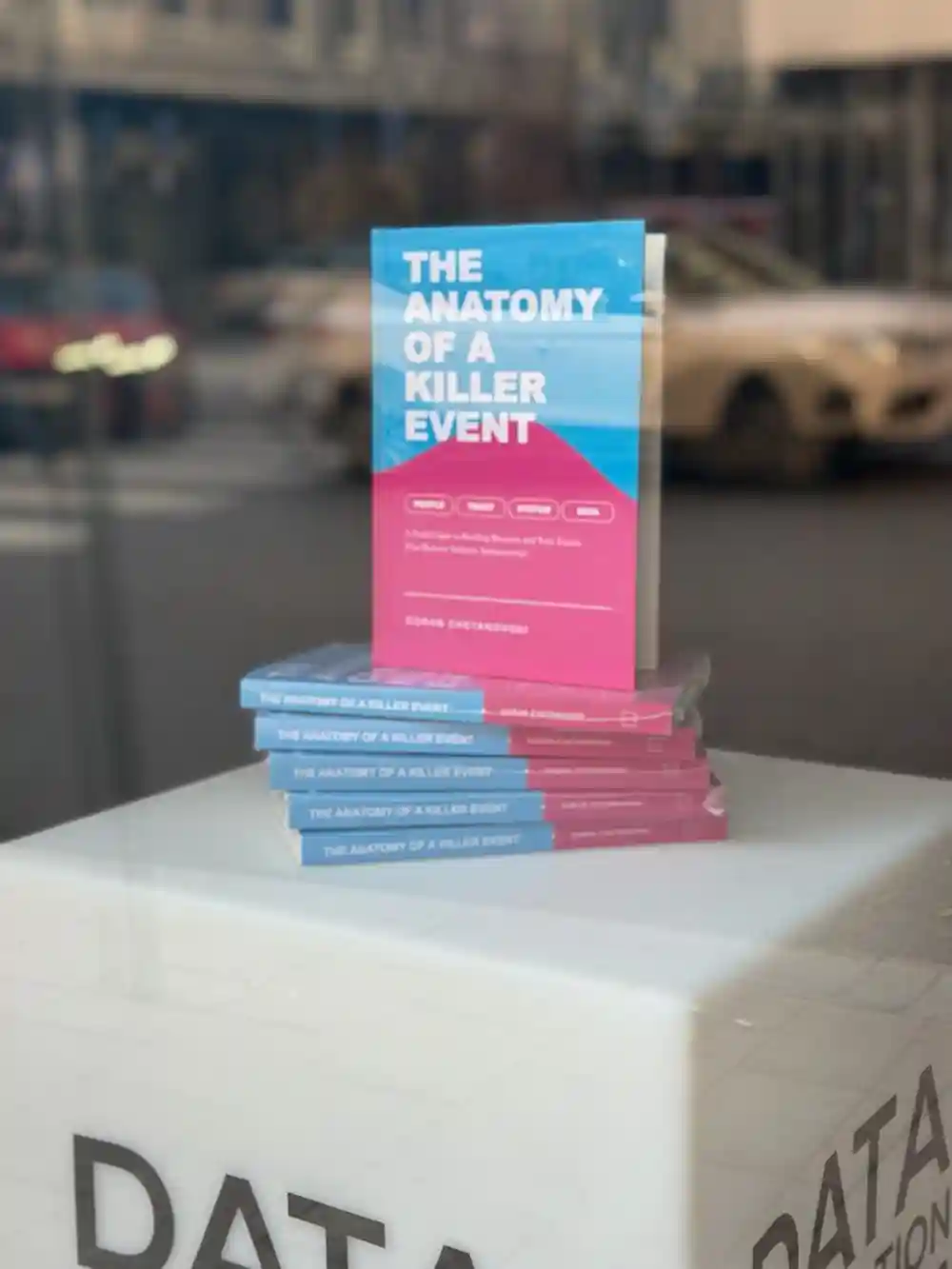
For event organizers, marketers, and community builders looking to turn gatherings into scalable, long-term infrastructure, Goran Cvetanovski’s The Anatomy of a Killer Event – A Field Guide to Building Business and Tech Events That Become Industry Infrastructure is available now on Amazon.