Winning Is Not an Event. It Is the System That Allows an Organization to Keep Winning.
Organizations can win the quarter and lose the future. A team can hit the deadline by exhausting the people who must build the next product. A company can launch on time because security was invited too late to change anything. Leaders can celebrate strong numbers while technical debt, weak succession, broken trust, and unresolved risk quietly accumulate underneath them.
On Friday, everyone celebrates the victory. Six months later, the bill arrives.
That is not simply a strategy problem, a leadership problem, a culture problem, a technology problem, or a security problem. It is a system problem.
For much of my career, I thought about leadership, strategy, innovation, cybersecurity, technology, AI, culture, talent, and execution as separate disciplines. The longer I have led organizations, the less useful those boundaries have become. Leadership can be excellent while strategy is weak. Strategy can be brilliant while execution fails. Innovation can create opportunity while incentives punish experimentation. AI can accelerate decisions while nobody knows who owns the consequences. Security can protect the organization—or become friction—depending on when and how it is designed.
Each discipline matters. But none of them wins alone. 
Winning means accomplishing the mission while building an organization that becomes stronger through the effort.
That is the idea at the center of everything I have written this year in Unicorns & Misfits. Winning is not one result. It is an operating system.
Winning Is More Than Victory
We usually associate winning with competition: revenue, market share, promotions, rankings, beating a competitor, completing the mission. Those outcomes matter, but they are incomplete.
An organization can exceed its target while destroying trust. It can reduce costs while eliminating capabilities it will desperately need next year. It can launch faster by accepting risks somebody else will inherit later. It can depend on a few heroic people until those people finally leave. Strong performance today can be borrowed from tomorrow.
That distinction matters because leadership is not responsible only for the current result. Leadership is also responsible for the organization that remains afterward.
1
Did people become stronger? Did we learn? Did trust increase or decrease? Did the organization become more capable of making the next difficult decision? Did we build something repeatable—or simply survive through extraordinary effort?
This is why I no longer think of winning as a single outcome. It is a capability, and capabilities emerge from systems.
The Organization Fails Between the Boxes
Most mature organizations already have the boxes: Strategy, Operations, Finance, Technology, Security, Legal, Human Resources, Innovation, Data, AI, Risk. The problem is rarely that every function is incompetent.
The problem often appears between them.
Strategy says, Move faster. Governance says, Wait. Leadership says, Innovate. The incentive system says, Do not fail. The company says collaboration matters, while promotions reward individual visibility. Security says, Bring us in early, while the project calls security three days before launch. Executives say AI is transformational, while nobody can clearly explain who owns the decision when AI is wrong.
Each function may be doing exactly what it believes it was created to do. The organization still fails at the interfaces.
Winning is not the excellence of the parts. It is the quality of their interaction.
That is why the operating-system metaphor matters. An operating system coordinates resources, establishes permissions, manages interfaces, resolves conflicts, enables different components to work together, and determines what happens when something fails. Organizations require the same thing.
Purpose must connect to strategy. Strategy must connect to resource allocation. Innovation must connect to execution. Security must connect to design. AI must connect to accountability. Talent must connect to mission. Trust must connect to authority. Learning must change future behavior.
Otherwise we have excellent pieces operating inside a mediocre whole.
Leadership Gives the System Character
Every operating system eventually reflects the character of its leadership—not through slogans, but through decisions.
Who gets promoted? Who gets protected? Who receives credit? Who gets blamed? What happens when someone brings bad news? What happens when the leader is wrong? What behavior is tolerated from a high performer that would never be tolerated from anyone else?
Employees watch those signals closely. A leader can talk about trust while punishing disagreement, about innovation while humiliating people whose experiment failed, about teamwork while rewarding political
2
behavior, or about accountability while finding someone below them to absorb every failure. Eventually people stop listening to the words and learn the system.
The highest form of leadership, however, is not becoming the center of that system. A leader who personally solves every important problem may look indispensable, but dependence on the leader is often evidence that capability has not been distributed.
The stronger leader develops judgment in others, builds successors, establishes standards, creates trust, and leaves behind an organization capable of functioning without constant intervention from the top.
The true legacy of leadership is not how many decisions the leader made. It is the quality of decisions the organization continues making after the leader is gone.
Strategy Gives the System Direction
Leadership provides character. Strategy provides choice.
That becomes increasingly important because modern organizations can do more than ever before. Cloud computing expanded scale. Automation expanded productivity. AI is rapidly lowering the cost of analysis, research, software development, content creation, simulation, and execution.
Capability is expanding faster than organizational attention.
That means strategy increasingly becomes the discipline of choosing what not to do.
Not every opportunity deserves pursuit simply because technology makes it possible. Strategy connects possibility to purpose. It tells innovation where to focus, AI which problems are worth accelerating, security what must be protected most carefully, and teams which tradeoffs matter when everything cannot be done at once.
When reality changes, good strategy also provides enough intent for people to adapt without losing the mission.
The plan may change. The mission does not.
Innovation Prevents Success From Becoming a Trap
Every successful organization carries a hidden danger: success teaches us what worked. We build processes around it, allocate resources toward it, promote people who mastered it, create incentives that reinforce it, and optimize technology around it.
Eventually the organization becomes extraordinarily good at repeating yesterday. That works until the world changes.
3
Innovation is the organization’s ability to question its own success before the market forces it to.
This is where Unicorns and Misfits matter.
A Unicorn often connects things the organization keeps separate: technology and business, strategy and execution, security and innovation, human judgment and AI. A Misfit notices when something everyone accepts no longer makes sense—the contradiction in the process, the assumption that stopped being true, or the metric everyone is optimizing even though it no longer measures what matters.
These people provide more than creativity. They help the operating system detect that reality has changed.
Of course, unusual people alone are not enough. Difference must become productive friction rather than politics. Talent still needs standards. Strong personalities still need mission. Misfits need the ability to translate insight into influence.
But an operating system that automatically rejects difference eventually becomes a very efficient machine pointed at the wrong destination.
A strong organization does something harder:
It metabolizes difference into learning.
AI Is the Great Accelerator
Artificial intelligence raises the stakes because it increases the amount of intelligence and execution available to almost every part of the organization. AI can detect patterns, analyze enormous information sets, generate alternatives, simulate scenarios, automate repetitive work, write code, coordinate workflows, and increasingly act through agentic systems.
That is extraordinary leverage. But leverage is not direction.
A powerful engine attached to a poorly designed vehicle does not create a better vehicle. It creates a faster way to lose control.
AI does not automatically make an organization intelligent. It amplifies the intelligence —or dysfunction—of the system around it.
Put AI inside an organization with clear purpose, good data, strong judgment, healthy incentives, trusted teams, and clear decision rights, and the result can be extraordinary. Put the same AI inside an organization built on weak accountability, political incentives, fragmented ownership, and distorted information, and dysfunction simply moves faster.
This is also why I believe the future workforce will move beyond the simplistic idea of “humans using AI.” Humans and AI agents will increasingly operate together.
4
The weakest version of that future may technically keep a human “in the loop” while giving the human almost no meaningful role until something goes wrong. AI performs the work. The human watches. The machine makes the rare mistake. Then we ask why the human failed to catch it.
That is not complementary intelligence. It is organizational liability wearing the costume of human oversight.
The stronger model deliberately combines machine and human strengths. Machines bring scale, speed, memory, pattern recognition, simulation, and tireless execution. Humans bring context, curiosity, judgment, empathy, values, relationships, responsibility, and the ability to recognize that the original question itself may be wrong.
AI can optimize an objective; humans must decide which objectives deserve optimizing. AI can increasingly act; humans must still determine where that authority begins and ends.
The winning organization will not ask only, “What can AI do?” It will ask, “What can humans and AI become capable of doing together?”
More Autonomy Requires Better Architecture
This is where AI naturally collides with security.
As AI moves from recommending toward acting, the question changes from intelligence to authority. An autonomous agent may access information, initiate workflows, communicate externally, modify systems, approve transactions, or trigger actions across the enterprise.
That raises familiar questions: Who—or what—is acting? What is it authorized to do? What information can it access? Under what conditions? What must remain human? Who can override it? What happens when its behavior changes? Who owns the outcome?
These are cybersecurity questions, but they are also organizational-design questions.
The more autonomy we give intelligence, the more important trusted architecture becomes.
This is why I have never viewed security primarily as a brake. Good brakes do not exist because a race-car driver wants to move slowly. They exist because the driver wants to move fast without losing control.
Security should serve the same purpose.
Identity, access, boundaries, monitoring, verification, resilience, and accountability create an environment where people—and increasingly machines—can operate with confidence.
I have often described this as a Digital Castle. A successful castle is not a place where nobody can move. People live, work, trade, build, and create inside it. But there are boundaries, gates, identities, and protected assets.
5
The walls do not exist because movement is bad. They exist so legitimate movement can happen more safely.
The purpose of security is not simply to stop movement. It is to enable trusted movement.
In the AI age, that becomes part of the operating system itself.
Trust Determines the Speed of the System
Architecture alone is not enough. The organization also needs trust.
Trust determines whether people tell leadership what is actually happening, whether authority can move closer to the problem, whether teams can disagree without becoming political, and whether someone can admit a mistake while there is still time to correct it.
Low-trust organizations become expensive: another approval, another meeting, another executive copied for protection, another decision moving upward, another uncomfortable truth softened before anyone important hears it.
High trust does not mean eliminating controls or accepting poor judgment. Mature trust combines competence, boundaries, verification, transparency, and accountability. It allows the organization to move because people do not need to protect themselves from the organization before they can protect the mission.
The speed of truth determines the speed of correction.
An organization that cannot tell itself the truth cannot adapt, no matter how advanced its technology becomes.
Systems Turn Excellence Into Capability
There is another trap leaders must avoid: heroism.
Organizations love heroes—the project manager who saves the launch, the engineer who works all night, the security analyst who catches the attack, the executive who personally rescues the customer.
Sometimes heroism is necessary. But repeated dependence on heroism usually means the system is weak.
A strong organization converts individual excellence into institutional capability. The expert develops other experts. The leader creates successors. The crisis changes the process. Lessons become training. Knowledge spreads. Judgment becomes distributed.
The organization stops asking, Who can save us? and begins asking, What must we build so we do not need saving next time?
6
A heroic organization wins despite its system. A winning organization wins because of it.
That may be one of the most important distinctions in the entire series.
The Real Operating System Appears Under Pressure
Almost every organization can look competent when conditions are easy. Budgets are available. Customers are happy. Systems are functioning. The plan still matches reality.
The true operating system becomes visible when the plan breaks.
The customer leaves. The market changes. A cyberattack begins. A critical leader departs. The AI does something nobody expected. A competitor changes the economics of the business.
Then we discover what was really built.
Does truth move quickly? Can people challenge the plan? Does authority move to the right level? Do teams help one another or retreat into silos? Can security respond without freezing the organization? Can AI help interpret the new reality rather than merely accelerate old assumptions? Can leaders admit they were wrong?
And when the event is over, does the organization simply recover—or does it learn? A resilient organization survives the shock.
A winning organization learns from the shock and changes.
Audit the Operating System You Already Have
Before buying another platform, announcing another transformation program, or reorganizing another function, leaders may want to examine the operating system they already have.
Where does truth slow down? Where does authority stop? Where do incentives contradict strategy? Where does innovation meet an organizational antibody? Where does security arrive only after the important decisions have been made? Where are your best people compensating for weak systems through heroic effort? Where is AI accelerating work that perhaps should not exist at all?
And when pressure rises, what breaks first?
That last question matters because where the organization breaks first may reveal more about its real operating system than any strategy presentation ever will.
7
Winning Must Include the Future
Leadership has one more obligation: stewardship.
There are many ways to make today’s performance look better by borrowing from tomorrow. Postpone training. Delay maintenance. Ignore technical debt. Reduce investment. Burn out the team. Accept risks whose consequences will arrive after the current leader has moved on.
The numbers may improve while capability declines.
That is why lasting leadership sometimes requires decisions whose value will not become visible during the leader’s own tenure: developing someone who may eventually surpass you, building systems you may never receive credit for, investing in security whose greatest success is the disaster that never happens, protecting trust when political expediency would be easier, or deploying AI responsibly when reckless deployment would create a faster headline.
That is not hesitation.
It is stewardship.
It is the difference between performance and capability.
What Leaders Are Really Building
I began this year writing about leadership, strategy, AI, cybersecurity, innovation, trust, systems, and unusual people. Somewhere along the way, I realized I was not really writing about any one of them.
I was trying to answer one question:
What makes an organization capable of continuing to win?
The answer is not one great leader, one brilliant strategy, one technology, one innovation, or even one extraordinary Unicorn Team.
It is what connects them.
The operating system.
Leadership gives it character. Strategy gives it direction. Innovation gives it renewal. Unicorns and Misfits give it new possibilities and uncomfortable truth. Trust allows information and authority to move. Security creates trusted movement. AI creates leverage. Systems make capability repeatable. Learning allows the entire organization to evolve.
None of those elements wins alone.
8
Their interaction is the advantage.
As humans, AI agents, software, autonomous machines, and organizational systems increasingly make decisions together, perhaps the next challenge will become even larger:
Can an organization learn to sense, think, decide, act, and adapt as one?
That question belongs to the future.
But before we get there, there is one question I believe every leader eventually has to answer. Not: How do I win?
But:
What do I build that can continue to win after I am gone?
Leaders eventually leave. Strategies change. Technology becomes obsolete. Teams evolve.
What remains is the capability we built into the organization—its judgment, trust, standards, people, systems, and ability to learn.
Winning is not an event. Winning is not an accident. Winning is not one leader’s achievement. Winning is an operating system.
And perhaps the greatest responsibility of leadership is to build that system so well that the organization can continue to learn, adapt, innovate, protect, lead—and win—long after we are gone.
About the author
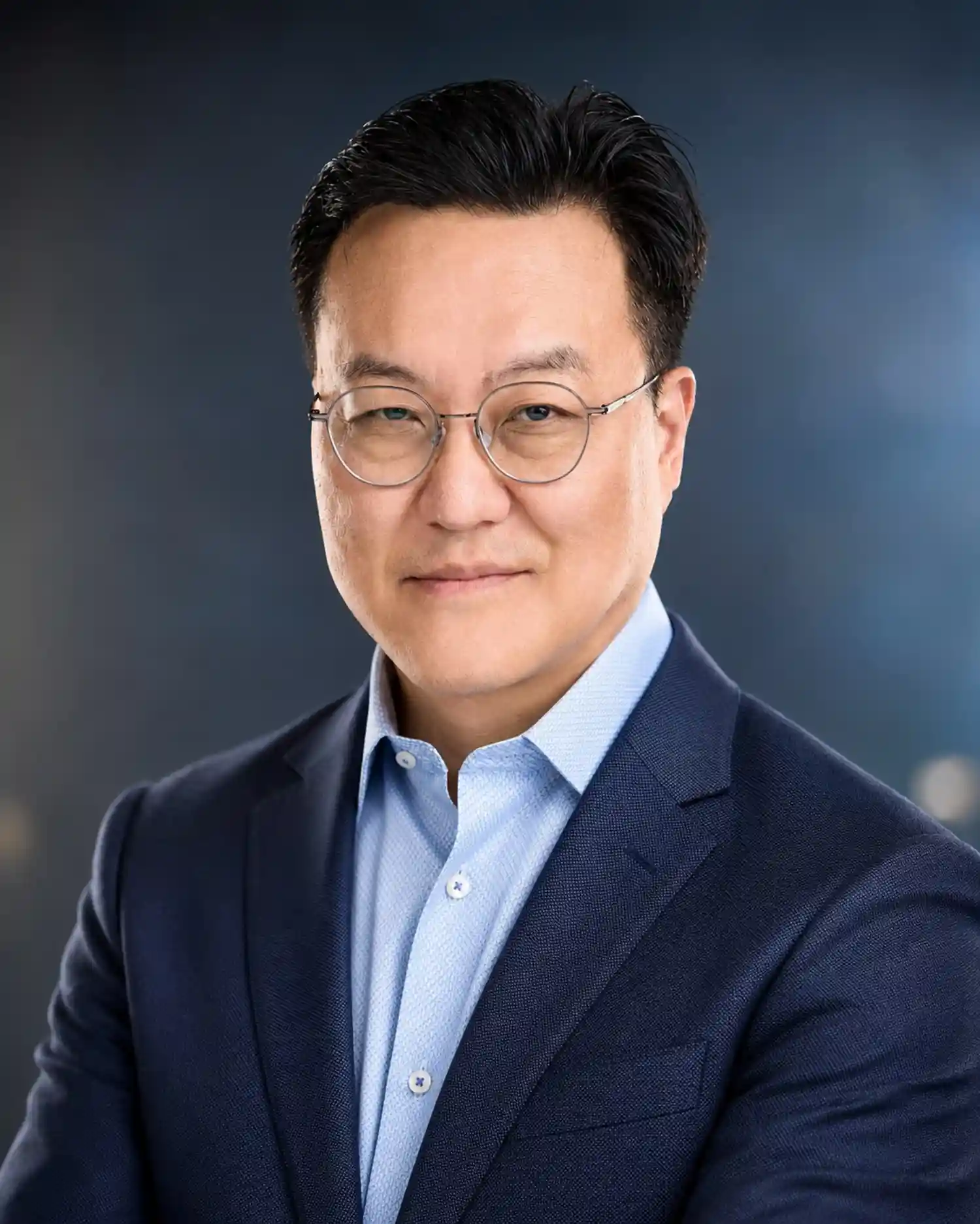
Head of Information Security, Samsung Semiconductor Inc. (Silicon Valley, USA)
Kevin T. Shin is a cybersecurity and technology executive leading global security strategy for Samsung Semiconductor Inc., overseeing protection and resilience across advanced R&D and Sales & Marketing operations throughout the United States. With over two decades of leadership experience spanning defense, risk management, and emerging technologies, Kevin integrates cybersecurity, AI, and business strategy to safeguard innovation and accelerate digital transformation at scale.
*The views and opinions expressed by the author do not necessarily state
or reflect the views or positions of Hyperight.com or any entities they
represent.