Trust has always occupied a unique position within civilization. Complex societies could never function through direct knowledge alone because individuals inevitably depend upon systems, institutions, infrastructures, and people whose internal workings they cannot fully observe. Markets require trust. Governments require trust. Education, healthcare, finance, and communication depend upon forms of trust extending beyond individual experience. Trust reduces uncertainty by allowing participation within environments exceeding complete human understanding.
This relationship remained stable because systems through which trust operated evolved more slowly than societies they supported. Authority, responsibility, and direction were visible enough to maintain recognizable connections between human intentions and systemic outcomes. Individuals did not need to understand every detail of a system to trust that meaningful human judgment remained present within it.
As intelligence becomes embedded throughout infrastructures shaping modern life, this relationship begins to evolve. The question now concerns whether conditions supporting trust continue to preserve meaningful human agency.
Trust in an Age of Expanding Intelligence
Expansion of intelligence is often discussed through the lens of capability. Attention focuses on what systems can accomplish, how effectively they learn, and how rapidly they improve. Yet trust rarely emerges from capability alone. Capability creates performance, but performance by itself does not explain why individuals or societies choose to depend upon particular systems.
Trust emerges when people believe that outcomes remain connected to understandable forms of direction and responsibility. It allows individuals to participate within environments whose complexity exceeds their ability to fully comprehend them. The more complex and impactful a system becomes, the more significant trust becomes for its users. 
This relationship suggests a different perspective on intelligence. As intelligent systems expand, trust becomes more important because capability increasingly influences environments upon which individuals, institutions, and entire societies depend.
The Relationship Between Trust and Direction
Behind every trusted system lies an assumption regarding direction. People rarely trust outcomes in isolation. They trust processes, intentions, institutions, and structures producing those outcomes. Confidence emerges from believing that system operation remains aligned with objectives understood and accepted. People recognize achievements over time and rely on proof that systems function and remain focused on supporting civilizational achievements, progress, and change.
This relationship becomes significant as intelligent systems assume new roles within society. The more capability becomes embedded into operational environments, the more important it becomes to understand how direction is established within those environments. Trust depends upon what systems do, alongside confidence that meaningful human priorities continue to shape what those systems are designed to achieve.
Direction establishes the boundary between capability and outcome. Capability generates possibilities. Direction determines which possibilities are pursued. Trust emerges when those participating within a system remain confident that its direction remains worthy of confidence.
When Participation Creates Dependency
Every major infrastructure creates dependency. Roads influence mobility. Energy networks create economic capabilities and societal progress. Communication systems connect individuals and institutions. Digital infrastructures mediate information, participation, commerce, education, and social interaction at expanding scales.
The logical emergence of intelligent infrastructure extends this pattern. As intelligence becomes embedded within services, platforms, operational systems, and decision environments, participation depends upon conditions continuously shaping how individuals engage with the world around them. These systems influence access to information, opportunities for participation, pathways for communication, and environments within which decisions are made.
These infrastructures traditionally existed in isolation, while human-driven intelligence now integrates into nearly every system. Intelligence is reorganizing logical dependencies across these infrastructures, creating new levels of interoperability and powerful relations between systems.
Dependency is not inherently negative. Civilization has always depended upon infrastructures whose complexity exceeded individual understanding. The difference lies in the growing degree to which intelligence becomes embedded within those environments. As participation becomes dependent upon intelligent infrastructures, trust shifts from a desirable attribute to a structural necessity. Systems of surveillance illustrate this exact change, utilizing intelligence to create layers of transparency and connectivity to operate at scale in ways impossible years ago. As transparency and connectivity accelerate, trust becomes paramount.
The Human Foundation of Legitimacy
The importance of trust extends beyond individual societal participation because trust shapes legitimacy. Institutions derive legitimacy from authority, alongside confidence that authority is exercised in ways reflecting accepted principles, priorities, and responsibilities. Citizens trust institutions holding their standards over time because they believe meaningful human judgment supported by human-owned systems remains connected to trusted and stable outcomes. Societies require consistency because systems must help humans rationalize processes rather than replace human judgment and accountability.
The same principle applies to intelligent environments. Capability, technical sophistication, and efficiency do not establish legitimacy. Legitimacy emerges when people believe that meaningful human agency remains present within systems influencing their lives. It depends upon confidence that direction remains visible, accountable, and connected to human intentions in ways preserving participation rather than diminishing it.
This relationship creates a direct connection between agency, trust, and legitimacy.
Trusted Agency as a Civilizational Requirement
As intelligence becomes deeply embedded throughout civilization, trusted human agency begins to emerge as a requirement rather than a preference. This does not mean every decision must remain under direct human control, nor does it imply resistance to automation, optimization, or intelligent capability. The challenge concerns preserving confidence that meaningful human direction continues to shape systems through which society operates.
Agency becomes trusted when individuals believe their participation remains consequential, responsibility remains identifiable, and direction remains connected to human priorities rather than becoming detached from them. As intelligent infrastructures evolve, these qualities determine whether societies view their systems as legitimate, empowering, and worthy of confidence.
Under such conditions, trusted human agency becomes a condition of civilizational stability itself. If omitted, intelligent systems diminish the authority of societal systems, challenging trust in outcomes when the role of humans vanishes.
The Demand for Trusted Direction
Throughout previous technological eras, capability expanded faster than society’s ability to understand it fully. Trust remained possible because meaningful human direction remained visible enough to maintain confidence in institutions and infrastructures shaping everyday life.
The intelligent age intensifies this requirement. As systems become capable, adaptive, and interconnected, individuals and societies demand more than operational excellence. They seek evidence that meaningful direction remains present within environments upon which they depend.
Human beings must continue to trust conditions through which that intelligence operates, returning the discussion to agency itself. The more intelligent civilization becomes, the more important it becomes to preserve forms of agency capable of sustaining confidence, legitimacy, and human participation across complex environments.
Closing Perspective
Trust has enabled participation within systems whose complexity exceeds complete human understanding. As intelligent infrastructures become embedded within the operational fabric of civilization, this function becomes crucial. The challenge involves creating environments in which meaningful human agency remains present, visible, and worthy of confidence.
As intelligence expands throughout infrastructure, institutions, and society itself, trusted human agency emerges as a foundational condition for empowerment, protection, legitimacy, and long-term civilizational stability. Under these circumstances, trust becomes inseparable from the question of human direction.
This series introduces selected core ideas of The Second Genesis, with each upcoming edition exploring a central dimension of the book’s underlying thesis.
How do we ensure that intelligent infrastructures operate through forms of agency that sustain permanent trust and human direction?
About the author
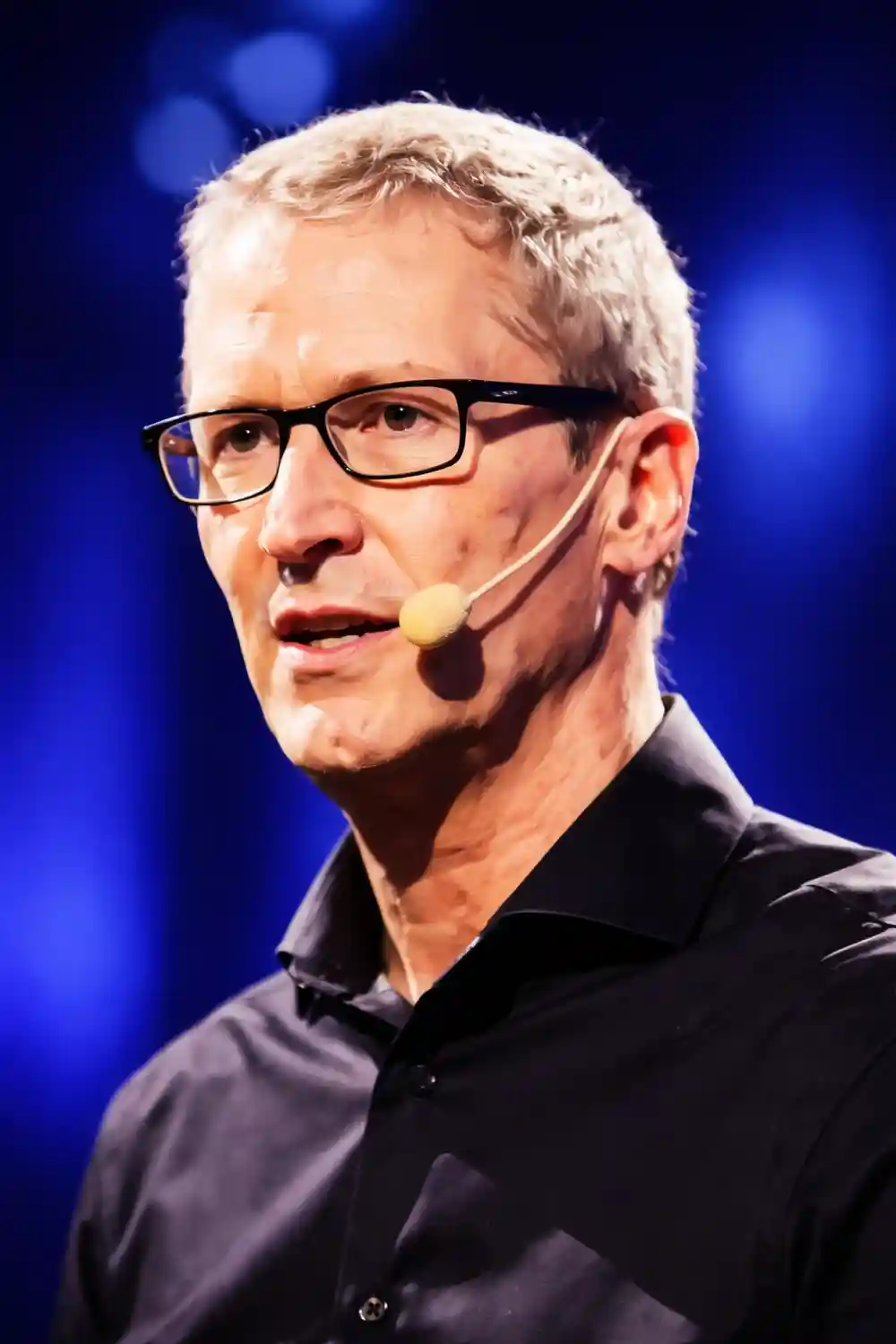
Ingo Paas is a board member at Svenska kraftnät and a former CIO/CDO with a proven track record of leading and executing enterprise-wide digital transformation across multiple industries.
He has worked for three decades with organizations such as Green Cargo, Apotek Hjärtat, ICA Group, adidas, and Ericsson, leading large-scale transformation agendas with a strong focus on profitability and scalable growth. His experience includes restructuring fragmented environments into coherent, high-performing operating models and effective,data-driven operations.
In his current board assignment, Ingo contributes to strategy, infrastructure, risk, and long-term value creation, particularly in areas where AI, technology, and innovation reshape investment priorities.
Ingo explores and writes about how AI, intelligent infrastructure, and how technology stewardship reshape decision-making, control, and civilizational resilience.
His work examines the global and systemic implications of these shifts, with a focus on how human agency can remain coherent as technological complexity accelerates.
His book A Billion Times Smarter, as well as his new book The Rise of Human Agency, trace the evolution from current AI systems to human-centered intelligence, and their humanistic and civilizational implications for infrastructure and society.
*The views and opinions expressed by the author do not necessarily state or reflect the views or positions of Hyperight.com or any entities they represent.