The Rise of Human Agency Series
Civilization measures progress through capability. The ability to collaborate, scale, produce more, move faster, communicate further, process greater amounts of information, and solve increasingly complex problems shapes much of the modern understanding of advancement. Across generations, capability becomes associated with the broader expansion of human potential itself, not only with technological advancement. As societies develop new tools, infrastructures, and institutions, they increase both what becomes achievable and the range of outcomes they can influence.
This relationship appears consistent enough that capability becomes one of civilization’s most trusted indicators of progress. The same assumption now influences how society views artificial intelligence and its related technological innovations.
Capability and Agency as a Shared Assumption
The strength of this assumption rests on a condition that remains largely unrecognized. Throughout most of human history, capability and agency evolve together closely enough that little distinction appears necessary between them. New technologies expand what people accomplish while simultaneously extending the ability to shape events, direct resources, and influence outcomes. Whether through industrial production, economic development, mass communication, or digital connectivity, expanding capability generally reinforces human participation within the systems people create.
As a result, agency rarely becomes the subject of explicit examination. It develops as an underlying characteristic of progress itself. The expansion of capability appears to carry agency forward almost automatically because the systems that create new capabilities continue to depend on human judgment, interpretation, and direction. Achievement grows alongside the capacity to determine how those achievements apply, creating the impression that capability and agency represent different expressions of the same developmental path.
The Historical Convergence of Progress
This convergence becomes deeply embedded within modern civilization because it repeatedly demonstrates its effectiveness across successive technological transformations. Industrialization expands productive capacity while simultaneously broadening economic influence. Communication networks increase the speed at which information moves while extending the reach of institutions and individuals. Digital platforms connect populations at global scale while creating new forms of participation, coordination, and influence.
In each case, capability expands in ways that strengthen the mechanisms through which human agency expresses itself. Progress therefore becomes naturally viewed through the lens of capability. Greater capability appears to create greater opportunities to influence outcomes because human direction remains central to execution. 
The emergence of intelligent systems does not invalidate this historical relationship. It introduces, however, conditions under which the relationship becomes increasingly difficult to assume.
When Capability Becomes Independent of Participation
The significance of intelligent systems lies not only in their growing capability but in how that capability increasingly operates. Unlike previous technological advancements that primarily amplify human execution, intelligent systems increasingly participate within execution itself. They interpret information, adapt to changing conditions, and generate outcomes across environments that no longer depend upon constant human involvement. Decisions, recommendations, optimizations, and forms of action that once required direct intervention increasingly emerge through interconnected systems operating across scales and speeds that challenge traditional forms of participation.
Human objectives, constraints, and intentions remain present within these environments, yet the pathways through which they influence outcomes become less direct than those that define earlier technological eras. Capability continues to expand, but its expansion no longer remains exclusively connected to visible acts of human participation. The relationship between what systems can achieve and how human influence shapes those achievements become increasingly mediated by the structures within which intelligent execution occurs.
What begins to emerge is not a decline in agency, nor a transfer of agency from humans to machines, but a growing distinction between capability itself and the mechanisms through which direction is established.
The Emerging Separation of Direction and Execution
For much of human history, direction and execution have remained closely connected because the systems responsible for producing outcomes depend upon continuous human involvement at nearly every stage of operation. Decisions translate into actions through organizations, institutions, and technologies that maintain a comparatively visible relationship with human intent.
As intelligent systems become increasingly integrated into the environments through which outcomes emerge, this relationship begins to evolve. Execution becomes more continuous, adaptation becomes more dynamic, and optimization increasingly unfolds within systems capable of responding autonomously to changing conditions. The importance of direction does not disappear. It becomes more significant. Yet direction becomes increasingly distinct from execution itself, creating conditions where the ability to determine direction can no longer be understood simply through the expansion of capability alone.
Why Capability Alone Cannot Define Progress
This distinction becomes significant because capability, while essential, never provides a complete explanation of how outcomes acquire meaning, purpose, or direction. Capability describes potential. It reflects the range of actions that become possible within a system. Agency concerns something different. It concerns the capacity to influence how that potential is expressed, which priorities shape its development, and which objectives guide its application.
For centuries, these questions remain largely invisible because capability and agency advance together. Intelligent systems introduce conditions where their relationship becomes increasingly complex, making it possible for capability to continue expanding while the mechanisms through which agency operate evolve along a different trajectory. The challenge is not determining whether capability remains important. Capability continues to define what systems can achieve. The challenge is recognizing that capability alone no longer provides a complete explanation for progress.
Agency as the Defining Variable
As intelligence becomes increasingly embedded within the systems that shape society, agency emerges as a more visible consideration precisely because capability becomes more abundant. What once appears inseparable gradually reveals itself as distinct. The ability to achieve outcomes remains critically important, but understanding how direction is established, how influence is exercised, and how human intent continues to shape increasingly capable environments becomes equally important. The question therefore begins to shift. It is no longer sufficient to ask what intelligent systems can do. It becomes equally important to understand how human agency evolves within a world where capability itself continues to expand at unprecedented scale.
Closing Perspective
For most of human history, capability and agency evolve together closely enough that their distinction remains largely invisible. The expansion of one reinforces the expansion of the other, allowing progress to become understood primarily through growing capability.
The emergence of intelligent systems introduces conditions under which this relationship becomes more complex. Not because agency disappears, but because the mechanisms through which agency operates continue to evolve alongside increasingly capable systems. The future challenge does not emerge from the absence of capability. It emerges from the growing distance between capability and direction. As intelligent systems continue to expand what becomes possible, human agency becomes increasingly defined by the ability to establish purpose, maintain influence, and determine the direction in which these capabilities develop.
This series introduces the core ideas of The Rise of Human Agency, with each upcoming edition exploring a central dimension of the book’s underlying thesis.
How can we prepare ourselves for a transformation unlike anything we have experienced before and ensure that our agency grows alongside it?
Abouth the Author
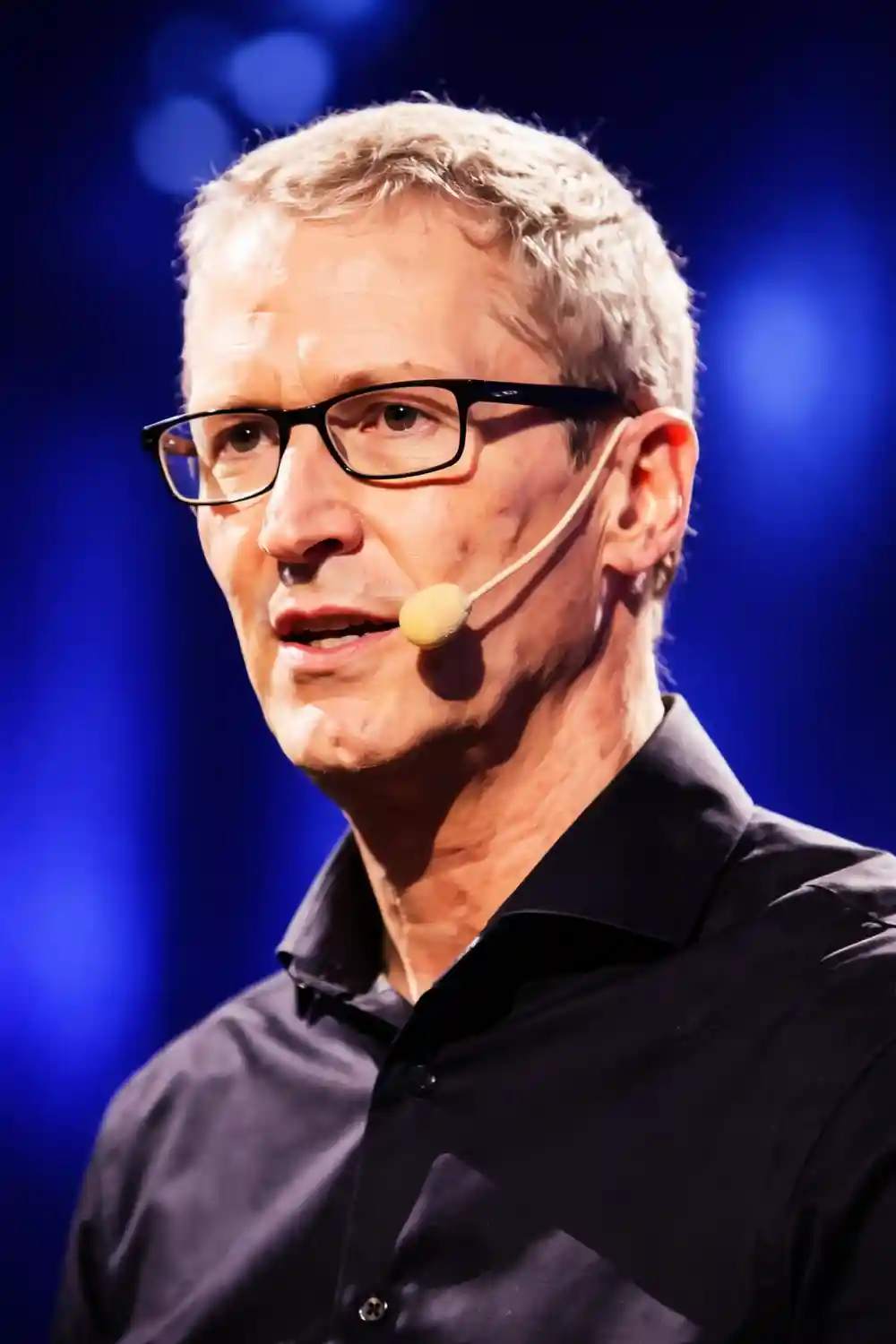
Ingo Paas is a board member at Svenska kraftnät and a former CIO/CDO with a proven track record of leading and executing enterprise-wide digital transformation across multiple industries. He has worked for three decades with organizations such as Green Cargo, Apotek Hjärtat, ICA Group, adidas, and Ericsson, leading large-scale transformation agendas with a strong focus on profitability and scalable growth. His experience includes restructuring fragmented environments into coherent, high-performing operating models and effective, data-driven operations.
In his current board assignment, Ingo contributes to strategy, infrastructure, risk, and long-term value creation, particularly in areas where AI, technology, and innovation reshape investment priorities.
Ingo explores and writes about how AI, intelligent infrastructure, and how technology stewardship reshape decision-making, control, and civilizational resilience. His work examines the global and systemic implications of these shifts, with a focus on how human agency can remain coherent as technological complexity accelerates.
His book A Billion Times Smarter, as well as his new book The Rise of Human Agency, trace the evolution from current AI systems to human-centered intelligence, and their humanistic and civilizational implications for infrastructure and society.
*The views and opinions expressed by the author do not necessarily state or reflect the views or positions of Hyperight.com or any entities they represent.