
Artificial intelligence has become the defining technology of the decade. Almost every conversation about digital transformation, innovation, and competitiveness now begins with AI. New models appear almost weekly, capabilities continue to improve at a remarkable speed, and investments reach unprecedented levels. Few technologies have generated such enthusiasm, attracted so much capital, or inspired such high expectations.
During this development, a striking paradox has emerged. Technology innovation continues to accelerate, while enterprise transformation advances much more slowly. Organizations enthusiastically adopt AI assistants, automate isolated tasks, and experiment with pilots, but relatively few create substantial new business value or fundamentally change how they operate. Despite impressive technical achievements, AI has yet to produce the broad organizational transformation that many expected.
This gap should not be mistaken for failure. AI is already reshaping scientific research, software development, healthcare, cybersecurity, and many other fields. Military systems, surveillance technologies, and industrial automation continue to demonstrate significant advances. The technology works, while the real challenge seems to lie elsewhere.
The greatest obstacle is most likely not artificial intelligence itself. It is the difficulty of transforming organizations that still depend on human-managed leadership and systems into enterprises that increasingly collaborate with intelligent technologies. Most AI initiatives enhance existing ways of working instead of redefining them. As a result, organizations improve individual tasks while leaving the surrounding business model, operating model, and decision-making structures largely unchanged.
This series explores and discusses why this gap persists. If AI is advancing at an unprecedented pace, why does enterprise-wide value remain so difficult to achieve? More importantly, what must organizations change to move beyond isolated AI applications and build intelligent capabilities that continuously create value? The answers lie less in developing smarter algorithms and more in rethinking how enterprises organize, integrate, govern, and evolve alongside intelligent technologies. It is critical for everyone engaged, from the developer all the way up to executives, boards, and owners.
The ongoing shift of enterprise AI transformation
The enterprise is undergoing a shift that is often described in technological terms but experienced as something less defined and more difficult to interpret. Artificial intelligence is introduced gradually, as a capability, initially embedded into systems and workflows, improving tasks that already exist. From this perspective, the transformation appears manageable, incremental, and aligned with how organizations have always evolved. 
Over time, a different pattern begins to emerge.
What initially appeared as an improvement starts to expose a growing tension between how the enterprise is structured and how intelligence operates. Systems adapt continuously, decisions are influenced by evolving context, and the boundary between execution and learning becomes less distinct. The organization, however, remains built on conventional patterns, including linear human-designed systems, processes, and sequential coordination.
The challenge is the persistence of a structure that we have built over decades under different conditions.
A system designed for another reality
Modern enterprises are built on the assumption that complexity can be organized, divided, and managed through defined roles, functions, and processes. This model has proven effective in environments where change is gradual and can be interpreted, planned, coordinated, and controlled over time. But suddenly, this is changing, as artificial intelligence introduces a different dynamic.
Instead of operating through linear workflows, intelligent systems respond outside traditional definitions of functions, processes, and skills. They do not depend on predefined sequences, nor do they remain confined within functional boundaries. As these capabilities slowly emerge and expand, the organization begins to encounter situations where its structure no longer supports the dynamics it faces.
The tension is not immediately disruptive. It appears in small inconsistencies, delays in coordination, and decisions that seem correct within their context but misaligned in outcome. Over time, these signals become more frequent, indicating that the environment and the enterprise are no longer operating on the same logic.

When structure becomes a constraint
In most transformations, the initial response is to strengthen what already exists. New systems are implemented, processes refined, and governance is adjusted to accommodate additional complexity and risks. These efforts assume that the organization remains fundamentally intact.
The underlying issue is not the efficiency of individual components. As intelligent capabilities expand, dependencies across the enterprise increase. Information moves faster, but alignment becomes more difficult. Decisions are made within defined areas of responsibility, while their consequences extend beyond them. The organization continues to operate as a collection of parts, while the environment increasingly behaves as a connected system. At this point, improvement reaches its limit.
What was designed to enable coordination at scale begins to introduce fragmentation under conditions of continuous change. Boundaries that once provided clarity start to restrict visibility. Control mechanisms designed for stability begin to slow adaptation. The structure remains coherent in isolation, but less so in reality.
The emergence of a different logic
As this tension becomes more visible, a different way of understanding the enterprise begins to take shape. The organization can no longer be described only by its structure, its processes, or its defined roles. Its effectiveness increasingly depends on how it interprets information, how it adapts to new conditions, and how it coordinates decisions across changing contexts.
This leads to a simple but consequential realization. The enterprise is not evolving through incremental improvement but slightly transitioning into a system defined by its ability to process and apply intelligence.
This shift does not change the organization and its structural capabilities immediately. It unfolds gradually, as intelligence becomes embedded in infrastructure, decision-making, and coordination. What changes is not only what the enterprise does, but how it operates as a system.
The beginning of a broader transformation
Once the enterprise is understood in this way, the implications extend beyond a single function or capability.
Leadership can no longer rely solely on experience derived from stable conditions. Strategy is no longer defined as a fixed direction over time. Governance cannot depend exclusively on control and compliance mechanisms. Execution is no longer a separate phase following decision-making. Infrastructure begins to carry intelligence rather than simply supporting operations. Resilience becomes linked to adaptation rather than resistance.
Each of these areas reflects a different dimension of the same underlying transition.
They are not independent challenges but connected expressions of a system that is changing its nature. As intelligence becomes embedded, the enterprise begins to operate less as a coordinated structure and more as an adaptive system.
A shift that extends beyond the enterprise
This transformation does not remain within individual organizations. As enterprises evolve in similar directions, they begin to interact differently. Information flows more freely, coordination extends across boundaries, and capabilities are combined in new ways. Over time, the distinction between organization and environment becomes less defined.
What emerges is not only a different type of enterprise but the early formation of a broader intelligence-driven infrastructure in which enterprises operate as part of a larger system.
This development is gradual and often difficult to observe in isolation. It suggests that the transformation underway is not limited to how organizations function internally, but how economic systems themselves are formed and coordinated.
Entering the adaptive enterprise
If the enterprise is no longer defined primarily by its structure, but by its capacity to operate as an intelligence-driven system, then the assumptions that once made it manageable begin to lose their reliability.
Conditions are changing, initiated by new opportunities, new investments, and new technologies and related skills. This has an impact on how organizations must drive their strategies from idea to execution. At the same time, leadership can no longer depend on experience formed under stable conditions, as the context in which decisions are made continues to evolve while they are being interpreted. Strategy loses its ability to define direction in advance, as the conditions it seeks to address refuse to remain fixed long enough to be fully understood. Governance, designed to ensure control and consistency, begins to encounter situations where alignment cannot be enforced, but must instead emerge. These shifts do not occur independently.
The impact on enterprise transformation
They begin to influence how decisions are made, how actions are coordinated, and how outcomes are produced across the enterprise. Execution no longer follows from planning alone, but becomes inseparable from interpretation and adaptation. Infrastructure, once positioned to support the organization, starts to shape how intelligence moves, connects, and is applied. Resilience no longer depends on stability, but on the capacity to adjust without losing coherence. As these dimensions evolve, the enterprise starts to behave differently.
What once required coordination through structure begins to unfold through interaction across systems. Dependencies become more visible, but less predictable. Capabilities extend beyond defined boundaries, connecting in ways that cannot be fully directed or contained. The distinction between what belongs to the organization and what lies outside it becomes less precise, as interaction expands into a broader system of exchange and adaptation.
Under these conditions, competition is no longer determined primarily by scale, position, or efficiency. It begins to reflect differences in how enterprises interpret change, apply intelligence, and coordinate action over time. The advantage shifts, but not in a way that can be isolated to a single capability or decision.
This transformation requires a systemic change, not just projects
The difficulty is that these changes do not present themselves as a single transformation.
They appear across multiple areas that were once understood separately, yet are now influenced by a shared logic that is only beginning to take shape. The enterprise continues to function, but with diminishing clarity about how its underlying system operates and where its boundaries truly exist.
At this point, the question is no longer whether the enterprise is changing. It is whether it can understand the conditions under which it must now operate. What defines it is that understanding does not reside in any single layer of the organization. It emerges through the interaction of leadership, structure, decision-making, infrastructure, and the environment itself, each evolving in relation to the others. This is not a question that can be resolved from a single perspective.
It requires entering the system, examining how each dimension changes when intelligence becomes the underlying condition rather than an added capability, and recognizing that what is changing is not only how the enterprise operates, but what it is becoming part of.
This is where the exploration begins.
Welcome to an exploration of the Intelligent Enterprise
This introduction marks the beginning of an ongoing exploration rather than the presentation of a finished theory. Artificial intelligence is evolving too rapidly for definitive conclusions, while its organizational implications are only beginning to emerge.
The purpose of this exploration is less about prescribing what enterprises should become and more about examining the questions, observable patterns, and structural shifts that increasingly shape their evolution and outcomes. Each series approaches this transformation from a different perspective, gradually building a broader understanding of the Intelligent Enterprise while inviting readers to challenge assumptions, contribute observations, and expand the discussion as new insights emerge.
I invite you to join this exploration. Together, we can study emerging patterns, question established assumptions, and discuss the systemic implications of enterprises that increasingly operate through intelligence.
This exploration begins with observation rather than prediction and continues through dialogue rather than conclusion.
About the author
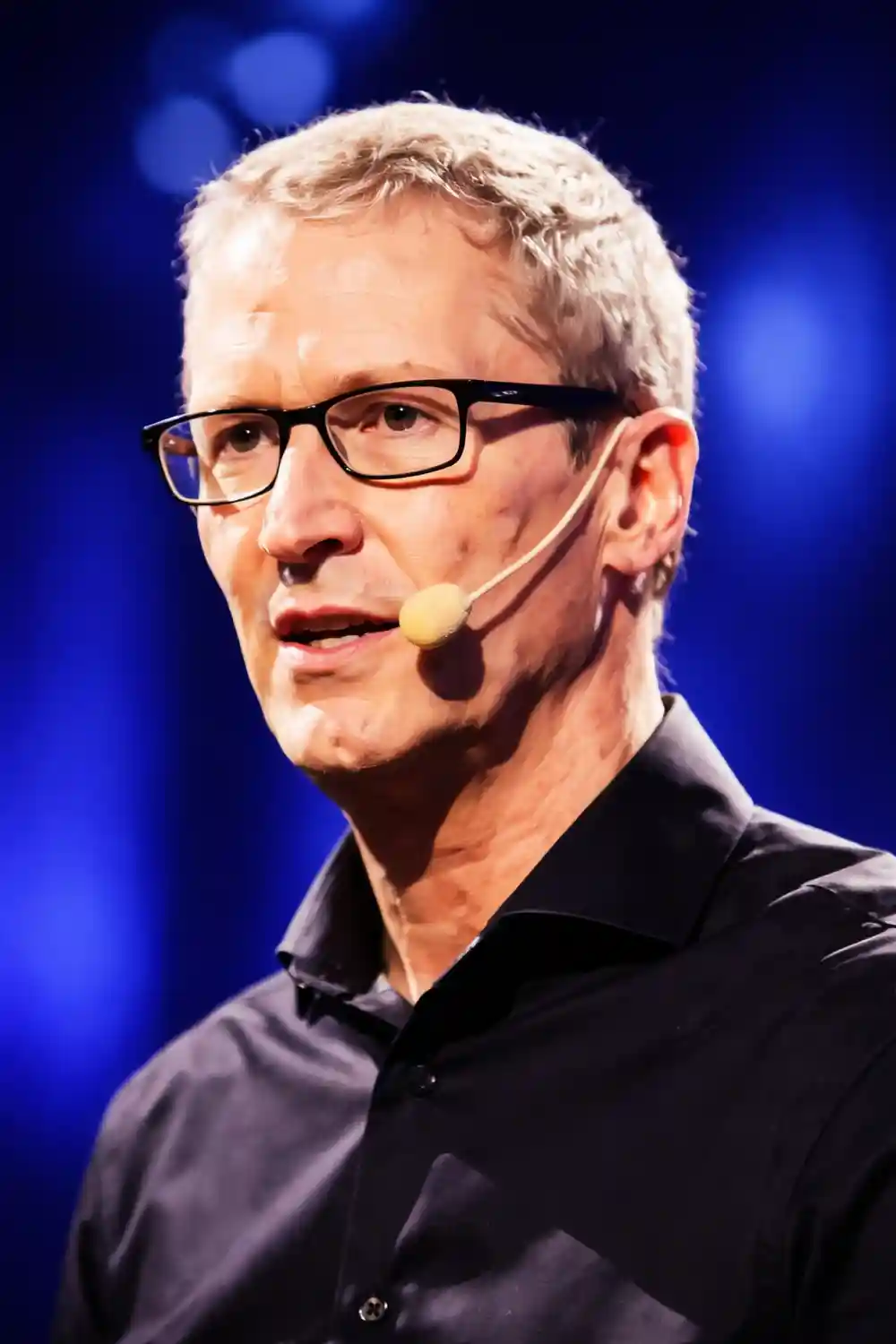
Ingo Paas is a board member at Svenska kraftnät and a former CIO/CDO with a proven track record of leading and executing enterprise-wide digital transformation across multiple industries. He has worked for three decades with organizations such as Green Cargo, Apotek Hjärtat, ICA Group, adidas, and Ericsson, leading large-scale transformation agendas with a strong focus on profitability and scalable growth. His experience includes restructuring fragmented environments into coherent, high-performing operating models and effective, data-driven operations.
In his current board assignment, Ingo contributes to strategy, infrastructure, risk, and long-term value creation, particularly in areas where AI, technology, and innovation reshape investment priorities.
Ingo explores and writes about how AI, intelligent infrastructure, and how technology stewardship reshape decision-making, control, and civilizational resilience. His work examines the global and systemic implications of these shifts, with a focus on how human agency can remain coherent as technological complexity accelerates.
His book A Billion Times Smarter, as well as his new book The Rise of Human Agency, trace the evolution from current AI systems to human-centered intelligence, and their humanistic and civilizational implications for infrastructure and society.
*The views and opinions expressed by the author do not necessarily state or reflect the views or positions of Hyperight.com or any entities they represent.