
In the pursuit of the Autonomous Enterprise, the industry has spent years perfecting the foundation of an AI strategy: high-speed pipes, master data alignment, and sleek data products. But many of these sophisticated architectures are hitting a cognitive ceiling. The culprit most likely is the widening context gap.
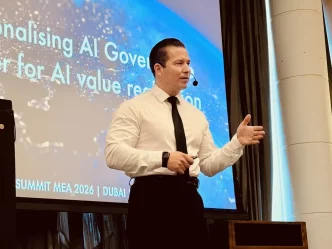
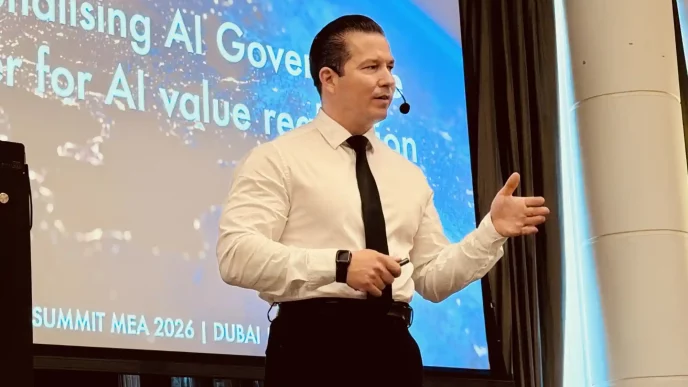
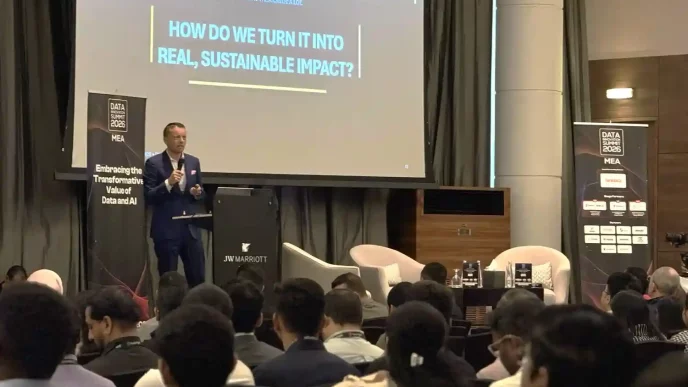
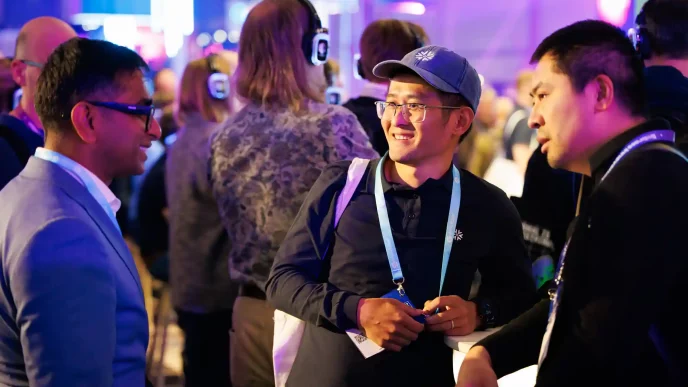
Deepak Yadav is a veteran with 18 years of experience at Amazon and AT&T. He took the stage at the Data Innovation Summit to show how AI is finally dismantling the shaky bridge of traditional data engineering.
Why Traditional Pipelines are “Rocky Roads”
Despite a decade of modernization, the traditional data journey remains a manual slog. Deepak shared one interesting reality from his time at AT&T: analysts often spent two to three weeks just extracting data for a single business use case.
The industry metrics back this up: approximately 68% of enterprise data currently lies unused, trapped in legacy systems. To get value out of this dark data, engineers traditionally perform a manual marathon of extraction, warehousing, and transformation. Even then, 27% of data remains inaccurate, leading to persistent quality issues that checks and balances fail to catch.
From Reactive to Self-Healing
At Amazon, the “on-call” culture is a rigorous test of engineering efficiency. Traditionally, engineers spend a massive portion of their quarter deep-diving into false alarms which are anomalies caused by valid business reasons like Prime Day seasonality or specific prime launches.
Deepak’s session explores how Self-Healing Pipelines and AI-powered anomaly detection are changing the game. By utilizing algorithms like Random Cut Forest (RCF) within tools like Amazon QuickSight, teams are now moving away from rigid, manual rule. Instead, AI gauges historical seasonality to distinguish between a real system failure and a predictable business surge. The result is 50% fewer false positives and a dramatic increase in engineering productivity. 
Agentic Code Generation
Perhaps the most disruptive shift discussed is the transition from manual coding to Agentic Orchestration. Deepak detailed a recent use case involving complex multi-tab Excel automation for financial closing which is a process that typically requires four to five weeks of manual Scala and Spark development.
By implementing Prompt Engineering and Claude-based agents, his team transformed the workflow:
- Agentic Ingestion: Agents read business-specific requirement sheets and mapping rules.
- Semantic Chunking: Data is processed through LLMs to understand the “intent” behind the logic.
- Automated Generation: The system outputs production-ready Scala and Spark code.
What used to be a month-long development cycle is now wrapped up in less than one week.
Strategy: Starting Small in a Data-Driven Culture
For practitioners looking to adopt these strategies, the message is that they shouldn’t go big immediately. The roadmap for future data journey involves:
- Identifying the Pain Point: Focus on the recurring “month-end close” frustrations of your customers.
- Prototyping: Build small experiments, review with stakeholders early, and iterate.
- Universal Access: Empower non-technical users (like accountants) to query data via Natural Language Processing (NLP) so they can innovate without writing a single line of SQL.
Deepak’s full session provides a deep dive into the technical implementation of Amazon Q – a chatbot developed by Amazon for enterprise use, and it will be used for data labeling, the specifics of Smart Data Lineage, and the metrics behind Amazon’s internal efficiency gains.
Subscribe to Hyperight Premium to watch the full video from our Data Innovation Summit 2025 edition and unlock the blueprints for the next generation of data engineering.
Join the 11th edition of Data Innovation Summit in Stockholm, Sweden (In-person & Online) from 6–8 May 2026 where the focus will be Applied AI, Data Engineering, Physical AI, and Generative AI for Enterprise.