The rapid acceleration of AI has fundamentally changed the professional landscape, rendering traditional technical benchmarks secondary to the ability to evolve. In this discussion, Natalie Halimi, Principal Product Manager at Booking.com, argues that by moving beyond task-based execution toward strategic orchestration and ethical reasoning, tech professionals can pivot from being tool-dependent to becoming architects of human potential. This conversation offers a roadmap for navigating the cognitive era of technology, where the redistribution of tasks between humans and models defines the new standard for organizational excellence.
How can tech teams remain relevant when the shelf life of technical mastery is shrinking faster than ever? This is the question driving the work of Natalie Halimi, a Principal Product Manager at Booking.com and a seasoned AI strategist focused on bridging technology and human potential.
After driving key AI initiatives at Booking.com, Natalie co-founded Product Leap AI to help organizations navigate the shift toward AI-driven ways of working. We sat down with Natalie to explore the transition to a “skills-plus-adaptation” era and the necessity of building structures that allow teams to evolve continuously rather than in one-off waves. She breaks down why the AI revolution-centered on human cognition-is fundamentally different from any technological wave of the past.
AI is rapidly reshaping how teams build, decide, and collaborate. Why is adaptability rather than just technical mastery becoming the most important skill for future-ready teams?

Natalie Halimi: Mastery is still important, but it depreciates faster than ever. The amount of time a technical skill stays relevant before becoming outdated is getting much shorter. What matters most now is not only what you know at the moment, but how quickly you can integrate, apply, and evolve with new tools and skills. Over the past year or so the market has been moving from qualifications-first to skills-first, specifically around AI topics.

I believe it will gradually shift again toward a skills-plus-qualifications era, where continuous adaptation is the differentiator.
AI is changing the nature of work in two key ways. First, through augmentation, where AI automates routine tasks and frees humans to focus on judgment, strategy, and creative problem solving as well as on newly acquired tech skills. Second, through acceleration, as AI compresses the time between idea and execution. This forces teams to operate with more fluidity and closer collaboration, where that collaboration now requires a shared AI literacy. Adaptability becomes the new currency because learning must be continuous to keep pace with rapid technological change, and individuals must not be afraid to fluidly shift across domains as boundaries between crafts blur. I believe that organizations that cultivate adaptability outperform those that only hire for technical depth.
How is AI changing the core skillsets required in product, data, and engineering roles? What new expectations are emerging, and how should individuals respond?
Natalie Halimi: AI does not replace roles; it changes task distributions within roles. Across product, data, and engineering, we see two layers surfacing. The first involves augmented skills that AI handles well, such as code generation, boilerplate setup, data retrieval, SQL generation, and documentation drafting. These are tasks that used to differentiate junior from mid-level contributors, but AI now performs much of this instantly.
The second layer consists of emerging human skills where people must now excel. Humans play a critical role in defining how AI performs these tasks and have the responsibility of examining the outputs of AI to ensure quality and integrity in work. We are looking at things like designing for AI systems, evaluating and validating model behaviour, and ethical decision-making. Alongside these, we also see more space for any craft, including engineers and data analysts, to increase their contribution to business, product, and strategic understanding. In short, individuals must shift from task execution to problem framing, orchestration, and high-context decision-making.
Beyond technical fluency, what human capabilities are becoming essential in AI-driven organizations?
Natalie Halimi: Three categories stand out. First is advanced thinking and communication, as teams need people who can articulate complex problems, evaluate trade-offs, and communicate uncertainty, especially when AI systems introduce new failure modes. Second is strategic and product understanding. As AI blurs functional boundaries, everyone from engineers to data scientists must understand customer needs, value drivers, and business strategy.
Finally, ethical reasoning and responsible decision-making are essential. As AI starts shaping more user experiences, thinking about ethics cannot be an afterthought. Human judgment still matters. AI is powerful, but it makes mistakes, not only the hallucinations we see in generative models but also biases and errors that have existed in traditional machine learning for years. Key contributors in the future of tech are those who spot these risks early, understand their impact, and design systems that reduce them. That is where human thinking, collaboration, and empathy continue to play a critical role.
There’s a well-recognized gap between formal education and applied AI skills in the workplace. What are some practical ways academia, industry, and individuals can work together to bridge this divide?
Natalie Halimi: This gap exists because industry moves exponentially while education changes more gradually. Academia is starting to accelerate, but today’s job market still has a major shortage of formal AI credentials, which is driving a skills-first hiring approach. That shift makes sense in the short term, but it is not sustainable. Over time, the real advantage will belong to people who combine strong practical skills with solid academic foundations. To get there, the industry needs to play a more active role in shaping curricula and clarifying what current and future AI-driven roles actually require. Individuals should continue strengthening their practical skills and experimenting with areas that might be outside of their comfort zone, while simultaneously keeping an eye out for any certificates, academic or otherwise, that can build up an official credential portfolio.
How has this focus on adaptability and continuous upskilling translated into real value for teams and businesses you’ve worked with?
Natalie Halimi: Organizations I work with see three clear benefits. The first is faster delivery cycles. Teams equipped with AI literacy and adaptive workflows deliver features and experiments dramatically faster because they can leverage automation and make decisions with greater clarity. The second is stronger cross-functional collaboration. As roles blur, shared AI understanding breaks silos. Data, ML, product, and engineering start speaking the same language, all driven by one mission to deliver the customer promise. Finally, there is better AI product development and responsible innovation. Adaptive teams build safer, higher-value systems because they do not treat AI as a black box; they evaluate, monitor, and question AI outputs with rigor. Ultimately, adaptability is not just a cultural asset; it becomes a business multiplier.
Finally, what advice would you give to organizations that want to prepare their tech teams not just for the current wave of AI, but for the next phase of change still to come?
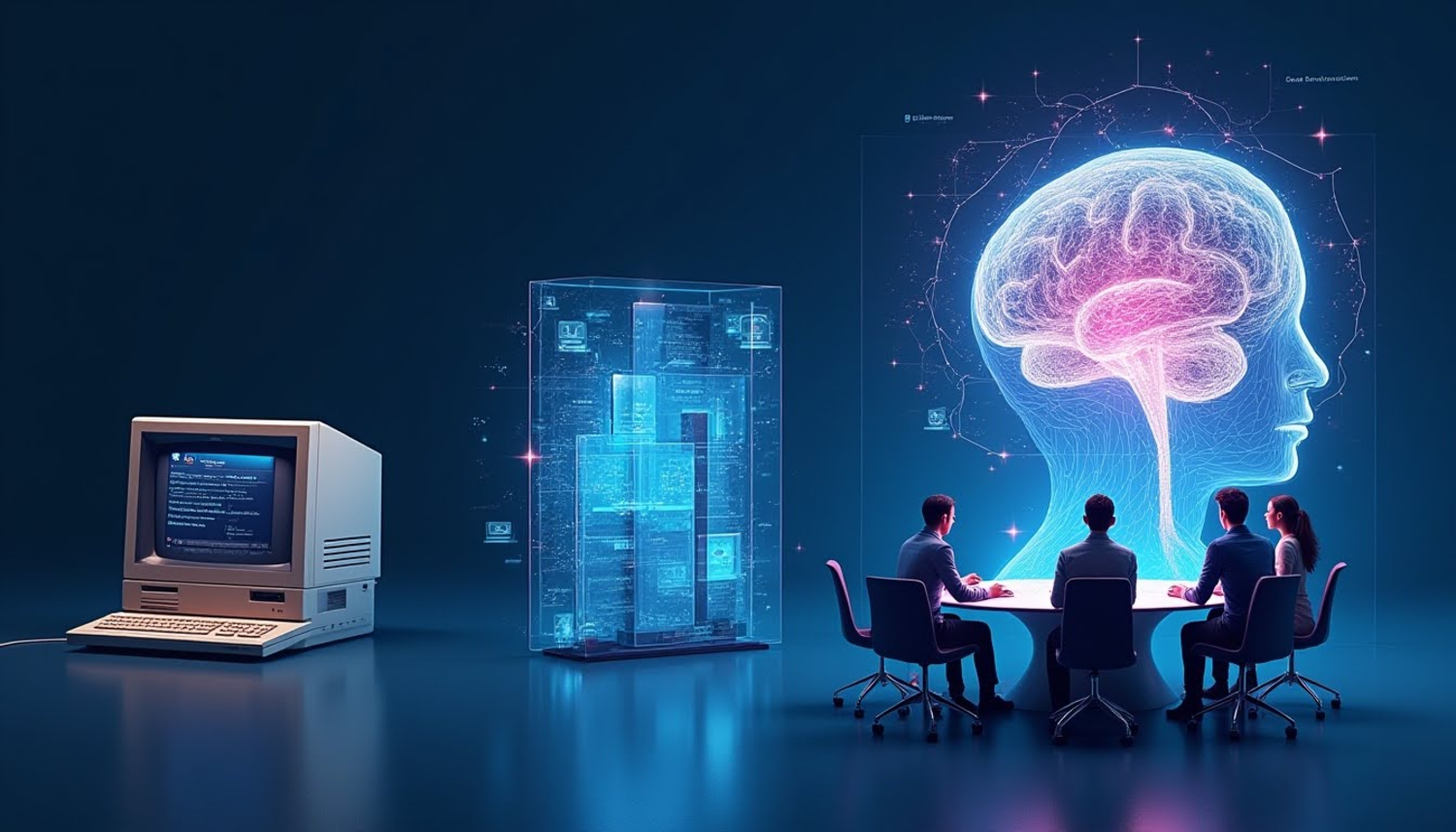
Natalie Halimi: Learn from the past. The Generative AI wave of innovation is not the first disruptor in the modern tech era. Not so long ago we had the mobile apps wave, and before that the commercial internet or dot com wave. In both of these, roles shifted in a similar way as we see today, with both emerging and augmented skills being created. However, there is a key differentiator when it comes to Generative AI. In the dot com and mobile apps waves, the change primarily revolved around a physical space, like a screen or a device. With AI, the change is revolving around human cognition.
You do not just have to specialize in a new space, and you do not just change the way you work, but you also change the way you think and perceive your surroundings. Perceptions we had before about what is possible and what is not are completely shifting, and that requires us to adopt a completely new mental model. We are no longer just building tools; we are evolving the very way we process and create information.
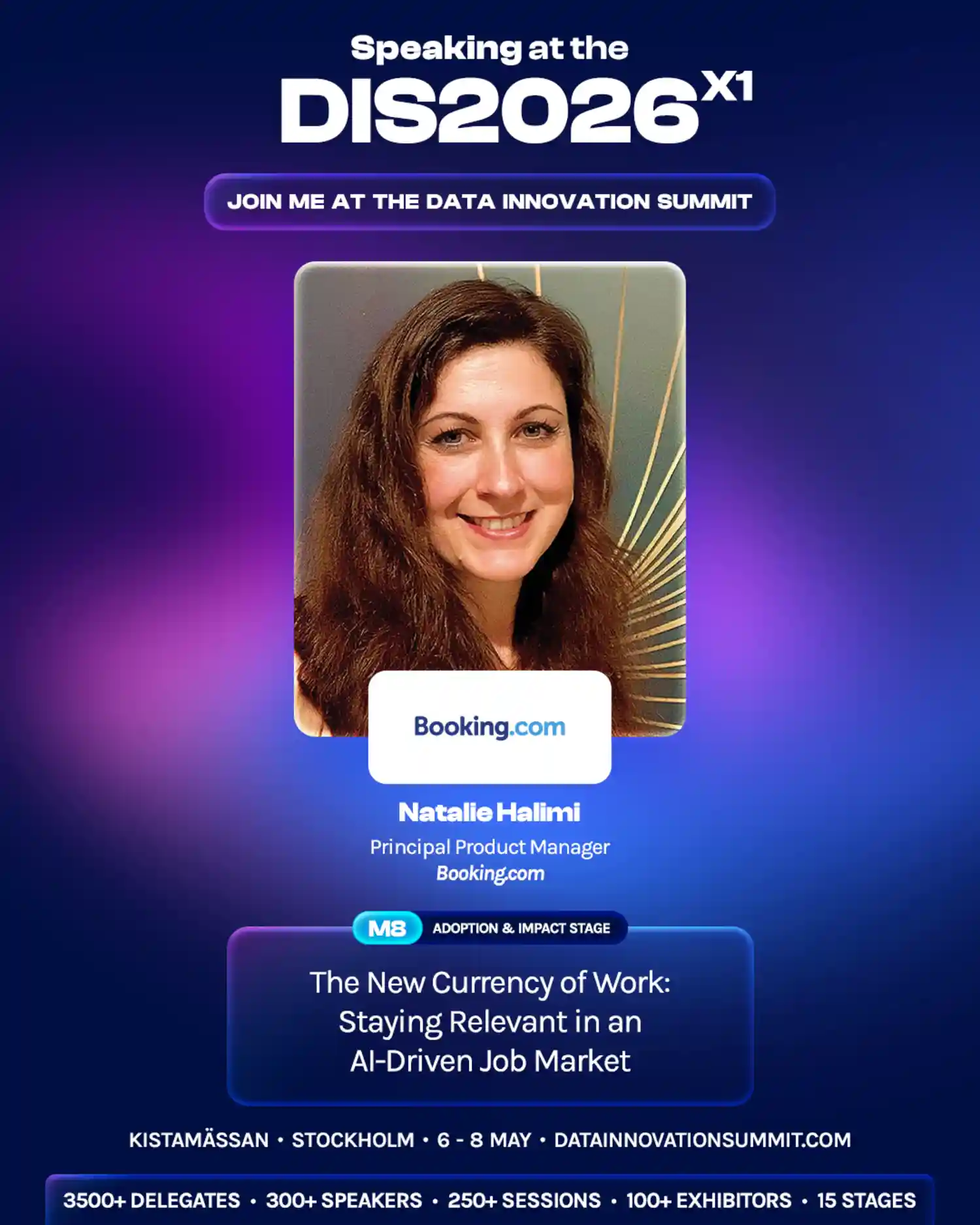
If you want to dive deeper into the frameworks of adaptability and continuous evolution, don’t miss Natalie Halimi at the Data Innovation Summit 2026. Her session, “From Mastering Tools to Mastering Adaptability,” moves beyond the theory of AI transformation to provide a practical playbook for staying future-ready in an era where learning agility has become the new currency of work.
Secure your spot to engage with these insights firsthand and learn how to turn the challenge of rapid AI evolution into a personal and organizational competitive advantage.