It is no longer a secret that success with Enterprise AI extends far beyond the ML model. In an enterprise setting, the algorithm itself typically contributes only 10–20% of the solution’s value; the remaining 80% comes from the ecosystem surrounding it. In this interview, Fredrik Thuring, Head of Operational Analytics at Tryg Insurance, explains why a culture of curiosity, “human-in-the-loop” trust, and seamless business-tech collaboration is the key to real impact.

AI technologies are reshaping how organizations solve problems, yet success depends on more than the models themselves. We sat down with Fredrik Thuring, Head of Operational Analytics at Tryg Insurance, to explore the human side of tech. Through his work, he has discovered that the true catalyst for effective AI isn’t just code, but the synergy between people and culture.
With a background in engineering physics (M.Sc.) and mathematics (Ph.D.), Thuring oversees the implementation of machine learning solutions across claims, underwriting, and internal processes. Rather than focusing solely on the math, he prioritizes curiosity-driven exploration and a culture that treats experimentation as a necessity rather than a risk.
According to Thuring, the transition from theoretical exercise to measurable impact requires a unique leadership style-one that provides clear strategic direction while trusting teams to navigate the solution. By bridging the gap between business needs and technical execution, organizations can move past the hype and deliver real-world results.
In your experience, what does it truly mean to build a culture of innovation when it comes to AI or Gen AI projects?
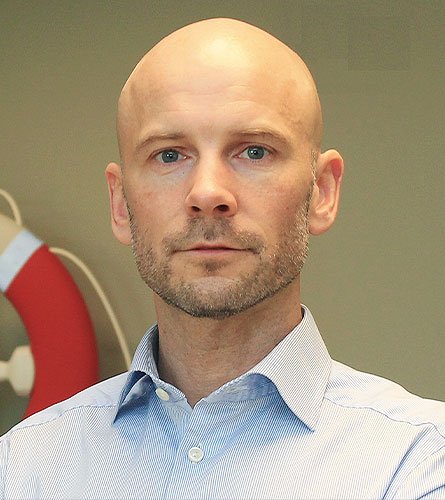
Fredrik Thuring: Personally, I believe in collecting a group of highly intelligent team-players, giving them direction and a proper set of tools and (as a leader) being present and allowing for mistakes. This is especially true when solving a problem with genAI since it’s very hard to assess how near or far you are from a viable solution. 
What are the cultural or mindset shifts that organizations need to embrace before they can successfully implement AI?
Fredrik Thuring: In a short sentence: try to avoid “AI-ify” an existing (and sometimes bad) process. This is a transformational technique – old and existing problems are now solvable in a whole new way. We are in a position where tech is seldom the limiting factor – our imagination is.
Why is it so important for business and AI teams to collaborate closely from the start of a project? How can organizations embed that collaboration into their culture?
Fredrik Thuring: I’ve seen so many examples where the AI team has worked on something brilliant but when they are ready, the business isn’t. And the other way around where the business has a (crazy) idea of an optimal process but can’t confirm it’s brilliance by someone. Quite simply there are often two parties in a company: one with knowledge of what’s needed and one with knowledge of what can be done – and those two should interact closely, often and freely.
How do you foster trust and transparency in AI solutions among stakeholders who may not fully understand the technology?
Fredrik Thuring: Gradual “human in the loop” transition. Start with the AI just making non-intrusive shadow work, when you see it’s performance be on par or better than the human performance, make it a more significant part of the process and then finally turning the table so that the AI is doing the real work and the human is doing the shadow work on a sample to verify consistency. In this way, anomalies are early and easily detected and rectified.
What role does leadership play in enabling or hindering innovation with AI? Can innovation succeed through bottom-up efforts, or does it require top-down support?
Fredrik Thuring: Leadership, but especially culture, plays a huge role. This technique can turn things on its head and revolutionize a business or market – but it requires the right minds and some courage –it’s not risk free. But connecting people from all across the organization, starting small and being meticulous about performance measurements helps. From the top, you need to set a direction and show trust and from the bottom you need to be curious and “show agency” about change.
How do you balance the excitement around Gen AI with the need for responsible experimentation – especially in regulated industries like insurance?
Fredrik Thuring: Legal and compliance present in the development from the get go! The AI team and the business should be able to demand a clear framework for data protection, business risks and IT security. With genAI especially there are practical things to do to ensure data protection and compliance such as isolating your request/response data from future training use or hosting an LLM on prem.
What practical steps can other organizations take to build a culture that supports AI innovation – not just for individual projects, but across teams and time?
Fredrik Thuring: Build on peoples’ curiosity, connect colleagues across the organization and create a culture that allows for trial and error. Also make sure you have a tech stack where data is available, training and deployment is not cumbersome and be relentless in pulling the plug on under-performing applications (and measure meticulously to know which ones does).
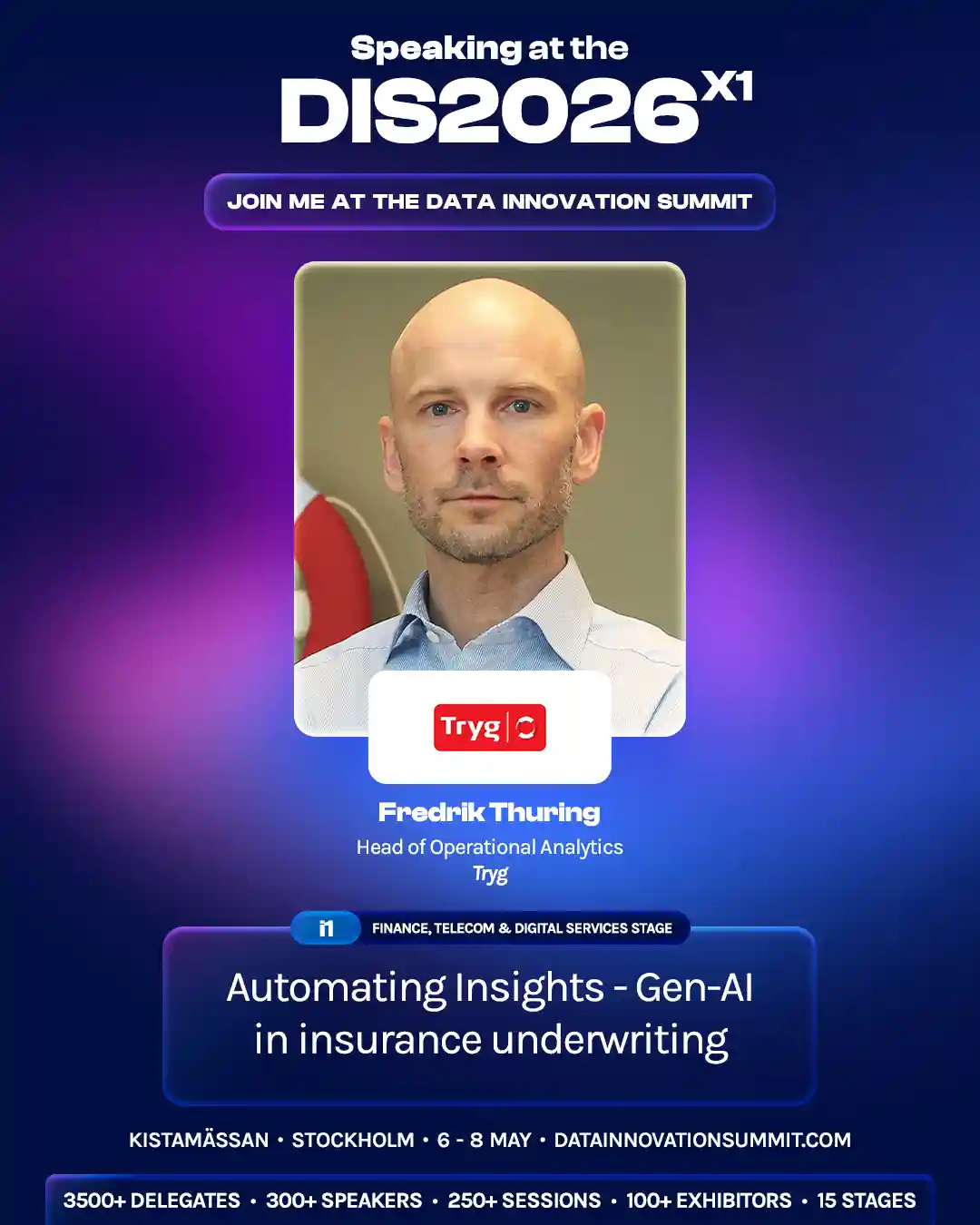
For anyone looking to understand how generative AI can enhance commercial underwriting, Fredrik Thuring’s session at the Data Innovation Summit 2026 is a must-attend. He will explore a framework that combines LLMs with structured data, risk classification, and decision support, showing how AI can automate document parsing, extract key risk factors, and generate underwriting narratives.
The session also covers practical insights on integrating GenAI into workflows, ensuring reliability and compliance, and implementing governance with model validation and human-in-the-loop safeguards. Attendees will leave with a clear understanding of how to deploy GenAI safely and effectively in production environments.