The promise of Enterprise AI is no longer a futuristic concept. Organizations are racing to deploy agentic workflows, predictive engines, and next-generation customer experiences. But as the initial hype of generative models settles, one reality is setting in for the people actually tasked with making it work.
The most sophisticated neural network in the world is effectively a high-speed engine with no fuel…or worse, fuel contaminated by decades of fragmented legacy systems.
The “Consumer AI” Delusion
A fundamental misunderstanding exists between the technology found in a pocket and the operations occurring within a data center. Consumer AI, typified by assistants like Alexa or Siri, is designed to mimic human intuition which is a task humans are naturally built to understand and comprehend.
Enterprise AI serves a different purpose. It is tasked with solving problems humans are inherently ill-equipped to handle: identifying a single, subtle anomaly within billions of data points or reconciling identical customer profiles hidden under different aliases across a dozen regional silos. When the stakes shift from an incorrect song choice to a regulatory violation or a multi-million dollar credit miscalculation, the margin for error effectively evaporates.
The Five-Step Cycle of Performance
Transitioning from a flashy pilot program into a business motion requires AI to navigate a rigorous five-stage lifecycle. While many organizations focus heavily on the “Prediction” phase due to its high visibility, true progress involves a quiet obsession with the surrounding stages:
- Discovery: Identifying patterns across silos previously thought to be disconnected.
- Prediction: Utilizing the commoditized engine, which remains powerful but only as effective as its inputs.
- Justification: Addressing the reality that “Black Box” models are no longer acceptable. A regulator should request an audit, a human-readable trail of why a decision was made essential.
- Action: Delivering insights to the appropriate stakeholder in milliseconds rather than days.
- Learning: Creating a closed-loop system where the data model evolves as rapidly as the business itself.
The Trust Gap and the “Silo of Silos”
The past decade was spent attempting to dismantle silos, only to inadvertently create a new one: the AI Silo. Data is often consolidated for a specific initiative, only for the model to reveal that the information is already outdated by the time training is complete. 
This creates a “Trust Gap.” While leadership may invest heavily in elite data science talent, results often remain under scrutiny because the foundation is built on unstable ground. Without a unified, governed, and real-time data layer, AI becomes a liability rather than an asset. This explains why some of the most advanced institutions in the world continue to pause their most ambitious projects and that is not because the AI failed, but because internal risk teams could not verify the data feeding it.
Beyond the Algorithm
The next generation of “Agentic AI” demands more than just a Large Language Model (LLM). It requires a foundation capable of handling critical, non-functional requirements:
- Massive Scalability: Infrastructure must handle 1.5 billion entries with sub-100 millisecond latency.
- Immutable Lineage: Every edit and entry must be traceable back to its source for an offline audit.
- Interoperability: Data cannot remain locked in a relational cage – it must flow downstream to every consumer in real-time.
Unlocking the Foundation
Navigating the friction between innovation and regulation, or recognizing that AI “hallucinations” often stem from poor data quality, marks a critical turning point for any organization.
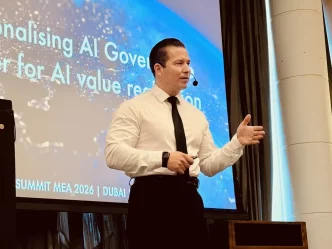
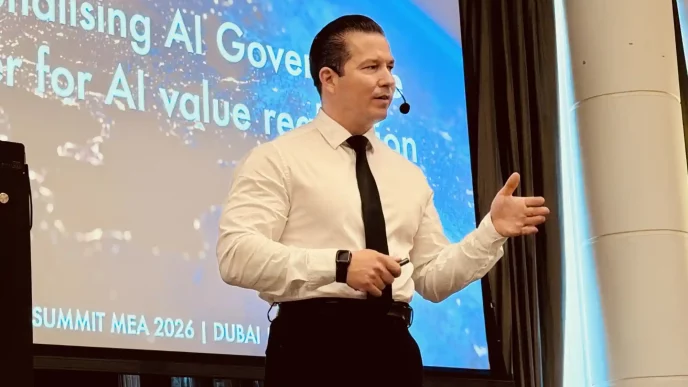
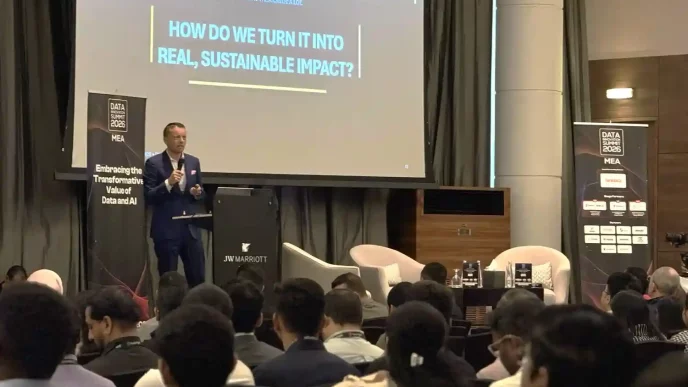
This DIS talk mapped out how high-velocity data management transforms AI from a risky experiment into a scalable enterprise motion. The conversation explored the transition from traditional SQL models to interconnected graph databases and detailed how the most regulated industries are solving the data unification problem.
The blueprint for a solid AI foundation is no longer a secret, though it does require a fundamental change in perspective.
This preview is part of our Premium Videos.
Sign up to see the whole DIS talk: Why AI without Solid Data Foundation is Complete Distraction
Speaker: Chris Lowe, Reltio