
AI is no longer a future ambition. It is already shaping how decisions are made, how products are built, and how companies compete. Yet across industries, many AI initiatives do not fail because the technology doesn’t work. They fail because trust does not scale.
Models perform well in pilots. Data platforms are technically sound. Automation shows early promise. But when AI moves closer to customers, regulators, and real-world impact, something changes. Confidence wavers. Questions multiply. Momentum slows. Boards hesitate. Executives pause. Adoption stalls.
What breaks in these moments is not the algorithm but rather organizational trust. In an era defined by AI and robotics, trust is an operational requirement rather than a soft concept. This means the function responsible for sustaining that trust can no longer operate in the background. Security has officially become a business strategy.
Models perform well in pilots. Data platforms are technically sound. Automation shows early promise. But when AI moves closer to customers, regulators, and real-world impact, something changes. Confidence wavers. Questions multiply. Momentum slows.
AI doesn’t stall on technology – it stalls on confidence
AI transformation introduces a new reality where systems do not merely support the business but increasingly become the business. They influence decisions, shape customer experiences, and interact with physical systems. When something goes wrong, the impact is immediate. This is why the success of AI is now determined less by technical capability and more by confidence at the leadership level. Leaders must feel certain that systems are resilient, data is protected, and risks are understood. 
For leaders responsible for data, innovation, and AI, this creates a difficult tension. You are expected to move faster than ever while the cost of mistakes has never been higher. In such an environment, security can easily feel like friction – another review, another constraint, another delay. But this is where a critical misunderstanding takes root.
Security is not what slows AI down. Lack of trust is.
Speed and security are not rivals – they are partners
The fastest organizations are not those that ignore risk. They are the ones that understand risk well enough to keep accelerating. In high-performance environments like motorsport, winning is never about choosing between speed and control. It is about mastering both. A race car does not win by avoiding the brakes. It wins because the driver knows exactly how to stay on the track while maintaining velocity.
The same is true for AI-driven organizations. When security is treated as a late-stage gate, innovation feels constrained. When security is embedded into architecture and decision-making, leaders gain something far more valuable than approval. They gain permission to move fast, repeatedly and at scale.
What AI leaders actually need from security
Most AI, data, and innovation leaders are not asking for more policies or controls. They are asking for clarity and confidence. They need clear rules of the road and secure, pre-approved architectural patterns. They need early partnership instead of late inspection and risk conversations framed in business terms. They want fewer no’s and more here’s how. The security teams that earn lasting executive trust are the ones that show up not as auditors but as innovation partners.
The most powerful sentence a security leader can say to an AI leader is simple. We want you to move fast. Here is how we can do it safely together. When that happens, culture shifts. And when culture shifts, transformation accelerates.
The quiet risk no one talks about: losing executive attention
Security programs rarely fail overnight. They erode. Attention drifts. Resources thin. Influence shrinks. Strategy becomes tactical. Talent disengages. Ironically, this erosion often happens not after a breach but during long periods of apparent stability when security becomes disconnected from business value.
AI changes this equation. AI now sits at the intersection of brand reputation, regulatory scrutiny, intellectual property, customer trust, and physical and digital safety. That makes security inseparable from enterprise leadership. Executives will not stay engaged with security because of fear or compliance alone. They will stay engaged because they recognize a simple truth. Their AI strategy cannot succeed without a security strategy they trust.
Security is about protecting momentum, not just assets
Most leaders driving AI transformation want to build something that lasts. Security’s role is not to eliminate risk because that has never been realistic. Security’s role is to ensure that risk is intentional, understood, and survivable so innovation can continue when, not if, friction appears.
That means protecting the innovation pipeline along with data, models, and intellectual property. It means protecting the organization’s ability to recover and keep moving. The outcome is not perfection. The outcome is resilience with momentum.
What winning organizations will have in common
By 2030, AI will be embedded into nearly everything that matters in business. The organizations that succeed will be led by executives who build trust into design rather than press releases. They will treat security as infrastructure instead of insurance and align the CIO, CAIO, and CISO as co-architects of transformation. They understand that confidence is what allows AI to scale.
In those organizations, security is involved early rather than late. Innovation and security share a common language. Trust is measured, governed, and reinforced. Customers feel safe adopting AI-driven products. The organizations that struggle will not be the slowest movers. They will be the ones that moved fast once, lost trust, and never fully recovered.
A closing thought for AI and security leaders alike
AI does not fail because algorithms are weak. It fails when organizations are not confident enough to stand behind them. Security is no longer a background function. It is the foundation that determines whether AI becomes a competitive advantage or an expensive experiment. The leaders who define the next era of innovation will not choose between speed and security. They will master the balance. In the age of AI, speed may win the race, but trust is what allows you to finish it again and again.
About the Author
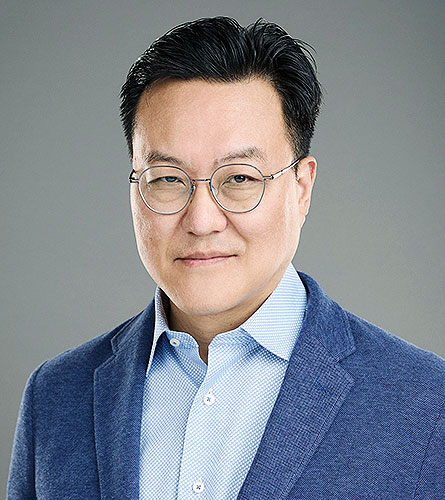
Kevin T. Shin is the global security strategy lead for Samsung Semiconductor Inc., overseeing protection and resilience for advanced R&D and operations across the United States. A U.S. Army veteran and former Infantry Major, he applies mission-driven leadership to align cybersecurity and AI with large-scale business objectives. With over two decades of experience, Kevin specializes in safeguarding innovation and accelerating digital transformation through disciplined execution. He is a recognized thought leader focused on the intersection of trust, governance, and organizational excellence.
Data Innovation Summit 2026: Leading the Future of Intelligent Enterprise
To see Kevin T. Shin’s strategies in action, join us this May for the 11 th edition of the Data Innovation Summit, the premier gathering for leaders in data, analytics, and AI.
We are honoured to feature him as a keynote speaker. His session, The Trust Architecture: Why AI Strategy is Security Strategy, explores how next-generation security enables trust, speed, and resilience across AI-driven organizations. Drawing on real-world lessons from Silicon Valley, Kevin will share how integrating security into infrastructure transforms it from a control function into a core engine of digital transformation.
Attendees will learn how to design zero-trust infrastructure for AI R&D and implement Security Fusion Center models to drive global scalability. Kevin will also demonstrate why leaders must master the balance between speed and cybersecurity to succeed in an era where innovation moves at lightning speed.
*The views and opinions expressed by the author do not necessarily state or reflect the views or positions of Hyperight.com or any entities they represent.