It took exactly one government directive to prove what AI skeptics have been whispering for years: frontier artificial intelligence is no longer just a tech story. But is it a geopolitical weapon?
When the US government issued an abrupt export control directive forcing Anthropic to remove access to its flagship Fable 5 and Mythos 5 models, the shockwaves reverberated far beyond Washington. By citing national security concerns over a reported “jailbreak” vulnerability, the US didn’t just freeze out foreign hackers but also locked out every foreign national, including Anthropic’s own overseas employees and European enterprise customers.
For Europe, the message landed like a storm. The illusion of a borderless, politically neutral AI ecosystem has officially shattered. Welcome to the era of sovereign AI.
The Startup’s Worst Nightmare
To understand why European founders are suddenly losing sleep, look at the collateral damage. Imagine you are an entrepreneur in Berlin or Paris. You’ve spent the last year building a cutting-edge startup. Your product, your workflow, and your entire user experience are hardwired into Anthropic’s API. You chose them specifically for their enterprise-grade reliability and industry-leading safety protocols.
Then, at 5:21 PM Eastern Time on a Friday, an agency in Washington pulls the plug.
Instantly, your application goes dark. Your customers are staring at error screens. Your revenue freezes. And the business didn’t do anything wrong. You aren’t being penalized for a security breach or a compliance failure of your own. You are simply a casualty of cross-border political crossfire. 
This isn’t a hypothetical risk anymore but a documented plausibility. When a foreign superpower can unilaterally deplatform your core technology overnight, relying on foreign AI isn’t just a dependency: it’s an existential vulnerability.
Is AI Political Now?
European enterprises treated AI models like standard cloud infrastructure: much like renting server space from Amazon Web Services or Microsoft Azure. But AI is fundamentally different and it represents cognitive infrastructure, industrial capability, and the future of national competitiveness.
By forcing Anthropic to comply with an aggressive, non-transparent recall over vulnerabilities that Anthropic claims are already common in competing models like OpenAI’s GPT-5.5, the US government signaled that it will prioritize its own defensive posture over global commercial stability.
The net effect? European companies now have to think twice before combining their tech stacks to US providers. If the US courts or commerce departments can weaponize export controls to shut down commercial models deployed to hundreds of millions of people, any European business built on US code is building on shifting sands.
The Mandate for European Sovereignty
This crisis is rapidly accelerating a massive paradigm shift across the continent. The narrative is shifting from “how do we implement AI” to “who owns the AI we implement?”
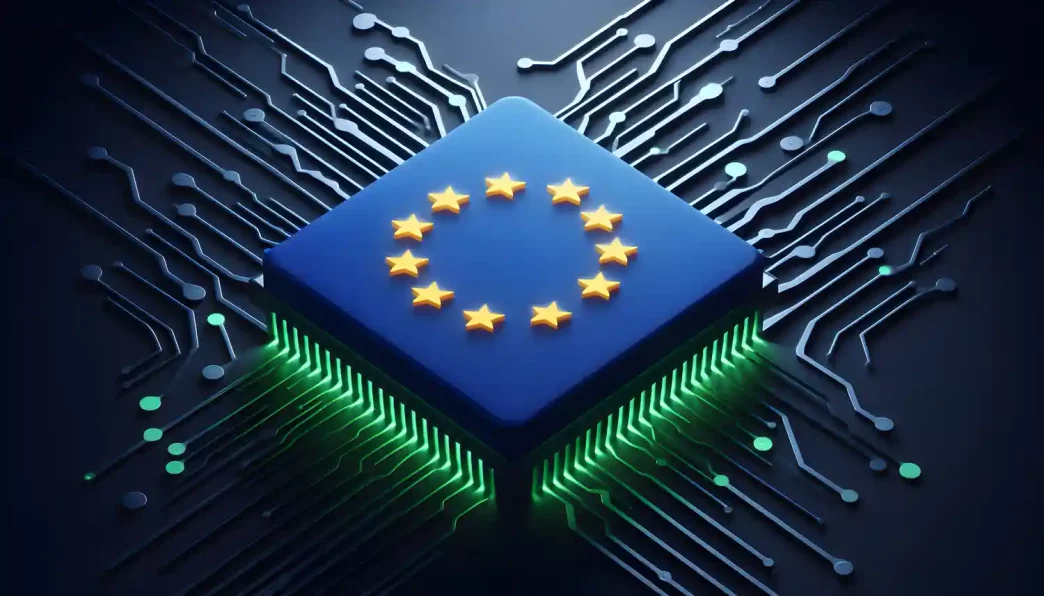
To maintain the freedom to innovate, Europe should think about reducing its dependency on Silicon Valley. But not retreating into isolation, more as building and funding a robust ecosystem of sovereign European models: built on European soil, subject to European laws, and immune to the geopolitical whims of foreign capitals.
The Fable 5 shutdown is a painful disruption for hundreds of businesses, but as a strategic catalyst, it might be exactly what Europe needed. The geopolitical training wheels are off. If Europe wants to control its digital destiny, it needs to own the intelligence driving it.