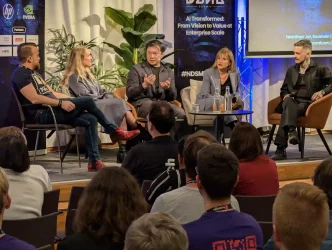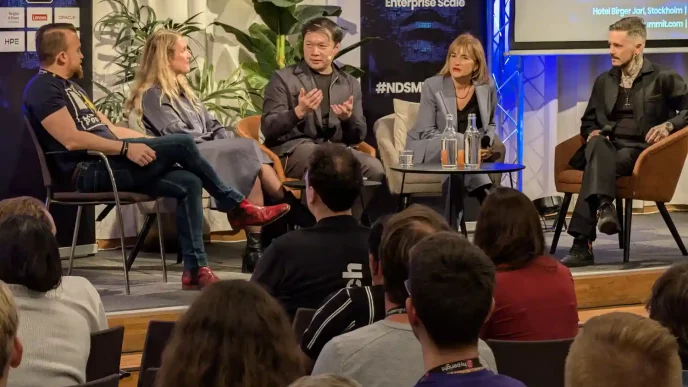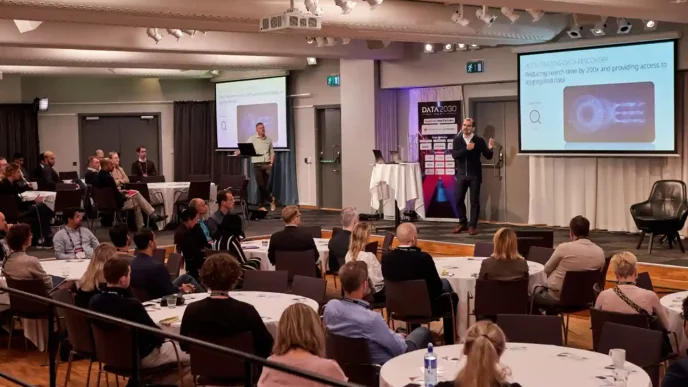

There is a moment in every technological shift when the narrative quietly turns. What begins as a tool for incremental efficiency evolves into something far more consequential, reshaping how organizations think, hire, and build. In our recent conversation with Viktor Jarnheimer, Founding CEO of Proxify, that turning point became unmistakably clear. What emerged was not merely a discussion about AI-assisted coding, but a deeper reflection on how productivity itself is being redefined inside modern technology teams.
The central insight is both simple and uncomfortable. AI is not leveling the playing field. It is stretching it. While many expected a democratization of capability, the reality unfolding across teams and organizations suggests something more asymmetric. The best individuals are accelerating faster than ever, and the definition of what makes someone “the best” is evolving in parallel. Organizations that fail to internalize this shift are not just falling behind gradually. They are diverging in a more structural and compounding way.
The Myth of Equalization
For several years, a dominant narrative in AI has been that of equalization. The expectation was that powerful coding assistants and large language models would enable junior engineers to quickly reach levels of productivity previously reserved for seasoned professionals. There is evidence that supports part of this story. Entry-level developers today can generate boilerplate code, scaffold applications, and troubleshoot common issues at a pace that would have been unimaginable only a few years ago.
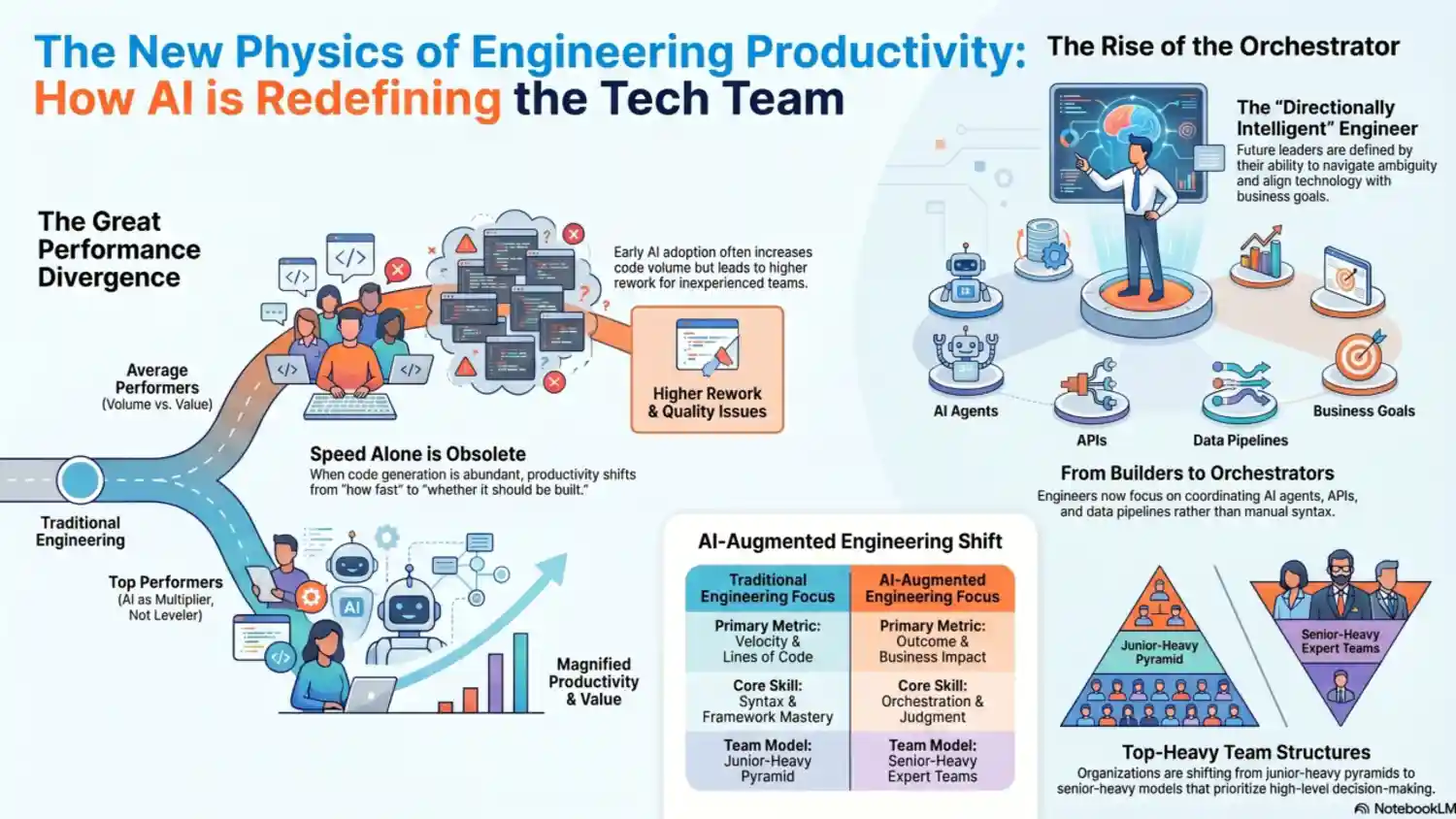
However, this is only one side of the equation. The more complete picture reveals that the gap between high and low performers is not narrowing. It is expanding. Historical data has long suggested that developer productivity varies widely, but with AI entering the workflow, that variation is becoming even more pronounced. The tools themselves do not remove differences in skill. Instead, they magnify them.
Senior engineers, particularly those with strong architectural thinking and contextual understanding, are able to use AI as a multiplier. They can accelerate execution while maintaining quality and direction. Less experienced developers may produce more output, but that output does not always translate into meaningful progress. In earlier phases of AI adoption, many teams experienced increased volume of code alongside higher levels of rework and quality issues. The net effect was often less impressive than anticipated.
Only recently, with more integrated and context-aware tools, has the balance begun to shift toward sustained productivity gains. Even then, those gains are distributed unevenly, reinforcing the widening gap between top and average performers. 
Productivity Is No Longer About Speed
For decades, productivity in software engineering has been approximated through measures such as velocity, throughput, or even lines of code. These metrics were always imperfect, but they provided a functional proxy in a world where development was constrained by manual effort. AI fundamentally challenges this framework.
When code generation becomes abundant, speed alone loses its meaning. The critical question shifts from how quickly something can be built to whether it should be built at all. Viktor articulated this shift in a way that aligns closely with broader industry observations. The most valuable engineers are no longer those who move fastest from one point to another, but those who can determine whether the destination itself is correct.
This shift reflects a broader pattern emerging in enterprise AI adoption. The greatest value is not derived from automating tasks, but from improving decisions. Engineers who understand the business context, anticipate downstream consequences, and align their work with strategic goals become far more impactful. AI accelerates execution, but it does not replace judgment. In fact, it raises the cost of poor judgment by enabling faster scaling of misguided efforts.
One of the most compelling ideas from the conversation is that the engineers who thrived in the past may not necessarily be the ones who lead in the future. This is not a dismissal of technical excellence, but rather a recognition that excellence is being redefined.
In the past, mastery of syntax, frameworks, and algorithmic efficiency was often the hallmark of top engineers. While these skills remain valuable, they are no longer sufficient on their own. AI systems are increasingly capable of producing high-quality code, but they lack a deep understanding of context, trade-offs, and long-term implications.
This creates a new archetype, which can be described as the directionally intelligent engineer. These individuals excel at framing problems, navigating ambiguity, and making informed decisions about where to invest effort. They are comfortable working at the intersection of technology and business, and they use AI as a tool to amplify their capabilities rather than replace them.
This evolution mirrors patterns seen in other knowledge domains, where the role shifts from execution to orchestration. The ability to integrate multiple inputs, guide systems toward desired outcomes, and adapt to changing conditions becomes the defining skill set.
AI as a Force Multiplier – But Not for Everyone
The uneven impact of AI extends beyond individuals to entire organizations. One of the more subtle dynamics highlighted in the discussion is the divergence between early adopters and those who hesitated.
Organizations that embraced AI early, even when the benefits were not immediately clear, are now reaping the rewards. They have developed internal expertise, refined workflows, and built systems that integrate AI into everyday operations. In contrast, companies that experimented briefly and then paused due to limited early gains are finding themselves increasingly behind.
This divergence is not accidental. AI proficiency develops over time, and the learning curve can be steep. Early adoption often involves inefficiencies, as teams learn how to prompt effectively, validate outputs, and integrate AI-generated code into existing systems. The organizations that persist through this phase accumulate knowledge that becomes difficult for others to replicate quickly.
This pattern is consistent with broader enterprise trends, where sustained investment and cultural adaptation are necessary to unlock the full potential of AI.
The Talent Equation Is Changing
These shifts are already reshaping how companies think about talent. One of the most immediate consequences is the increasing demand for senior engineers. While junior developers are becoming more capable with AI, organizations continue to prioritize individuals who can navigate complexity, ensure quality, and make high-level decisions.
This is leading to a structural change in team composition. Traditional models, which relied on a pyramid structure with many junior developers supporting a smaller number of senior engineers, are giving way to more balanced or even top-heavy configurations. The emphasis is shifting toward experienced professionals who can leverage AI effectively and guide its use within the organization.
At the same time, the barrier to entry for building software is decreasing. Individuals from non-technical backgrounds are beginning to create functional tools using AI, contributing to a broader expansion of who can participate in software creation. This democratization increases the total number of people building software, but it does not eliminate the need for expertise. Building at scale, with reliability and maintainability, still requires deep experience.
The Global Talent Marketplace Reimagined
Proxify’s approach to connecting top engineering talent with organizations provides a practical lens on how these dynamics play out in the real world. The company’s model relies on identifying high-performing individuals and matching them with roles where they can have the greatest impact.
This process is increasingly informed by data and AI. By analyzing factors such as project duration, client feedback, and long-term performance, it becomes possible to build more accurate models of success. These models can identify patterns that are not immediately visible through traditional hiring methods.
At the same time, the limitations of automation remain clear. Hiring decisions are influenced by factors that are difficult to quantify, including motivation, communication style, and cultural alignment. As a result, human judgment continues to play a critical role in the final stages of decision-making.
This combination of data-driven insights and human intuition reflects a broader trend in how organizations approach complex decisions.
Remote Work, Revisited
The conversation also touched on the evolution of remote work, which intersects closely with the rise of AI. Distributed teams have long been a feature of the software industry, but their adoption has accelerated significantly in recent years.
While technology enables remote collaboration, it does not eliminate the challenges associated with it. Time zone differences, communication barriers, and coordination overhead can all impact productivity and retention. Even small misalignments can create friction over time.
AI has the potential to mitigate some of these challenges by improving documentation, enabling asynchronous workflows, and automating routine tasks. However, it does not fully replace the need for thoughtful organizational design. Successful remote teams require intentional structures that balance flexibility with alignment.
The Jevons Paradox of Software Development
A useful framework for understanding the broader impact of AI is the Jevons paradox, which suggests that increases in efficiency often lead to increased consumption. Applied to software development, this implies that as it becomes easier and cheaper to build software, the demand for it will grow rather than shrink.
There are already signs that this is happening. Internal tools that were previously too costly to justify are now being built. Teams outside of engineering are creating their own solutions. Entire categories of applications are emerging that rely on rapid iteration and customization.
This expansion extends to the concept of on-demand software, where applications are generated for specific, short-lived purposes. In such a scenario, software becomes more fluid and ephemeral, created and discarded as needed.
The implication is that the total volume of software will continue to increase, along with the need for oversight, governance, and optimization. AI changes the economics of development, but it does not reduce the importance of skilled engineers.
From Builders to Orchestrators
Across all these developments, a consistent theme emerges.
The role of the engineer is shifting from building to orchestrating.
Rather than focusing solely on writing code, engineers are increasingly responsible for coordinating systems that include AI agents, APIs, data pipelines, and human inputs. They define workflows, set constraints, and ensure that outputs align with intended goals.
This shift reflects a broader transformation in how work is structured. The tools are more powerful than ever, but they require direction. Without it, they can produce large volumes of output without delivering meaningful value.
The Risk of Misalignment
With increased speed comes increased risk. One of the most significant challenges in this new environment is misalignment. When development accelerates, it becomes easier to build the wrong thing faster.
This risk is particularly pronounced in larger organizations, where decision-making is distributed and communication can be fragmented. AI does not inherently solve these issues. In some cases, it amplifies them by enabling rapid execution without sufficient coordination.
This makes clarity more important than ever. Clear goals, well-defined requirements, and strong feedback loops are essential to ensuring that increased productivity translates into meaningful outcomes.
What This Means for Leaders
For leaders, the implications of these changes are substantial. Hiring strategies need to evolve to prioritize not only technical skills but also business understanding and the ability to work effectively with AI. Organizations need to invest in AI adoption as a capability, which includes training, process redesign, and cultural change.
Traditional productivity metrics may need to be reconsidered, as they often fail to capture the true value of work in an AI-augmented environment. Leaders should focus on outcomes and impact rather than output alone.
Perhaps most importantly, there is a need to embrace experimentation.
The landscape is evolving rapidly, and there is no single blueprint for success.
Organizations that are willing to test new approaches and adapt quickly will be better positioned to navigate the transition.
A New Era of Software Creation
The discussion between Anders Arpteg, Viktor Jarnheimer and me on this episode provides a clear view into a future that is already taking shape. AI is not simply making developers more efficient. It is redefining productivity, reshaping talent markets, and changing the nature of software itself.
The organizations that succeed in this environment will not be those that merely adopt new tools. They will be those who rethink how work is structured, how teams are built, and how decisions are made.
They will understand that the true power of AI lies in its ability to amplify human capability.
And they will act accordingly.
* This article was enhanced with the help of AI tools, drawing on the podcast transcript and complementary online research. To go deeper into the source material, I encourage you to listen to the full episode and make your own learnings.