As intelligence becomes increasingly embedded within the systems shaping civilization, human capability continues to expand. The central question remains which forms of human agency must remain in human hands as intelligent systems become increasingly capable.
The Rise of Human Agency Series examines how human agency is often discussed as though it were a singular concept. It is routinely associated with freedom, participation, decision-making, autonomy, and influence, creating the impression that agency either exists completely or does not exist at all. Agency expresses itself through everyday decision authority, representing the right and power to execute choices while encompassing judgment, responsibility, and direction within existing legal or societal conditions that shape the long-term development of individuals and their societies.
In the past, these layers remained closely aligned, yet agency changes continuously alongside expanding intelligent capabilities. Individuals exercise personal choice while institutions establish direction, governments create order, and societies adapt through interacting forms of influence. The mechanisms differ while the underlying rules remain consistent, as expanding capabilities strengthen humanity’s ability to influence its own future.
The emergence of intelligent systems invites a closer examination of that assumption. As capability becomes embedded within systems that learn, adapt, optimize, and execute at unprecedented scale, understanding agency becomes less a question of the past than an imperative for the future.
Not All Agency Is Equal
Treating agency as a single concept obscures the distinct roles it performs and the circumstances governing decision authority. The rules governing societal contexts apply equally within corporate businesses, where certain forms of agency shape immediate actions while others alter the environments within which those actions occur. Some forms influence outcomes inside existing systems, whereas others dictate the design and direction of those systems.
This distinction becomes increasingly important as capability expands. Access to information grows while choices become preconditioned and decisions become increasingly influenced or manipulated. Expanding options does not automatically strengthen the capacity to establish direction, because choosing among alternatives differs fundamentally from determining which alternatives exist in the first place. In the age of artificial intelligence, the scale of acceleration outperforms human ability to track, understand, and remain informed and aligned. Systems change while behaviors persist, transparency shifts while fairness remains unaddressed, and data expands exponentially until processing its vast volume becomes impossible for human minds. 
This dynamic fundamentally alters information processing across societies, individuals, and enterprises alike. When capability and agency evolve together, this vital difference is easily overlooked, yet as intelligent systems gain capability, the distinction between forms of agency becomes increasingly visible alongside a structural shift of power from humans to machines.
The Foundations of Human Direction in the Age of AI
Civilizations do not evolve through isolated decisions alone, advancing instead through the capacity to establish direction. Beneath laws, regulations, institutions, technologies, and governance structures lies a set of human capabilities that help societies define priorities, navigate conflicts, and pursue shared objectives. Although these systems were established to serve citizens, they continuously tend toward becoming more observable and operational in routine decision making.
Judgment forms a foundational component alongside responsibility within these capabilities. The capacity to establish intent, assign meaning, and define purpose builds forms of agency that extend beyond individual actions to shape collective outcomes over time. These capacities remain central to human development because they enable societies not merely to respond to changing circumstances, but to determine which outcomes deserve pursuit. They establish direction rather than simply supporting activity.
In corporate applications, this shifts traditional processes and operational logic. The foundations of human decision authority are replaced by initial intelligent capabilities that outperform experienced specialists across numerous corporate domains. As intelligent systems expand capabilities, they operate and process traditional business workflows differently from historical execution.
Finance departments exemplify this shift, where specialists traditionally navigate fragmented data to find errors, resolve data problems, and verify organizational deviations from standards. This manual intervention showcases the broken chain of enterprise systems across data, knowledge, processes, integrations, and reporting. While humans historically resolved these fragmentation challenges, intelligent systems now absorb these workloads, moving decision authority directly into the intelligent software layer and rendering individual human roles obsolete within traditional business environments.
Judgment Beyond Optimization
A defining characteristic of intelligent systems is their growing capacity to optimize processes, evaluate alternatives, and improve outcomes against selected objectives. This capability unlocks extraordinary opportunities across virtually every domain of society and enterprise.
Even as investments scale, optimization operates strictly within the scope assigned to intelligent technologies. It improves performance relative to established goals without determining which goals deserve priority, comparing alternatives without deciding which values should guide those comparisons. This limitation demonstrates the boundaries of intelligent systems and highlights the enduring significance of human judgment.
Judgment extends far beyond identifying the most efficient path toward a predefined outcome, evaluating context, balancing competing priorities, navigating uncertainty, and reconciling values that cannot be reduced to algorithmic optimization. Throughout history, societies and enterprises relied upon judgment because their most critical decisions involved competing values rather than competing efficiencies. As intelligence increasingly optimizes execution, balanced human judgment emerges clearly as a distinct form of agency operating beyond optimization itself.
Choice Beyond Recommendation
The growing integration of intelligent systems into everyday life increasingly shapes how choices are created, evaluated, and pursued as information is filtered, content is recommended, and alternatives are prioritized. Systems capable of processing vastly more information than any individual could evaluate independently now support routine decisions.
These developments do not eliminate human choices, often improving outcomes across various operational domains. However, direct escalation occurs when these invisibly operating systems move from guiding human decisions to combining continuous observation with direct execution. When a system detects a repeated violation, it reacts in real time to issue automated citations directly to an account, completing detection, evaluation, and penalty execution entirely within the network. The human supervisor no longer makes an active choice, monitoring an automated outcome statistically while accountants experience similar systemic authorization of routine decisions.
This dynamic reveals the true limit of automated recommendations. Genuine human control extends beyond choosing from a list of suggestions or monitoring automated results, requiring the capacity to question system rules, alter priorities, challenge automated direction, and create entirely new options. As systems process more decisions, preserving the ability to direct them rather than selecting from their suggestions becomes essential.
Meaningful agency was never defined solely by selecting among available recommendations, involving instead the capacity to question assumptions, redefine priorities, challenge prevailing directions, and construct alternatives that did not previously exist. Choice concerns more than selecting from presented possibilities, encompassing the power to influence which possibilities become available and which futures become imaginable. As intelligent systems actively participate in shaping decisions, preserving this broader dimension of choice grows increasingly vital.
Meaning Beyond Execution
Execution plays a central role in human progress because intentions create little change unless translated into outcomes, and every major technological advance expands humanity’s capacity for execution. The rise of intelligent systems continues this trajectory by automating, accelerating, optimizing, coordinating, and scaling tasks in ways previously impossible.
Capability continues to grow, yet execution alone does not establish meaning. Meaning emerges from the capacity to determine why outcomes matter, how they relate to broader objectives, and what place they occupy within human aspirations, connecting action to purpose beyond efficiency and performance.
As execution becomes increasingly abundant, questions of meaning grow more critical rather than less important. The core challenge gradually shifts from determining what can be done to understanding why it should be done and how those choices contribute to societal direction or enterprise success.
The Agency Civilization Depends Upon
Throughout history, human agency depended upon forms of decision authority that evolved alongside societal and business frameworks. This structural baseline is changing without formal acknowledgement or recognition of its vast implications. The capacity to exercise judgment, establish direction, define purpose, create meaning, and assume responsibility consistently shapes societal development regardless of technological conditions.
When these underlying conditions shift silently, systems built over decades diminish as authority transfers from humans toward machines. This transition remains hidden behind projects, operational improvements, or daily convenience, masking an underlying shift in capability and control.
The emergence of intelligent systems does not diminish the importance of these human capacities, making them instead far more visible. As intelligent capability expands, the forms of agency that determine how capability is directed emerge as essential conditions for meaningful human participation in the future.
This does not render personal choice, participation, and autonomy irrelevant, as they remain important components of human life. However, as systems become more capable, the forms of agency that shape direction rather than execution appear increasingly significant. The challenge is consequently not preserving every historical expression of agency unchanged, but understanding which forms of agency remain indispensable as intelligence becomes embedded throughout the systems shaping civilization itself.
Closing Perspective
The evolution of intelligent systems changes the conditions within which agency operates, revealing distinctions that were previously easy to overlook. As capability becomes abundant, not all forms of agency contribute equally to the future direction of society.
Certain forms of agency influence immediate actions while others define the objectives toward which those actions are directed, just as some shape execution while others establish meaning and improve outcomes. Understanding this distinction becomes essential as intelligence evolves, shifting the primary question from how much agency humanity possesses to which forms of agency remain indispensable for preserving meaningful human direction within increasingly capable systems.
This series introduces the core ideas of The Rise of Human Agency, with each upcoming edition exploring a central dimension of the book’s underlying thesis.
Which forms of agency become indispensable as intelligence becomes abundant?
A Billion Times Smarter, available on Amazon.
About the author
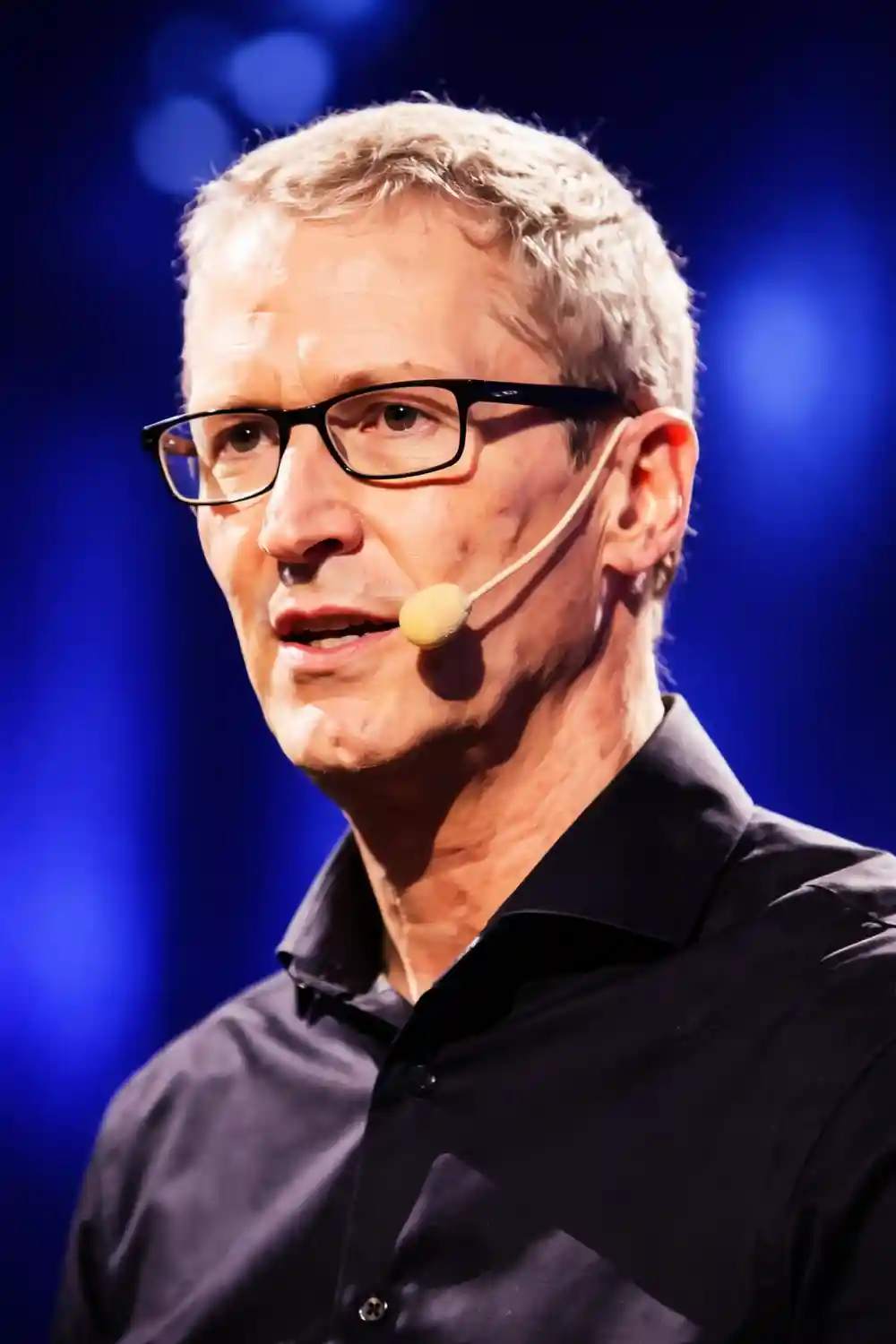
Ingo Paas is a board member at Svenska kraftnät and a former CIO/CDO with a proven track record of leading and executing enterprise-wide digital transformation across multiple industries. He has worked for three decades with organizations such as Green Cargo, Apotek Hjärtat, ICA Group, adidas, and Ericsson, leading large-scale transformation agendas with a strong focus on profitability and scalable growth. His experience includes restructuring fragmented environments into coherent, high-performing operating models and effective, data-driven operations.
In his current board assignment, Ingo contributes to strategy, infrastructure, risk, and long-term value creation, particularly in areas where AI, technology, and innovation reshape investment priorities.
Ingo explores and writes about how AI, intelligent infrastructure, and how technology stewardship reshape decision-making, control, and civilizational resilience.
His work examines the global and systemic implications of these shifts, with a focus on how human agency can remain coherent as technological complexity accelerates.
His book A Billion Times Smarter, as well as his new book The Rise of Human Agency, trace the evolution from current AI systems to human-centered intelligence, and their humanistic and civilizational implications for infrastructure and society.
*The views and opinions expressed by the author do not necessarily state or reflect the views or positions of Hyperight.com or any entities they represent.