
Governance no longer aligns with the conditions it now operates within, not because its principles have weakened, but because the environment it was designed for has fundamentally changed. The language still assumes stability, predictability, and controllable outcomes, while the underlying reality has shifted toward continuous motion, accelerated execution, and systems that no longer wait for interpretation.
A different condition now shapes outcomes. Intelligence moves faster than institutions can interpret, execution unfolds continuously rather than in discrete steps, and feedback loops compress beyond the limits of human planning cycles. Under these circumstances, governance gradually loses its ability to function as a controlling mechanism and instead becomes something else entirely: a descriptive layer that explains decisions only after they have already materialized within systems. This reflects a mismatch between design assumptions and operating conditions rather than a failure of governance itself.
What begins to emerge in its place is a more fundamental distinction. Governance describes intent, rules, and formal structures of control. Stewardship defines how systems behave under continuous intelligence pressure. Governance assumes a separation between design and execution. Stewardship assumes that this separation collapses, and that both now operate simultaneously within the same environment. The transformation begins precisely at this point of collapse.
Why Governance No Longer Matches System Reality
Governance evolved in environments where change moved more slowly than decision cycles, allowing oversight mechanisms to intervene before consequences fully unfolded. This created a manageable sequence: decision first, outcome later, correction in between. That sequence no longer holds.
Modern systems operate in continuous motion. Software defines execution at scale, while intelligent systems interpret, adapt, and act in real time. The distance between decision and outcome no longer stretches across time; it compresses into near simultaneity.
Governance, however, still depends on delay. It relies on periodic reviews, structured approval processes, and retrospective correction, all of which assume that systems will pause long enough to be evaluated. Increasingly, they do not. 
The resulting tension does not produce immediate breakdown. Instead, it creates divergence: systems evolve faster than they can be described, regulated, or even fully observed, widening the gap between how they are understood and how they behave.
The Assumptions That No Longer Hold
This divergence rests on assumptions that current conditions no longer support. Governance assumes that policy and execution can remain separate, while intelligent systems increasingly interpret policy dynamically and translate rules into outcomes through layers of behavior that are no longer fully transparent. It also assumes that scale can be managed through hierarchy, even as rising interaction density causes decisions to move laterally across interconnected systems rather than along stable vertical paths.
Governance further assumes that control points remain fixed and identifiable. In practice, infrastructure, platforms, and models now adjust continuously, causing those control points to shift, blur, or disappear.
These assumptions have not failed because they were poorly designed. They have failed because the underlying system dynamics have changed, and the environment no longer provides the conditions they require.
Stewardship as Operational Reality
Stewardship does not emerge as a philosophical refinement of governance, nor as an ethical improvement layered onto existing structures. It emerges as an operational response to conditions in which governance can no longer maintain alignment on its own. Where governance operates outside the system, observing outputs and reacting after the fact, stewardship operates within the system itself, shaping behavior as it unfolds. The distinction is structural rather than semantic.
In stewardship-based environments, alignment does not depend on intermittent intervention. It depends on continuous design. It is embedded in how data flows, how decisions propagate, and how constraints operate within intelligent infrastructure. Governance, in this sense, becomes absorbed into a broader system reality that operates continuously rather than episodically.
Control, in its conventional meaning, no longer resides in the ability to intervene after outcomes appear. It resides in the ability to shape the conditions that produce those outcomes.
Stewardship becomes less about oversight and more about system design—the discipline of maintaining human agency within environments defined by continuously evolving intelligent systems.
Civilization as an Execution Environment
As execution becomes continuous within infrastructure, its influence extends beyond isolated systems into the broader structure of civilization. Processes that once operated in discrete stages now unfold across interconnected networks of infrastructure, platforms, models, and increasingly autonomous agents. The result is not simply faster systems, but a different kind of system altogether, one that behaves as a persistent execution environment rather than a collection of controlled processes.
This shift changes the nature of the problem. Civilization can no longer rely solely on governed institutions that intervene at defined intervals. It must operate within systems that are always active, always adapting, and never fully at rest. Under these conditions, preserving human agency becomes more complex and more systemic. Governing systems no longer guarantees control. Instead, it often introduces fragmentation, widening the gap between intention and outcome while reducing coherence in environments that continue to accelerate.
The challenge is no longer how to govern systems effectively. It becomes how to design systems that maintain direction without interrupting their continuity.
The Diffusion of Human Agency
Intelligence systems do not simply automate tasks; they reshape the structure of decision-making itself. As these systems expand, they redefine what can be observed, what can be decided, and what can be influenced. Some decisions move closer to automated execution, others recede beyond direct human visibility, and many dissolve into layers of system activity that no longer expose their internal logic in accessible ways. Human agency does not disappear in this process, but it changes form. It diffuses across layers of systems, becoming less concentrated and less directly visible. Without deliberate structural design, this diffusion reduces the degree to which human intent meaningfully shapes outcomes, even as overall system capability continues to increase.
What emerges is a paradox in which capability expands while direct influence contracts.
The essential question therefore shifts. It is no longer sufficient to ask how humans use intelligent systems. The more fundamental question becomes how those systems preserve meaningful human direction as intelligence expands within them.
The Gradual Erosion of Control
The risks associated with this shift are not sudden or catastrophic. They accumulate gradually, often without clear visibility at the point where they begin. Decision velocity begins to exceed human comprehension, causing outcomes to take shape before they can be fully understood. Optimization processes prioritize efficiency unless explicitly constrained by embedded human intent. Accountability, once tied to identifiable decision-makers, becomes distributed across systems that no longer present clear boundaries.
None of these patterns remove humans entirely. Instead, they reduce the structural weight of human judgment within the system. Over time, the space in which human agency meaningfully influences outcomes becomes narrower, not because humans are excluded, but because the system evolves around them.
The Reconfiguration of Agency
Driven by the expansion of intelligent systems, the same forces that reduce traditional forms of agency also create the conditions for its reconfiguration. As systems become continuous, they also become programmable at deeper levels. As execution becomes automated, influence shifts away from direct commands and toward the design of constraints. As intelligence becomes embedded, control relocates from individual decisions to the architecture that shapes those decisions.
In this environment, agency does not disappear, but it relocates. It moves from intervention to design, from isolated actions to structural influence. The capacity to shape outcomes depends less on reacting to events and more on defining the conditions under which those events occur. This relocation marks the transition from governance to stewardship in its most practical sense.
A Condition Already in Place
This transformation is not an abstract future scenario. It is already embedded in the systems that define current operational reality. Cybersecurity systems, surveillance infrastructures, military applications, and increasingly AI-driven platforms already function under these conditions, operating continuously and adapting in real time. The shift is not approaching; it is already unfolding at scale.
The question is no longer whether governance will adapt quickly enough. The question is whether civilizational design can evolve to preserve human agency without being outpaced by the continuity that now defines execution.
Closing Perspective
Governance is not obsolete. It continues to describe how systems should behave under stable and linear assumptions. Stewardship, however, defines how systems behave when those assumptions no longer hold. One depends on separation between decision and execution, while the other operates within their convergence. This transition does not eliminate control. It changes where control resides, moving it away from points of intervention and into the structure of systems themselves. Understanding this shift is not simply conceptual; it defines the conditions under which human agency can persist within environments that no longer pause before acting.
This series introduces the core ideas of The Rise of Human Agency, with each upcoming edition exploring a central dimension of the book’s underlying thesis.
If intelligent systems increasingly operate as continuous infrastructure, then the question becomes unavoidable:
How can human agency remain structurally present, and continue to evolve, challenged by scalable systemic intelligence?
About the Author
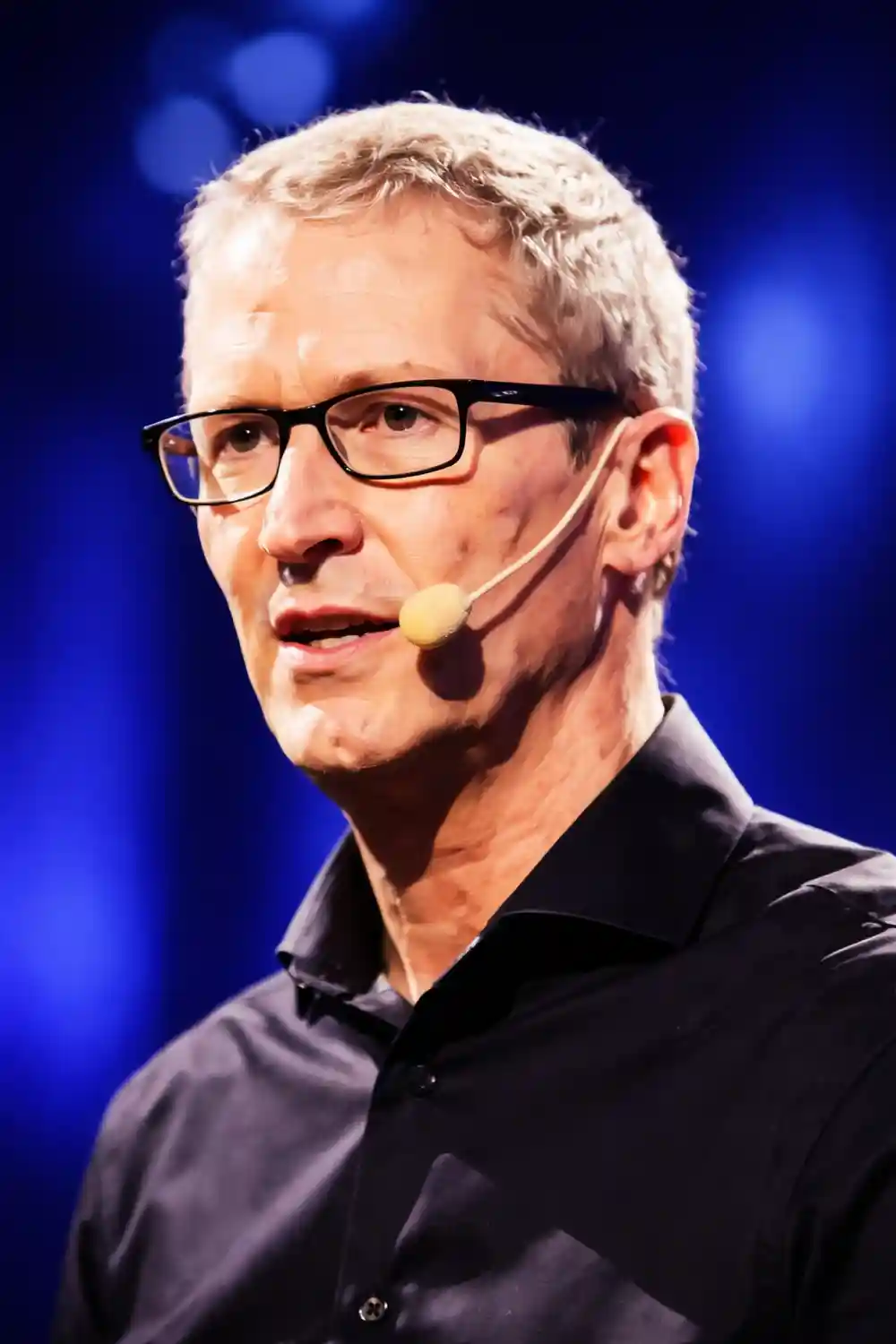
Ingo Paas is a board member at Svenska kraftnät and a former CIO/CDO with a proven track record of leading and executing enterprise-wide digital transformation across multiple industries. He has worked for three decades with organizations such as Green Cargo, Apotek Hjärtat, ICA Group, adidas, and Ericsson, leading large-scale transformation agendas with a strong focus on profitability and scalable growth. His experience includes restructuring fragmented environments into coherent, high-performing operating models and effective, data-driven operations.
In his current board assignment, Ingo contributes to strategy, infrastructure, risk, and long-term value creation, particularly in areas where AI, technology, and innovation reshape investment priorities.
Ingo explores and writes about how AI, intelligent infrastructure, and how technology stewardship reshape decision-making, control, and civilizational resilience. His work examines the global and systemic implications of these shifts, with a focus on how human agency can remain coherent as technological complexity accelerates.
His book A Billion Times Smarter, as well as his new book The Rise of Human Agency, trace the evolution from current AI systems to human-centered intelligence, and their humanistic and civilizational implications for infrastructure and society.
*The views and opinions expressed by the author do not necessarily state or reflect the views or positions of Hyperight.com or any entities they represent.