„Preventing a future humanity fears does not automatically create a future worth preserving!“
Artificial intelligence is entering the systems that produce knowledge, execute decisions, and operate essential services. The defining question concerns humanity’s freedom, authority, and practical capacity to shape the decisions and actions through which intelligence affects its future.
Beyond Control
Business approaches artificial intelligence through the language of regulations and governance and approaches this as the dominating global challenge. Organizations, institutions, and policymakers seek visibility, accountability, and control for their outcomes even across complex environments. These efforts are essential because intelligent systems require boundaries, oversight, transparency, and human-controlled mechanisms for intervention.
Regulation extends this responsibility across organizations, sectors, and globally. It establishes enforceable boundaries, accountability, and coordinated conditions to address the risks of rising autonomous intelligence, including consequences that could threaten essential services, social stability, and humanity itself.
The second challenge of the shift of human agency receives far less attention. As intelligent systems take on decisions once made by people, individuals and institutions must retain formal authority while losing the practical ability to understand, question, or direct the outcomes that affect them.
The current discussion is focusing on existential risks, concerned with whether humanity survives. The loss of human agency concerns whether humanity retains the capacity to shape its own future. The first risk is documented by the largest AI companies in the world, embedded in their IPO documentation. These risks may appear under unclear conditions many years ahead, while the second condition is already underway, and its consequences can become irreversible, long before they become recognizable and actionable. 
The Second Genesis addresses exactly this challenge.
The Question Beneath Artificial Intelligence
These efforts address an essential dimension of the intelligent age. Public discussion often focuses on another question: what intelligent systems may become.
Will they transform work, science, education, and creativity? Will they become safer, more capable, or more difficult to govern? Will they introduce prosperity, disruption, or existential risk?
These questions matter, while they can distract attention from a transformation already underway. Intelligent systems initially started to operate under the control and agency of humans. Humans retain formal authority over their purposes while becoming dependent on intelligent systems to interpret circumstances, evaluate alternatives, execute decisions, and produce outcomes. Possessing authority is not the same as retaining the ability to exercise it. This distinction defines the intelligent age. The question concerns humanity’s capacity to understand, direct, and shape the systems that affect its future.
A Personal Starting Point
Behind these questions lies a more personal understanding of freedom. As a technology executive, I have spent much of my life believing that technology can and should expand human possibilities. That conviction has shaped my work, my curiosity, and my understanding of progress.
For 24 years, I have lived with the experience of caring for someone whose ability to act independently is profoundly limited. As a father, I learned that autonomy is more than the freedom to make choices. It depends on the ability to exercise those choices, participate in everyday life, and preserve dignity under conditions that others may take for granted. That experience taught me something that later became central to my understanding of artificial intelligence. Freedom depends on the practical ability to understand, influence, and act within the systems and decisions that shape one’s life.
Intelligent systems now operate beyond familiar boundaries of human understanding and control. This deeply personal question has become a question for civilization itself. What happens to human freedom when the capacity to act depends upon intelligent systems?
The Second Genesis
Human civilization emerged through the collective development of biological intelligence. Knowledge accumulated across generations, institutions enabled cooperation, and technologies extended human capabilities beyond individual limitations. The First Genesis describes this historical process through which intelligence created civilization. AI introduces another source of intelligence into this relationship. Intelligent systems contribute to research, software development, design, coordination, and complex problem-solving. These systems interact across technological environments and contribute to the development of further intelligent capabilities.
We are now entering a new historical condition and have begun creating intelligence capable of contributing to its continued evolution. This transition extends far beyond technology, as intelligent systems now influence how societies pursue their future.
The Challenge of Human Agency
Intelligent systems influence what becomes visible, what becomes knowable, what becomes actionable, and how decisions unfold. People may retain authority over their purposes while losing the practical ability to understand, question, or direct the outcomes that affect them. Responsibility can remain legally and institutionally intact while the capacity to shape consequential outcomes weakens. A society can become safer while its members lose the ability to understand, question, or influence the systems that affect their lives.
Preventing a future humanity fears does not automatically create a future worth preserving. Safety, compliance, and control are necessary. They do not ensure that individuals retain the ability to participate meaningfully in the systems that affect their lives.
Empowerment and Protection
Two conditions determine whether freedom endures in the intelligent age: Empowerment and Protection.
Empowerment expands the possibilities available to individuals and societies by enabling participation, understanding, choice, creativity, and development. Intelligent systems can strengthen Empowerment by extending access to knowledge and capabilities once reserved for powerful institutions.
Protection preserves the freedom to understand, choose, and act. It safeguards sovereignty, integrity, autonomy, and the practical ability to act according to one’s own purposes. Neither condition is sufficient alone. Empowerment without Protection exposes individuals to manipulation, exploitation, and dependence. Protection without Empowerment turns safety into control.
The task is to ensure that they advance together.
Why The Second Genesis Exists
I created and wrote THE SECOND GENESIS because governance alone cannot secure the future of human freedom, and to demonstrate that we still have a choice about our future. The book states that regulation remains essential considering the risks for humanity. It agrees that societies must establish enforceable and much stronger boundaries, accountability, and mechanisms to address the risks of autonomous intelligence. Regulation addresses the conduct of intelligent systems; it does not guarantee that individuals and institutions retain the enduring capacity to understand, participate in, and shape the intelligent systems that affect their work, services, security, and daily lives.
THE SECOND GENESIS explores what becomes necessary when intelligence becomes an integral capability of civilization. It asks how humanity can preserve meaningful participation, legitimate authority, and sovereign authorship as intelligent systems shape the decisions, opportunities, and constraints that determine individual and collective futures. This book offers an intelligent framework for the future of humanity as the foundation of choice to prepare us for a future worth preserving.
The Release of THE SECOND GENESIS
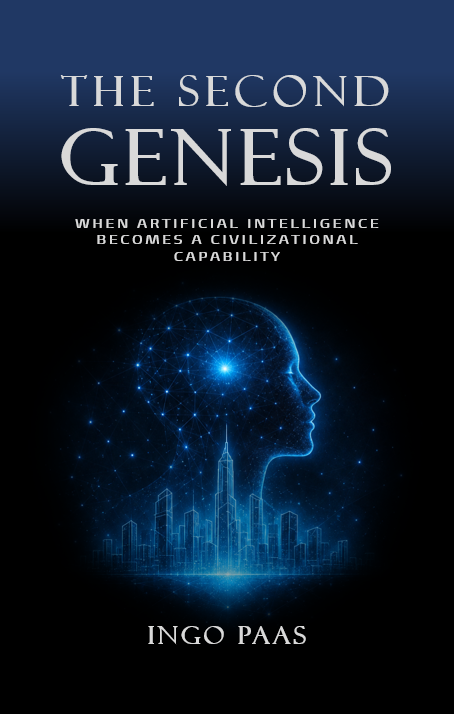
THE SECOND GENESIS is now available on Amazon. The book explores the civilizational conditions required to preserve and expand human agency in the intelligent age. It brings together the historical development of human freedom, the structural challenges of expanding intelligent capabilities, and the need for a new foundation of human authority within intelligent civilization.
A Future Worth Preserving
Humanity has never possessed greater capacity to shape its future. It has never faced greater uncertainty about its capacity to influence the systems and decisions that determine that future. The intelligent age does not require humanity to choose between technological progress and human freedom. It requires a commitment to ensure that expanding intelligence strengthens human agency rather than making it dependent upon systems beyond meaningful understanding and control.
The First Genesis enabled intelligence to create civilization. The Second Genesis emerges as civilization begins creating intelligence capable of contributing to its continued evolution. The responsibility of our time is to preserve and expand humanity’s sovereign authority to shape our own future.
Must humanity preserve its capacity to shape a future worth preserving, or surrender that authority to systems beyond its understanding and control? This book gives hope.
Share your thoughts in the comments!
Now available on Amazon: THE SECOND GENESIS
About the author
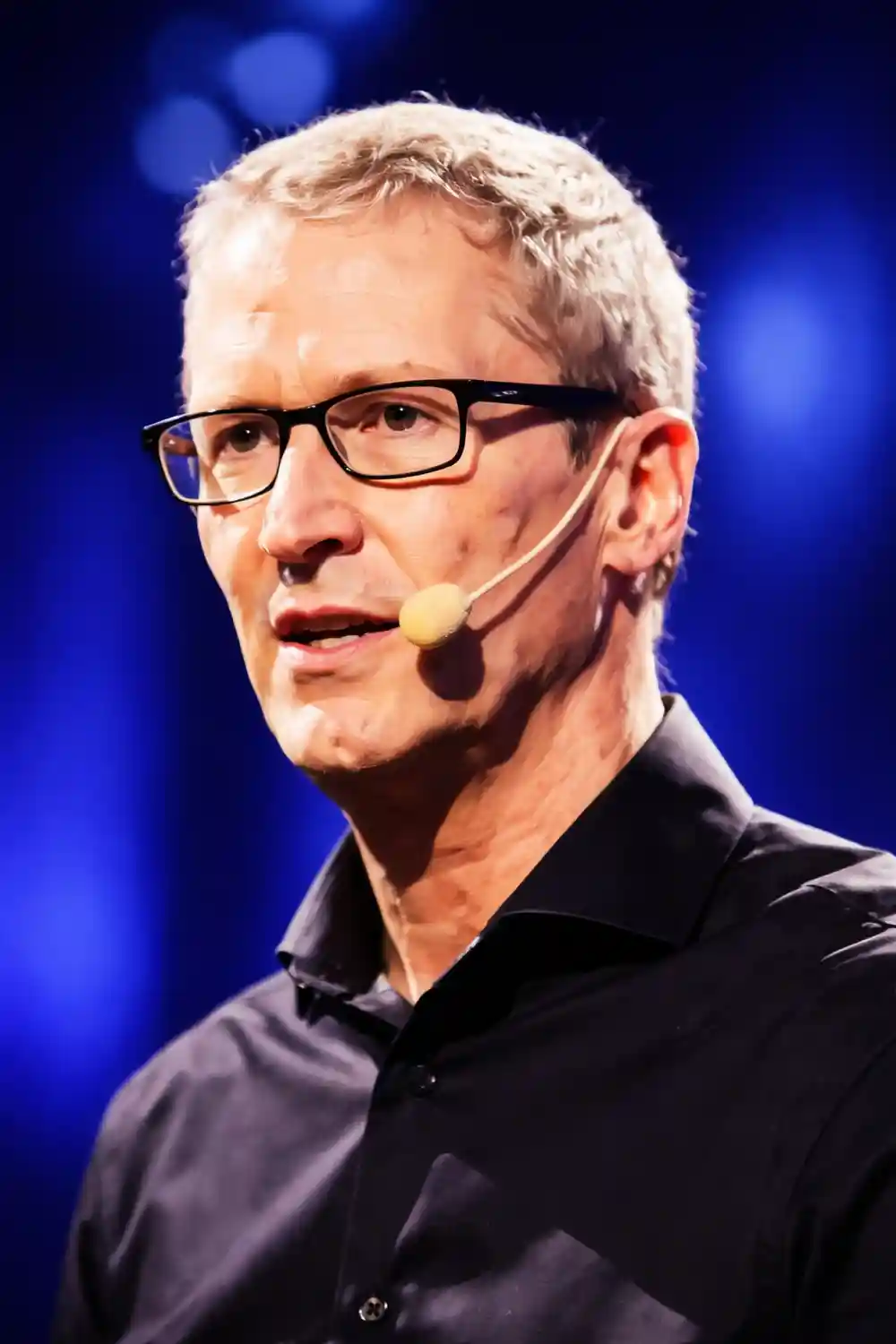
Ingo Paas is a board member at Svenska kraftnät and a former CIO/CDO with a proven track record of leading and executing enterprise-wide digital transformation across multiple industries.
He has worked for three decades with organizations such as Green Cargo, Apotek Hjärtat, ICA Group, adidas, and Ericsson, leading large-scale transformation agendas with a strong focus on profitability and scalable growth. His experience includes restructuring fragmented environments into coherent, high-performing operating models and effective,data-driven operations
In his current board assignment, Ingo contributes to strategy, infrastructure, risk, and long-term value creation, particularly in areas where AI, technology, and innovation reshape investment priorities.
Ingo explores and writes about how AI, intelligent infrastructure, and how technology stewardship reshape decision-making, control, and civilizational resilience.
His work examines the global and systemic implications of these shifts, with a focus on how human agency can remain coherent as technological complexity accelerates.
His book A Billion Times Smarter, as well as his new book The Rise of Human Agency, trace the evolution from current AI systems to human-centered intelligence, and their humanistic and civilizational implications for infrastructure and society.
*The views and opinions expressed by the author do not necessarily state or reflect the views or positions of Hyperight.com or any entities they represent.