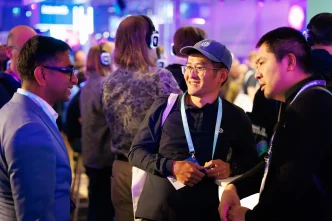
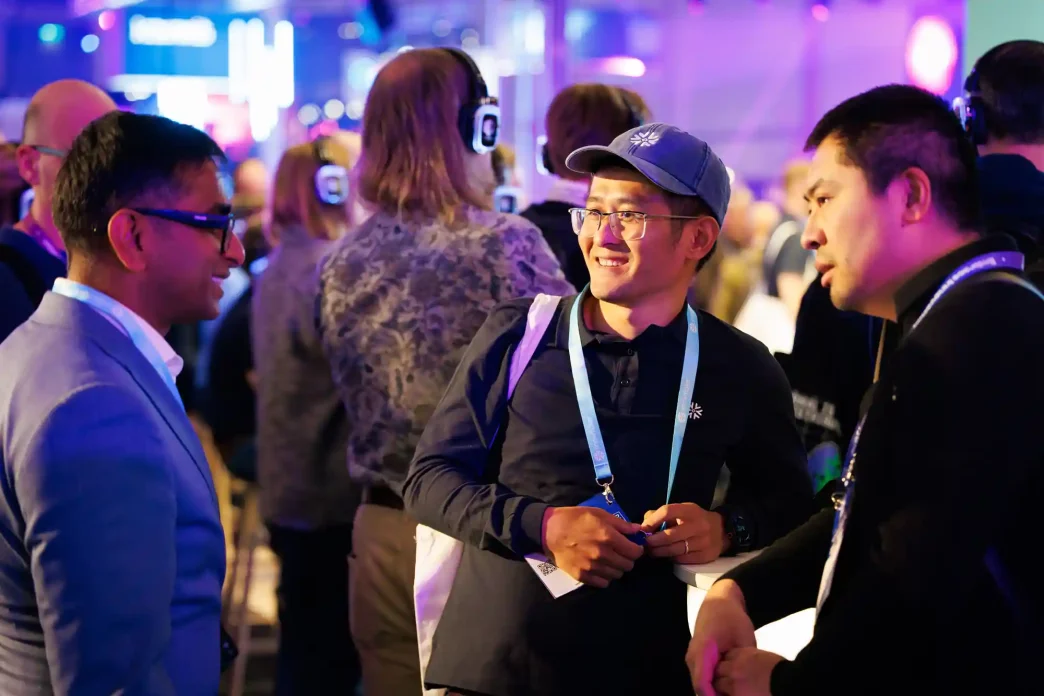
Every conference organizer claims their event was valuable. Data Innovation Summit’s audience made that case itself, unprompted, across dozens of posts published on LinkedIn in the days immediately following the 2026 edition in Stockholm. Read together, those posts do something a curated testimonials page can’t: they show what a genuinely diverse set of attendees, data engineers, C-level executives, central bank officials, vendor marketers, and returning speakers, actually took away from the same three days, in their own words and under their own names.
The scale, stated plainly
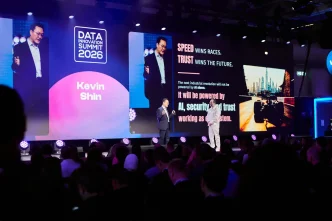
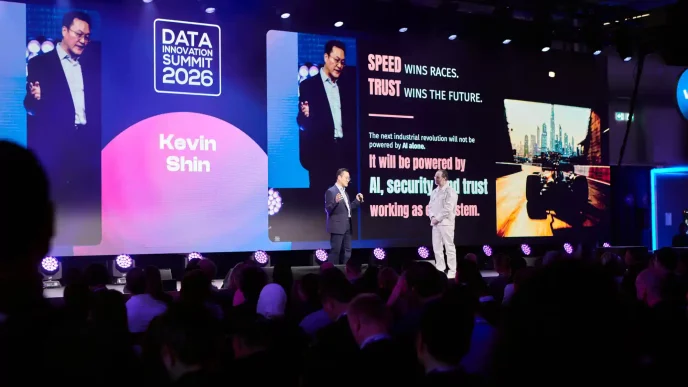
One panel slide circulated by an attending speaker put the numbers in context: the 2026 edition ran across three days at Kistamässan in Stockholm with more than 3,500 delegates, over 300 speakers, more than 300 sessions, over 100 exhibitors, and 15 concurrent stages. Those figures match the deliberate capacity ceiling the event has held itself to for years. What the posts add is texture the numbers alone can’t: multiple attendees independently described struggling to choose between nine parallel sessions running at once, a sign the density of relevant content, not just the headcount, is what people actually remember afterward. That is also why Hyperight organizes all of its events in a hybrid format, allowing the delegates to consume the missed set of presentations after the event as they can not consume all the content during the event days.
Practitioners left with specific, usable ideas
The most credible signal in any of these posts is specificity. Vague enthusiasm is easy to write; detailed technical takeaways are not. A data engineer at Omnevo summarized the trends she saw across all three days: semantic layers and AI agents dominating conversation, business intelligence shifting from static dashboards toward contextual analytics, and data governance and lineage remaining the unglamorous but unavoidable foundation behind every AI initiative in the room. An AI and Data Science Lead working in MLOps described a similar pattern from his own conversations, noting that many companies are moving fast on multi-agent workflows, but that the real difficulty starts once teams try to connect an impressive stage demo to an actual production business process, and that semantic layers and controlled metric definitions are becoming critical precisely because ungoverned “chat with your data” tools can quietly slide into hallucination and mistrust.
Other attendees carried away near-identical concerns from entirely different sessions, which is itself a form of validation. A data architecture and governance specialist at Fingrid, Finland’s electricity transmission operator, quoted a speaker’s blunt framing that models have no understanding of what’s actually happening inside a company, and took from it a renewed appreciation for why business context and structure still matter more than the model itself. A data strategist wrote that the summit’s clearest lesson was that AI agents can’t reach their real potential without a genuinely strong underlying data layer, echoing, independently, exactly what the Fingrid attendee took from a different stage entirely.
The infrastructure story attendees are telling themselves
Several posts described, in their own words, precisely the on-prem-to-cloud-to-hybrid arc that shows up across a decade of the summit’s own archive. A partner-focused marketer at a data infrastructure vendor summarized his three biggest takeaways from the Stockholm stage as, in order: on-premises infrastructure genuinely coming back into serious consideration rather than being treated as legacy, sustained momentum specifically around Databricks integrations, and Apache Iceberg emerging as the clear direction of travel in the data lake space. A separate attendee, summarizing the event more broadly, described a “real shift in the room this year,” where AI adoption itself had stopped being the headline and the conversation had moved to production concerns instead: operability, scale, cost, governance, and ownership, with organizations becoming noticeably more self-aware about the actual state of their own foundations after a couple of years of hype.
Executive and institutional credibility, from people with no reason to flatter
Some of the strongest signals came from attendees with the least incentive to inflate their praise. A CIO and board member wrote that her clearest reflection from the summit was that most organizations aren’t actually struggling with AI adoption itself, they’re struggling with organizational design, since AI pilots routinely succeed in isolation but fail to scale, not because the technology falls short but because the incentives and structures around it were never built for it. Sveriges Riksbank, Sweden’s central bank, posted its own account of sending its innovation lead to present the bank’s AI work on stage to a full room, describing concrete internal experience with AI assistants and analysis platforms and how development can still move forward even under strict regulatory constraints, a notably candid disclosure from an institution not known for casual public commentary on its internal technology practices. 
Fredrik Reinfeldt’s keynote, delivered as Sweden’s former Prime Minister, drew a similarly substantive reaction from at least one attendee who described it as a genuine “masterclass” in what leadership should look like heading into the next several years, built around the argument that Sweden’s ability to lead in technology and AI depends on remaining an open society that continues attracting global talent rather than closing itself off.
Vendors got real commercial value, not just booth traffic
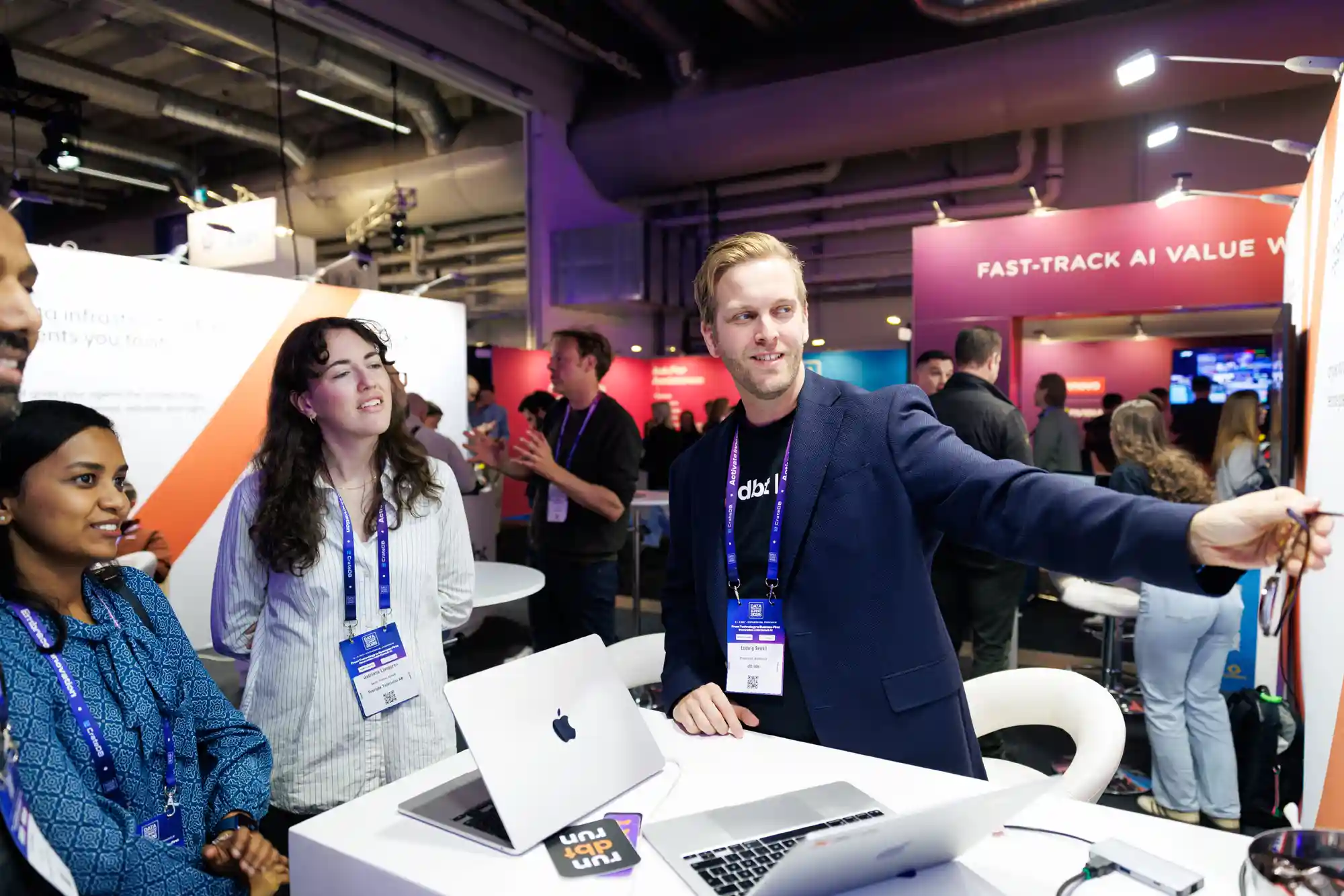
Exhibitor posts told a consistent story of their own: booths described as buzzing continuously across three days, deep technical questions from qualified attendees rather than casual browsers, and, in at least one case, a partner explicitly thanking the summit’s organizing team for facilitating a dinner series that led directly into substantive conversations about enterprise data and AI needs. That kind of specific, product-level engagement, attendees asking about beta features and specific platform capabilities rather than generic small talk, is a different order of signal than attendance figures alone, and it’s the kind of detail vendors have no particular reason to fabricate in an unprompted LinkedIn post.
The clearest evidence of sustained vendor confidence came from a Dataiku sales leader who described having attended the summit for many years and called it, plainly, his favorite event of the year, crediting the organizing team by name for again producing a level of energy he said he hadn’t found anywhere else on the circuit. His account of the actual conversations he had matched the summit’s own governance-heavy thesis closely: customers weren’t asking generic questions about AI’s potential, they were asking specifically about governing a growing number of AI models and agents, and about how to democratize data and AI access without creating the organizational bottlenecks that stall real implementation. Dataiku’s own company account posted a near-identical summary independently, noting that AI agents were everywhere on the show floor, but so were pointed questions about governance, evaluation, and how to generate measurable business value from them, rather than questions about the technology in the abstract.
The community, not just the content
A recurring theme across nearly every post, regardless of the poster’s seniority or role, was the value of the room itself rather than any single session. Multiple attendees specifically credited the event’s organizers by name for building what one CIO called “an impactful platform” that “takes vision and persistence” to create at that scale, while others described walking away with new collaborators and, in a few cases, the beginnings of concrete future partnerships formed in hallway conversations rather than scheduled meetings. One attendee summarized the event’s underlying premise about as directly as it can be stated: he came in curious and open, and left not because of hype, but because of clarity, specifically the recognition that whichever companies get their data foundations right will be the ones shaping the next decade of AI, a conclusion that lines up closely with the summit’s own editorial thesis about where the real work in this industry actually happens.
That sense of community showed up in smaller, less scripted moments too. One attendee described organizing a spontaneous lunch with several other peers working in data and AI as one of the personal highlights of her three days, alongside praise for the caliber of the speakers she’d seen on stage. An engineering manager at Flightradar24 captured the distinction between the summit and a typical technical conference directly: some conferences leave attendees with notes, she wrote, while this one left her with energy, questions, and a renewed sense of possibility, adding that what stayed with her most wasn’t only how quickly data and AI are evolving, but how important it is that organizations evolve with purpose rather than simply chasing the pace of change. A Vattenfall data engineer distilled his own takeaways into a similarly blunt, practitioner-level verdict: data professionals aren’t going anywhere, because AI without solid data foundations, context, and governance doesn’t get far, a conclusion he described as obvious but still worth restating plainly to a room full of people who might otherwise get swept up in the agentic AI conversation instead.

Why unprompted testimonials matter more than curated ones
None of these posts were commissioned, scripted, or published on Hyperight’s own channels first. They were written independently, by people with their own professional reputations attached to their names, in the days immediately following an event they had no ongoing obligation to promote. That’s a meaningfully different category of evidence than a quotes page assembled from a post-event survey, and it’s why the pattern across them, specific technical takeaways, credible institutional participation, real vendor commercial value, and consistent praise for the organizing team by name, carries more weight than any single glowing review could on its own.