Agency as an Assumed Condition
Human agency has occupied a unique position throughout the development of civilization. It has always been present, shaping decisions, institutions, markets, governments, and societies, yet it has rarely been examined as a condition in its own right. Agency was not ignored because it lacked importance. Rather, it became so deeply embedded in the foundations of civilization that its presence was largely assumed. Human beings make choices, exercise judgment, establish direction, and influence outcomes. The systems surrounding us might expand in complexity and scale, but the source of meaningful direction remains fundamentally under our control. Decision authority remains human-centered fot the majority.
This assumption shaped the modern world more profoundly than is often recognized. Political systems emerged around the idea of representation and participation. Economic systems evolved around individual and collective decision-making. Education expanded the capacity for human judgment, while technological progress sought to extend what individuals and institutions could accomplish. Across each of these domains, the focus remained largely consistent. Civilization invested considerable effort in expanding capability because capability was believed to strengthen the human capacity to shape our world with good and bad intend.
The Historical Expansion of Capability
Throughout our recent history, that relationship appeared straightforward. Each major technological advancement extended the reach of human activity. Tools intensified physical effort, robotics transformed production, and communication systems compressed distance while computing systems accelerated information processing. The digital age connected individuals, organizations, and societies at a scale that previous generations could scarcely imagine. Progress became closely associated with the expansion of capability because expanding capability repeatedly expanded the range of outcomes that humans were able to influence.
Under these conditions, the agency itself required little attention. It existed as a constant within the equation. The focus was rather on protection through uncontrolled and destructive use of these tools and systems. Governance had an important purpose until technology changed. Institutions evolved, economies expanded, while human beings remained the primary source of direction within the systems they created. Capability and agency advanced together closely enough that the distinction between them often appeared insignificant.
The emergence of intelligent systems introduces conditions that deserve closer examination, not because agency is disappearing, but because the relationship between capability and agency is becoming increasingly complex.
When Capability and Agency Begin to Diverge
Modern discussions surrounding artificial intelligence are largely framed around capability. They discuss technologies and the transformation of these, including the road map towards AGI and ASI. The conversation focuses on what intelligent systems can achieve, how effectively they learn, the tasks they perform, and the speed at which they continue to evolve. These developments are undeniably important, while capability alone does not fully explain what is changing. Capability describes the range of possible actions available within a system. Agency concerns something different. It concerns the capacity to establish direction, to influence outcomes in meaningful ways, and to shape the conditions through which outcomes emerge. 
Historically, the distinction between these two concepts of capability and agency remained difficult to observe because they developed together. As societies acquired greater capability, individuals and institutions generally acquired greater influence. Industrialization expanded productive capacity while simultaneously increasing economic and political influence. Communication networks increased connectivity while also increasing the ability of ideas to shape societies. Digital platforms created new forms of participation and new mechanisms through which individuals could exercise influence. Capability expanded, and agency evolved alongside it.
What makes the current transition different is that intelligence itself increasingly becomes embedded within the systems through which capability is expressed. Decisions, interactions, recommendations, interpretations, and increasingly execution are no longer confined to direct human action. They emerge through interconnected systems that continuously process information, adapt to changing conditions, and operate across scales that often exceed direct human visibility. The result is not a reduction of human agency, nor a transfer of agency from humans to machines, but a gradual shift in the environment through which agency operates.
Civilization has experienced similar transformations before, although never under precisely these conditions. Human agency has always evolved alongside the structures through which society organized itself. Markets expanded agency beyond local relationships. Institutions expanded agency beyond individual influence. Democracies created mechanisms through which collective agency could operate across populations. Digital networks transformed the ways individuals, organizations, and communities could shape events. In every case, the agency adapted to the conditions surrounding it.
The Evolution of Influence
What changed was not the existence of agency itself, but the mechanisms through which agency became effective.
The emergence of intelligent systems appears to follow a similar pattern. As intelligence becomes increasingly embedded within infrastructure, platforms, services, and operational environments, the pathways through which influence is exercised continue to evolve. Human direction remains present, but it increasingly operates through environments that themselves contain growing layers of intelligence. The systems surrounding decisions become more adaptive, the structures connecting actions and outcomes become more dynamic, and the conditions through which influence is exercised become progressively more complex.
This development carries implications that extend beyond technology. Discussions about intelligence frequently concentrate on performance, productivity, automation, and scalability. While intelligence becomes more deeply integrated into the operational fabric of society, another question begins to emerge. It concerns not what intelligent systems can accomplish, but how human agency itself develops within increasingly intelligent environments.
For centuries, civilization concentrated primarily on expanding capability because capability represented the most visible path toward progress. Agency remained present in the background, shaping direction while rarely becoming the object of examination itself. Today’s conditions suggest that this may begin to change. Not because human agency is under immediate threat, nor because intelligent systems replace the role of human judgment, but because the environments through which agency operates are themselves evolving.
Agency as an Emerging Consideration
As intelligence becomes embedded within systems, the relationship between capability and direction becomes more important to understand. The issue is no longer limited to the capabilities that systems possess. It increasingly concerns how human intention, judgment, influence, and responsibility continue to shape outcomes within environments characterized by continuous intelligence.
Under these conditions, the agency gradually becomes visible and important in a new way. What was once treated as an implicit characteristic of civilization begins to emerge as a subject of careful consideration. The question is no longer whether agency exists, but how it evolves and changes as the systems surrounding is profoundly changing the underlying conditions.
Closing Perspective
Human agency has never been a static condition. Throughout history, it has evolved alongside the institutions, technologies, markets, and structures that shaped civilization. The emergence of intelligent systems does not break from that historical pattern. Instead, it introduces a new set of conditions within which the next stage of that evolution will unfold.
As intelligence becomes increasingly embedded within the systems that shape modern society and civilizational and institutional systems, the challenge is no longer only understanding the evolution of capability. It is understanding how human agency evolves and changes alongside it.
This series introduces the core ideas of The Rise of Human Agency, with each upcoming edition exploring a central dimension of the book’s underlying thesis. It accommodated the structural approaches suggested and discussed in this edition, which translates the hidden complexity and implications of this transformation.
If intelligence continues to expand through increasingly capable systems, how should human agency evolve alongside it?
A Billion Time Smarter is available on Amazon.
About the Author
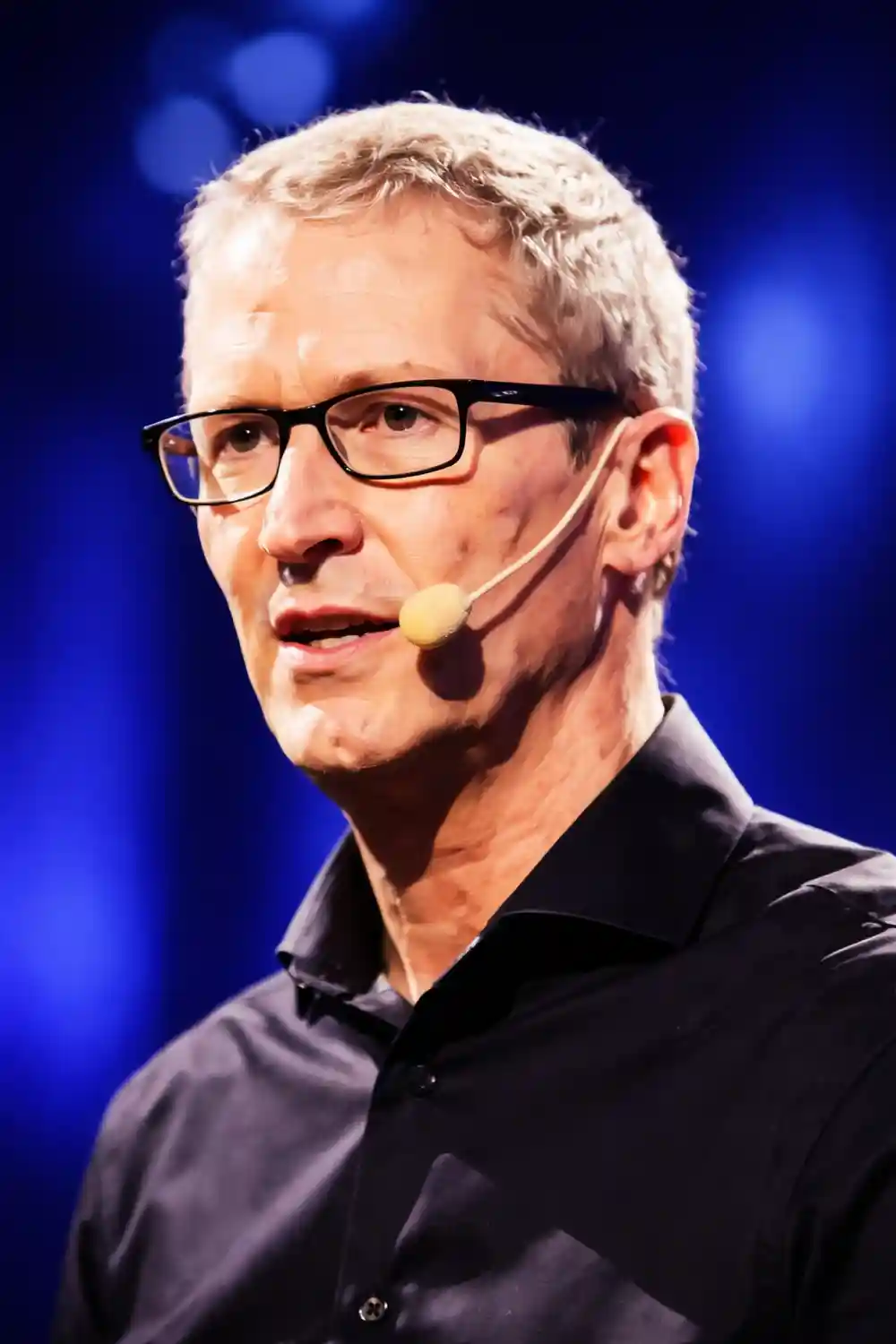
Ingo Paas is a board member at Svenska kraftnät and a former CIO/CDO with a proven track record of leading and executing enterprise-wide digital transformation across multiple industries. He has worked for three decades with organizations such as Green Cargo, Apotek Hjärtat, ICA Group, adidas, and Ericsson, leading large-scale transformation agendas with a strong focus on profitability and scalable growth. His experience includes restructuring fragmented environments into coherent, high-performing operating models and effective, data-driven operations.
In his current board assignment, Ingo contributes to strategy, infrastructure, risk, and long-term value creation, particularly in areas where AI, technology, and innovation reshape investment priorities.
Ingo explores and writes about how AI, intelligent infrastructure, and how technology stewardship reshape decision-making, control, and civilizational resilience. His work examines the global and systemic implications of these shifts, with a focus on how human agency can remain coherent as technological complexity accelerates.
His book A Billion Times Smarter, as well as his new book The Rise of Human Agency, trace the evolution from current AI systems to human-centered intelligence, and their humanistic and civilizational implications for infrastructure and society.
*The views and opinions expressed by the author do not necessarily state or reflect the views or positions of Hyperight.com or any entities they represent.