
In the current era of “AI or fail” it is easy to get swept up in the glamour of Large Language Models and generative agents. But as most data practitioners know, an AI is only as good as the architecture it sits upon. While the industry bickers over the “rivalry” between Data Warehouses and Data Lakehouses, a much more dangerous set of problems is quietly tanking enterprise projects from the inside out.
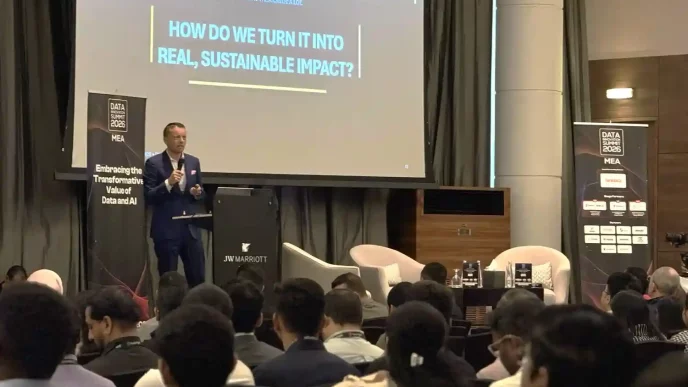
In a compelling session from WiseDigi Oy, Tuure Karppimaa dives deep into the mechanics of the modern data platform, moving past these words to address an uncomfortable truth: You can get the technical parts perfectly right and still fail.
The Great Debate: Warehouse vs. Lakehouse
For years, the Data Warehouse was structured, rigid, but reliable for historizing data. Then came the Data Lakehouse, promising the flexibility of semi-structured data with the performance of a traditional warehouse.
Is one the winner? Is the other doomed? This session suggests that viewing these as competitors is a fundamental misunderstanding. Whether one is building a “Silver/Gold” layer in a lakehouse or a “Staging/Presentation” layer in a warehouse, the structural goals remain remarkably similar. The real question isn’t which technology to choose, but how to handle the Modern Data Platform without falling into the “bitfalls” of development.
The Three Silent Killers of Data Projects
Most project failures aren’t caused by a lack of technical skill. There are three specific “true causes” that lead to wasted budgets and abandoned reports:
- The Human Dependency Trap: People make errors, and large teams suffer from “communication decay”. When complex business logic is trapped in the heads of individual developers, the platform becomes fragile.
- Inconsistency in Practice: Without a strong definition of how data is handled, the outcome is a mess of rework. If three different developers build in three different ways, the governance disappears.
- The Business Value Void: It doesn’t matter how elegant an SQL code is. If the end report doesn’t solve a specific business problem, the work is not usable.
“If no one uses the report, then the work is gone, it’s wasted”. 
How to Get From Coding to Modelling
The solution presented is a radical shift in how people spend their hours. If they spend 80% of our time on repetitive coding, loading scripts, and manual documentation, they only have 20% left to actually understand the business problem.
This session introduces the power of Data Automation and it is specifically shown through the lens of WhereScape. By using a metadata-driven approach, practitioners can automate the “repetitive tasks” that usually lead to human error.
This video shows:
- The Blueprint Approach: How to use conceptual modeling to create a “blueprint” before a single line of physical code is written.
- Code Generation: The mechanics of generating SQL, procedures, and loading scripts automatically based on templates, ensuring 100% consistency regardless of who is on the team.
- Automatic Documentation: How to pull lineage and metadata by default, solving the governance nightmare that usually haunts “ongoing” development projects.
Tuure Karppimaa from WiseDigi Oy This, shows a roadmap for moving from “manual laborer” to “strategic modeler” for any architect, developer, or data lead. It provides a clear methodology for building in small, high-value increments rather than trying to boil the ocean with a massive, unmanaged platform.
To finish it, it concludes with a powerful look at WhereScape 3D and RED, demonstrating how a tool first published in 2003 has evolved to handle the complexities of modern systems like Data Vault 2.0 with ease.
This is about a new philosophy of data leadership that ensures that one platform is never “ready” because it’s always evolving alongside your business.
The full session, is from our Data Innovation Summit 2025 edition. It includes the deep-dive demo of WhereScape’s automation engine and it’s available now for premium members.
Join the 11th edition of Data Innovation Summit in Stockholm, Sweden (In-person & Online) from 6–8 May 2026 where the focus will be Applied AI, Data Engineering, Physical AI, and Generative AI for Enterprise.