The story of how Hyperight built the Data Innovation Summit, and everything that came after it.
Most conferences are built to follow demand. They identify a topic that is already popular, book speakers who are already well known, and sell tickets to an audience that already knows what it wants to hear. The Data Innovation Summit was built the opposite way, and understanding that distinction is the key to understanding why it has lasted.
Hyperight & DIS Ecosystem at a Glance
| Initiative / Platform | Origin / Launch | Core Purpose & Audience |
|---|---|---|
| Data Innovation Summit (DIS) | 2016 (Stockholm) | Northern Europe’s flagship conference for applied data engineering, MLOps, and Agentic AI. |
| NDSML Summit | Community Request | Dedicated technical home for Data Scientists, ML Engineers, and AI Architects. |
| Data 2030 Summit | Community Request | Specialized gathering focused on Data Governance, Quality, and Enterprise Architecture. |
| The Nordic 100 List | Community Recognition | Annual recognition honoring practitioners driving real-world enterprise data and AI execution. |
| DAIR Awards | Industry Benchmark | Celebrates organizational Data and AI Readiness across European enterprise sectors. |
A Gap the European Data Industry Hadn’t Named Yet
By around 2013 and 2014, digital transformation had become the dominant narrative in European boardrooms. Nearly every conference on the continent was discussing it in some form, yet underneath that enthusiasm sat a much narrower problem: very few organizations actually understood what was driving the next technological shift. 
Digitalization was treated as an IT and infrastructure conversation, run through CIO budgets and executive strategy decks. Meanwhile, the deeper capability that was starting to separate market leaders from laggards (namely data science, machine learning, and algorithmic decision-making) remained largely absent from major agendas.
The gap became impossible to ignore when looking outside Europe. In Silicon Valley and across North America, tech companies were already moving well past the conceptual stage, investing heavily in machine learning infrastructure, predictive systems, and large-scale analytics. European executives were still describing “digital transformation” in the abstract, often without a working understanding of what the next phase required of their talent pipelines or technology stacks. Academic programs in data science were thin on the ground, meaning even organizations that recognized the shift struggled to hire for it.
That disconnect was the founding insight behind the Data Innovation Summit. The conclusion Hyperight‘s founders reached was straightforward: the market did not need another generic conference about digital transformation. It needed a platform willing to confront that capability gap directly.
Built to Be Useful, Not Comfortable
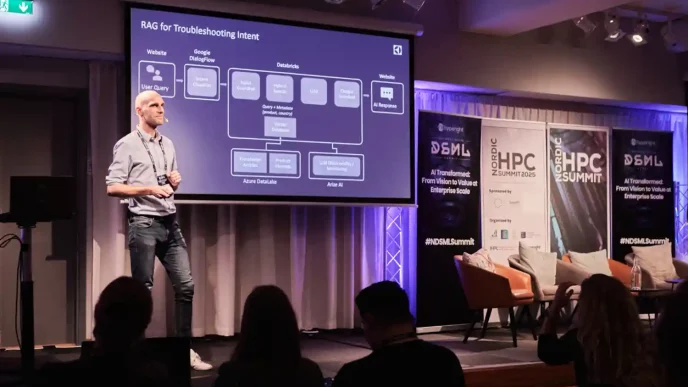
From the outset, the event was designed with a specific philosophical stance: it would prioritize operational depth over executive comfort. Rather than inviting C-suite leaders to talk about transformation in abstract terms, the summit deliberately placed strategic decision-makers in the same room, and often on the same stage, as the technical practitioners and data scientists actually building the underlying systems.
That combination created a productive friction. Executive rhetoric about the future ran directly into implementation reality, making the scale of incoming technology concrete for early delegates. Speakers were expected to describe what they had actually built and including what had failed, rather than offer predictions or vendor marketing.
That single editorial standard “practicality over hype” became one of the summit’s most durable differentiators. While most large tech expos optimize for sponsor exhibition traffic, the Data Innovation Summit optimized for delegate value, establishing that curating who was in the room mattered more than maximizing footfall.
The Day 264 Delegates Became Co-Architects
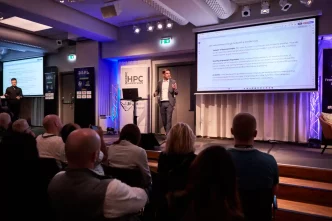
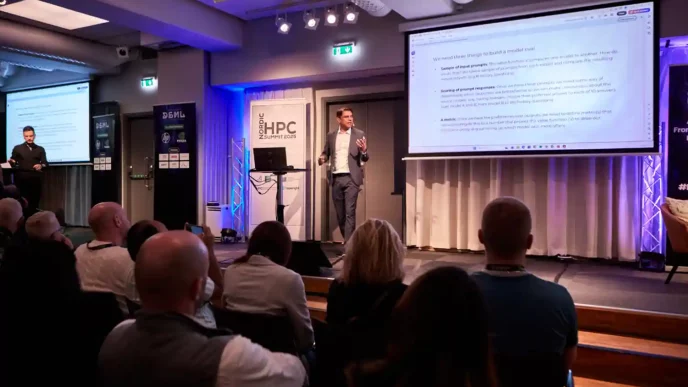
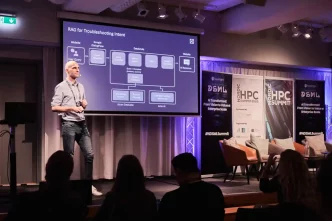
The clearest evidence of that philosophy in action happened on the very first day the event ran in 2016. With 264 delegates in the room (sponsors included), the early Hyperight team made a deliberate choice: rather than spending that first day purely on execution, they spent it in direct conversation with attendees about what the platform should focus on next.
Delegates weren’t just consuming the event; they were actively shaping its roadmap. Practitioners in that inaugural room included:
- Johan Magnusson from the University of Gothenburg’s Informatics division.
- Diego Galar from Luleå University of Technology, whose research later anchored an entire spin-off event on predictive maintenance.
- Anders Arpteg (now VP of AI & Data at Saab).
- Henrik Göthberg (CEO of Dairdux).
- Robert Luciani (founder of Nerv Dynamics).
Each of these leaders returned to a Hyperight stage in nearly every subsequent year, forming an unbroken thread that makes their careers a living testament to the community established in 2016.
Furthermore, a ticket to that first summit included more than a single day in a conference hall. From the beginning, it provided recorded session access afterward and entry to smaller, complementary half-day events held across regional cities throughout the year. The organizing team recognized that community relationships needed continuous touchpoints across the calendar year.
How Listening Built an Ecosystem
Over the following decade, that community feedback loop produced the broader Hyperight platform:
- Nordic Data 2030 Summit: Grew out of a specific need identified by data management and governance practitioners.
- NDSML Summit: Created for data scientists and machine learning engineers who needed a deeper technical environment.
- Specialized Summits: Focused gatherings like the People Analytics Summit and Predictive Maintenance Summit were built for emerging roles that lacked a professional home in Northern Europe.
- Recognition Programs: The Nordic 100 List was created to honor practitioners doing real operational work, the Women and Data Summit were launched to champion female technical leaders, and the Nordic DAIR Awards were established to elevate data leadership within executive suites.
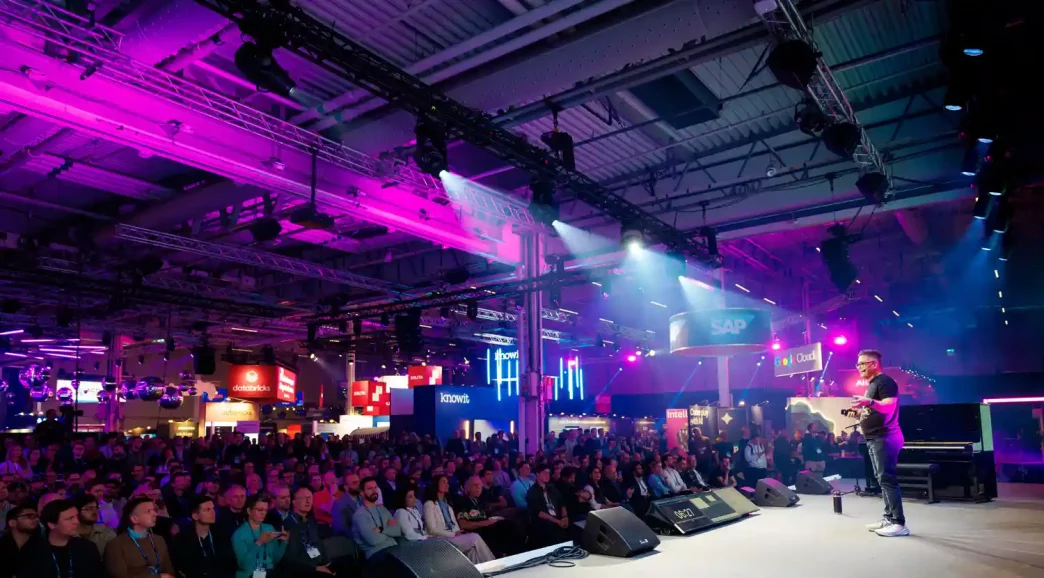
The exhibitor floor from those founding editions reflects that same technological transition. Early sponsors came almost entirely from the established big data and business intelligence landscape: companies like Cloudera, Teradata, Informatica, Talend, Qlik, Tableau, SAP, and IBM. Bringing those vendors into the same room as academics and machine learning practitioners before the broader European market had caught up helped define an entire category.
Why This Origin Story Matters a Decade Later
The strongest event platforms are built before the broader market fully understands why they are necessary in the gap between what an industry discusses and what is happening underneath the surface. The Data Innovation Summit was built inside that exact gap when Europe was still debating digitalization in the abstract while algorithmic decision-making was taking off globally.
A decade on, choosing delegate value over volume, curation over scale, and practical implementation over trend commentary remains the organizing principle behind everything the summit builds. The platform didn’t just track the industry’s evolution from big data to machine learning to Generative and Agentic AI but it evolved directly alongside the community that helped design it.
Frequently Asked Questions
When was the Data Innovation Summit founded and by whom?
The Data Innovation Summit was conceived in late 2015 and officially launched in 2016 in Stockholm, Sweden, by Hyperight. It debuted with 264 delegates to bridge the gap between abstract corporate digitalization and applied data science engineering.
What sister events evolved from the Data Innovation Summit?
Through community feedback, Hyperight expanded the summit into a broader ecosystem including the Nordic Data Science and Machine Learning Summit (NDSML), Data 2030 Summit, People Analytics Summit, Predictive Maintenance Summit, and the Women and Data Summit.
How does the Data Innovation Summit differ from traditional tech expos?
Unlike standard commercial expos that prioritize exhibition floor traffic and sponsor pitches, the Data Innovation Summit prioritizes delegate value, real-world operational blueprints, technical speaker transparency, and practitioner-led content.