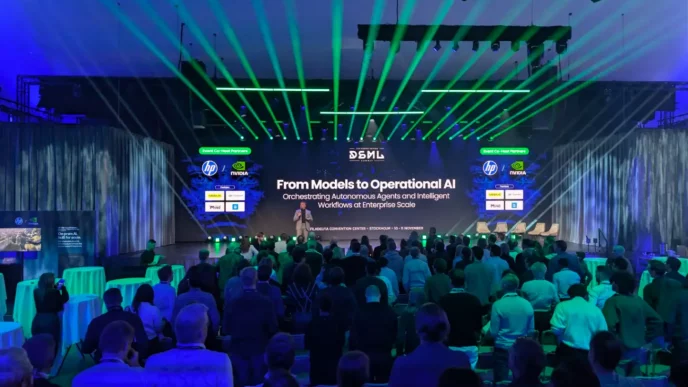
The 11th Nordic Data Science and Machine Learning (NDSML) Summit wrapped up yesterday in Stockholm, bringing an intensive two-day gathering of over 400 onsite leaders and a global hybrid audience to a close. While the opening day established an industry-wide mandate to move past experimental sandboxes, the final day provided the architectural blueprint for what comes next: engineering resilient autonomy, mastering sovereign compute, and embedding self-correcting systems directly into production.
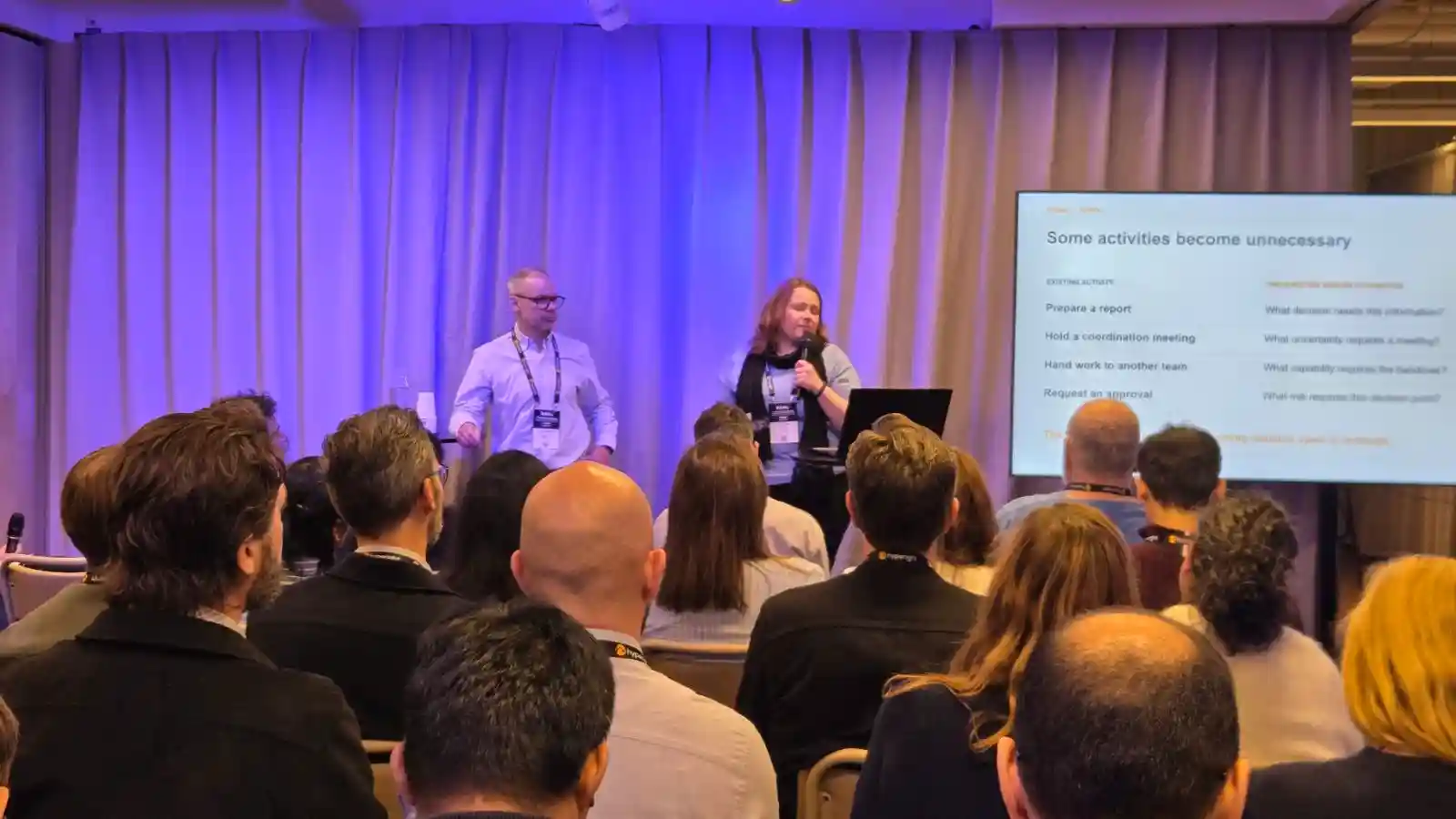
For speakers on stage, the event was all about open dialogue and peer learning. Luba Weissmann, AI & Data Director at Epiroc, highlighted the value of that shared knowledge.
“First of all, it’s a really great networking opportunity – I get to see people that I don’t see daily, and it’s really good to check in and see what others are up to. You learn what other companies in the industry are doing. I think it’s a learning opportunity,” she told Hyperight.com.
Summit speaker Eugene Klyuchnikov, Principal Data Engineer at Zalando, echoed that sentiment, pointing to how those conversations translate into tangible outcomes.
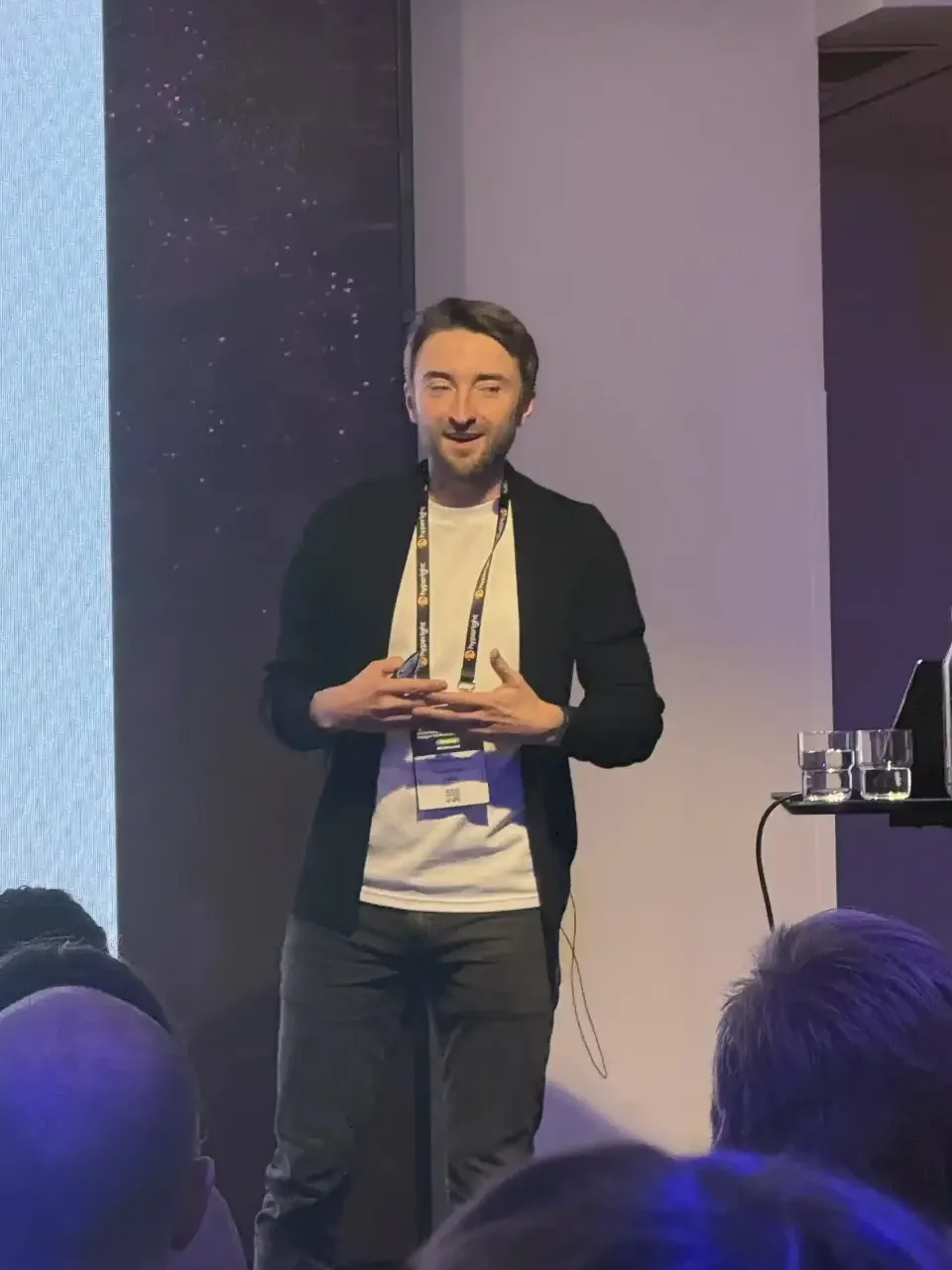
“For me, it’s a combination of the talks and the people. The summit brings together a carefully curated selection of speakers and vendors, which makes it a great opportunity to hear how different companies are approaching AI, tackling practical challenges, and looking for real business value and ROI, but networking is equally important. It’s a chance to connect with hundreds of professionals who are solving similar problems, or sometimes completely different ones.
Those conversations help broaden my perspective, spark new ideas, and occasionally point me towards solutions to challenges I’m dealing with myself,” he added. 
Engineering for Scale and Reliability
Summit Chairman Robert Luciani (CEO, Nerv Dynamics) opened the day by framing its core thesis around reliability, continuous evaluation, and infrastructure robustness.
That theme carried straight into the opening keynotes and panels:
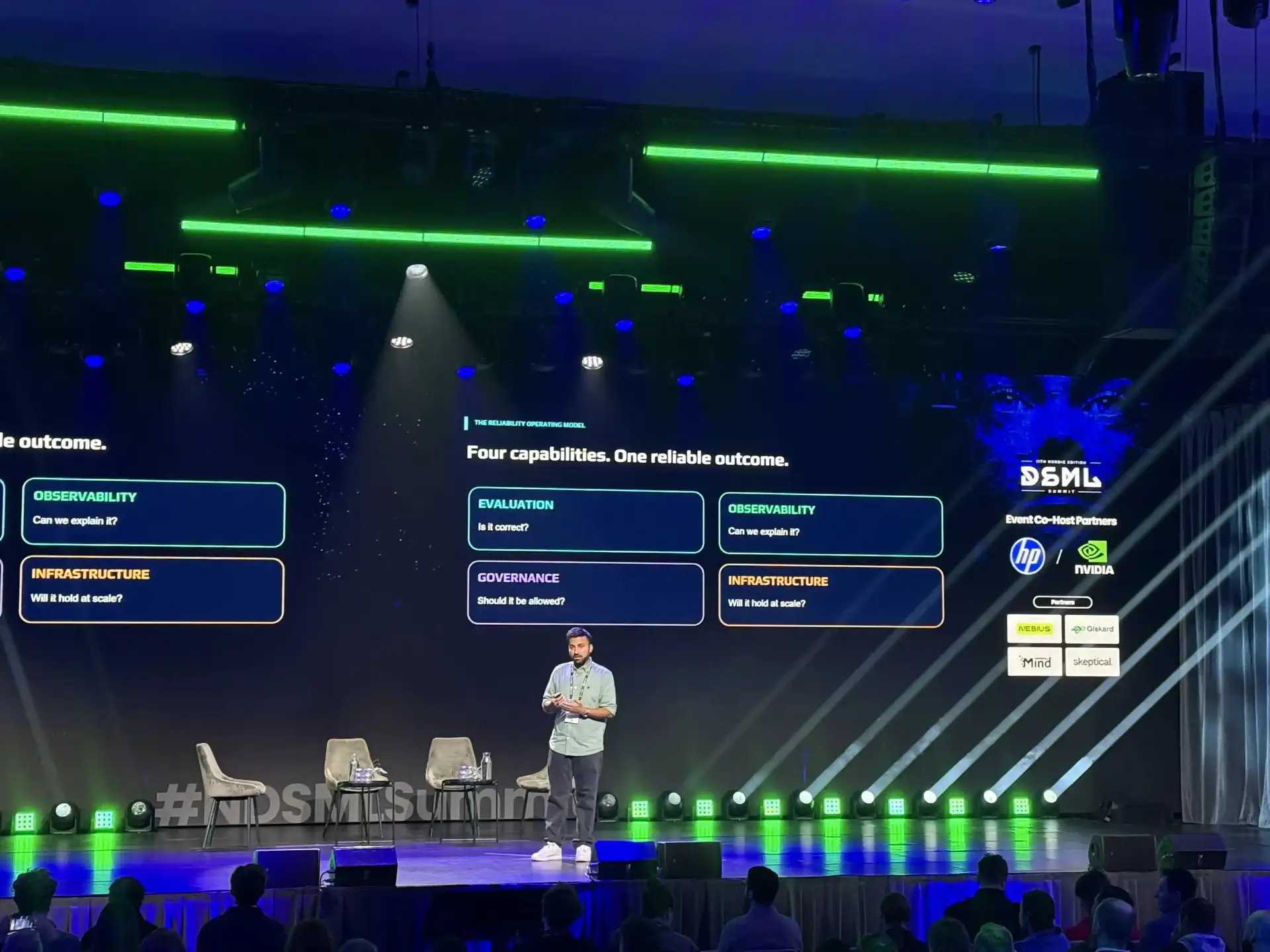
- Evaluation as a Prerequisite: Nishant Gupta (Staff Software Engineer, Meta) detailed why telemetry, observability, and governance have shifted from post-deployment afterthoughts to mission-critical engineering foundations.
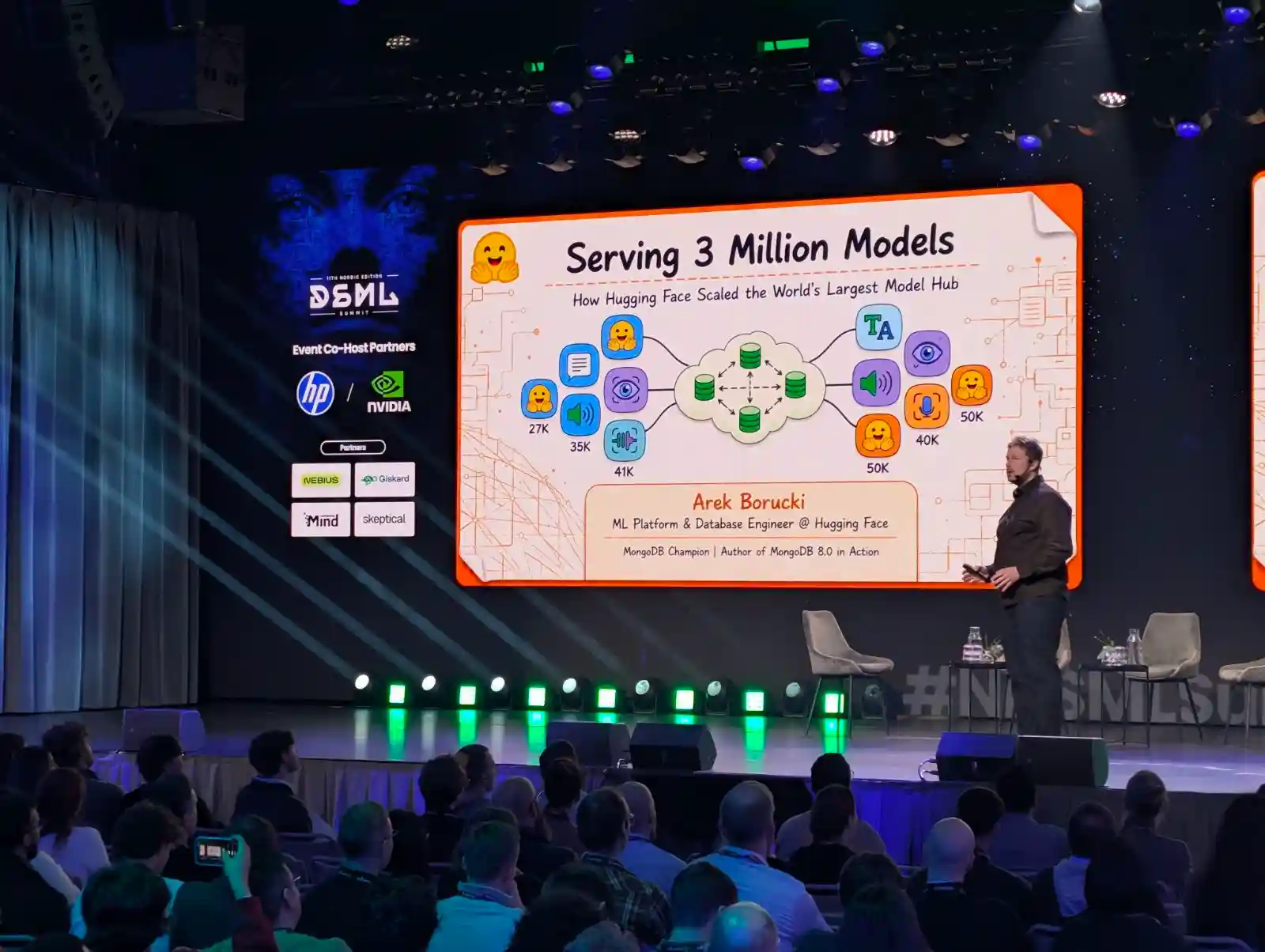
- Surviving Planetary Traffic: Arek Borucki (Machine Learning Platform & Database Engineer, Hugging Face) shared architectural battle scars from serving three million models without operational collapse.
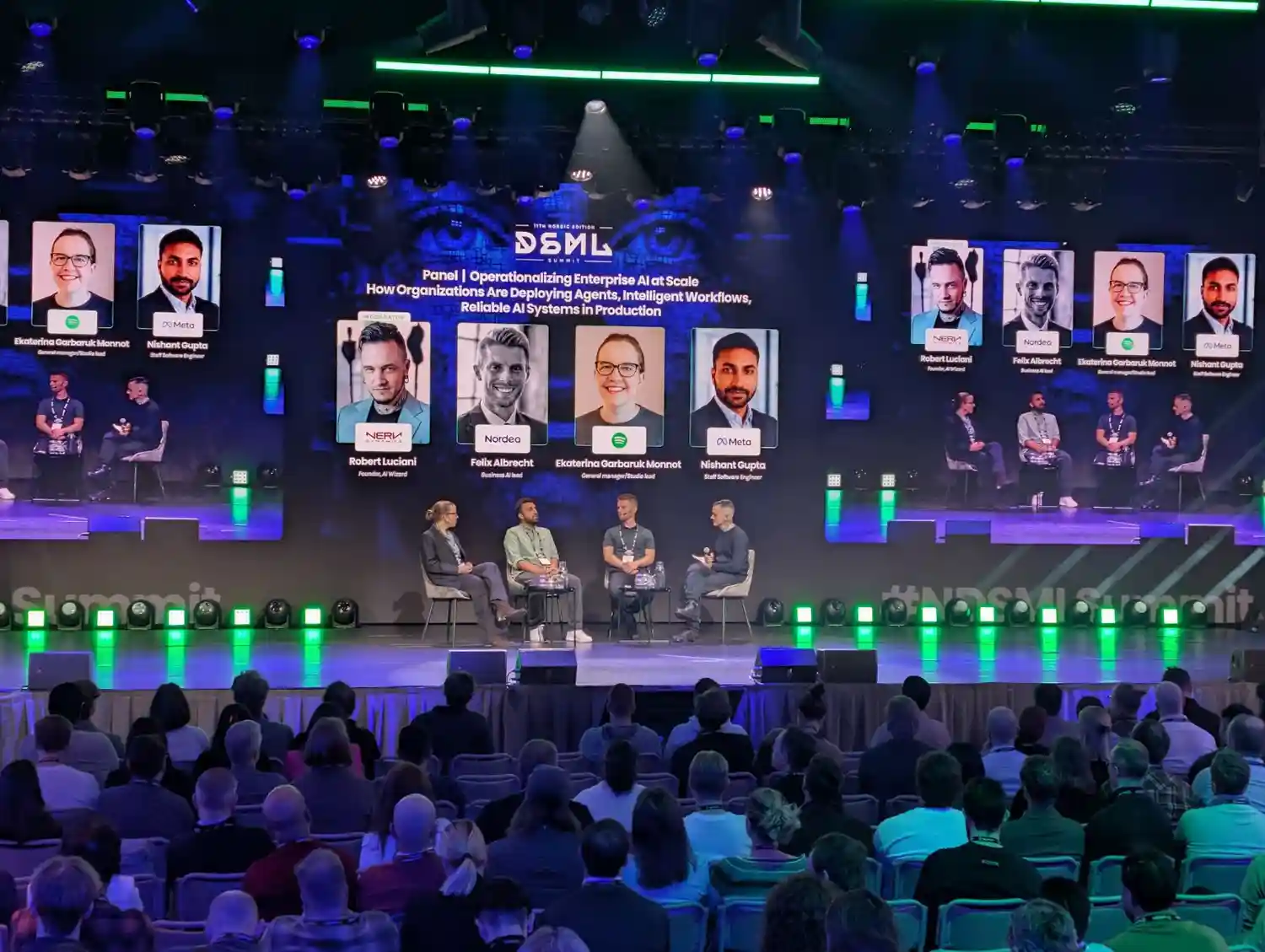
- Moving Beyond Copilots: In an executive panel moderated by Robert Luciani, leaders Felix Albrecht (Business AI Lead, Nordea), Ekaterina Garbaruk Monnot (General Manager / Studio Lead, Spotify), and Nishant Gupta (Meta) unpacked the organizational friction of scaling AI, balancing risk management in regulated banking with dynamic personalization in high-throughput streaming.
Running parallel to the main stage, Robert Luciani also led a hands-on workshop exploring how far local AI can be pushed on personal hardware to preserve privacy and cut cloud dependencies.
Tracks: From Governance to Self-Healing Platforms
Across three parallel stages, practitioners traded theoretical hype for production realities:
Manage + Govern AI stage
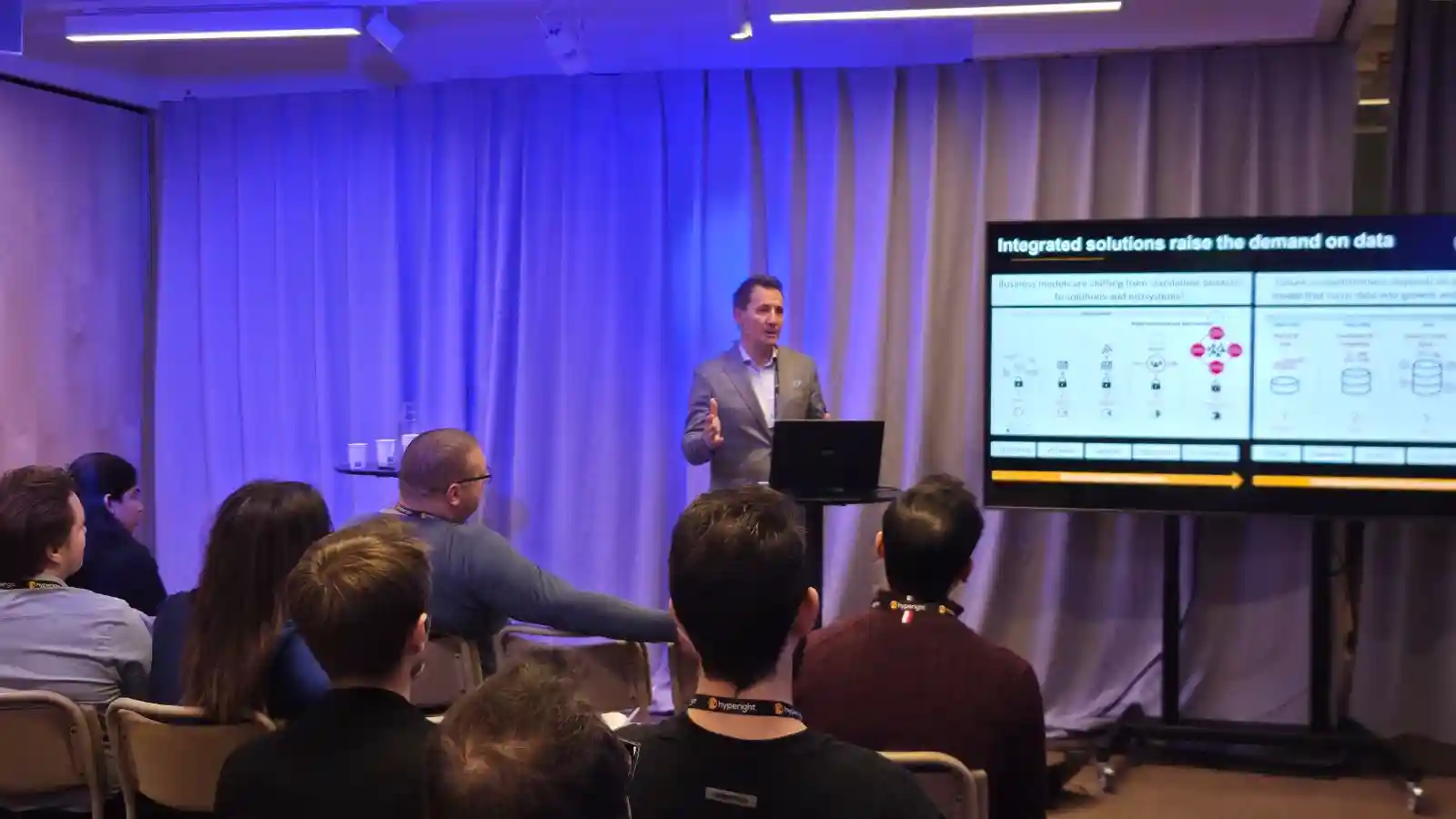
Governance & High-Stakes Adoption: On the Manage + Govern AI stage, the focus centered on keeping autonomous systems within strict boundaries. Aurora van de Walle (AI Engineer, ASSA ABLOY) showed how to translate abstract company policies into executable runtime guardrails, while Senadin Alisic (Strategy Planning, Combitech/Saab) examined airtight security in defense transformations. Luba Weissmann (AI & Data Director, Epiroc) and Peter Malmberg (VP Innovation & Digital Divisional Management, Epiroc) explored moving past isolated use cases toward end-to-end automation, while Nicolay Nerdal (Data Scientist, SpareBank 1 SMN) addressed the risk of LLMs corrupting enterprise data quality. Rounding out the track, Rasmus Lundholm (Engineering Lead, Intric) shared compliance lessons from over 80 public-sector deployments, and Fredrik Urby (Head of Data Science, Länsförsäkringar AB) traced the journey of taking an agentic insurance chatbot from pilot to production.
Develop + Deploy AI stage
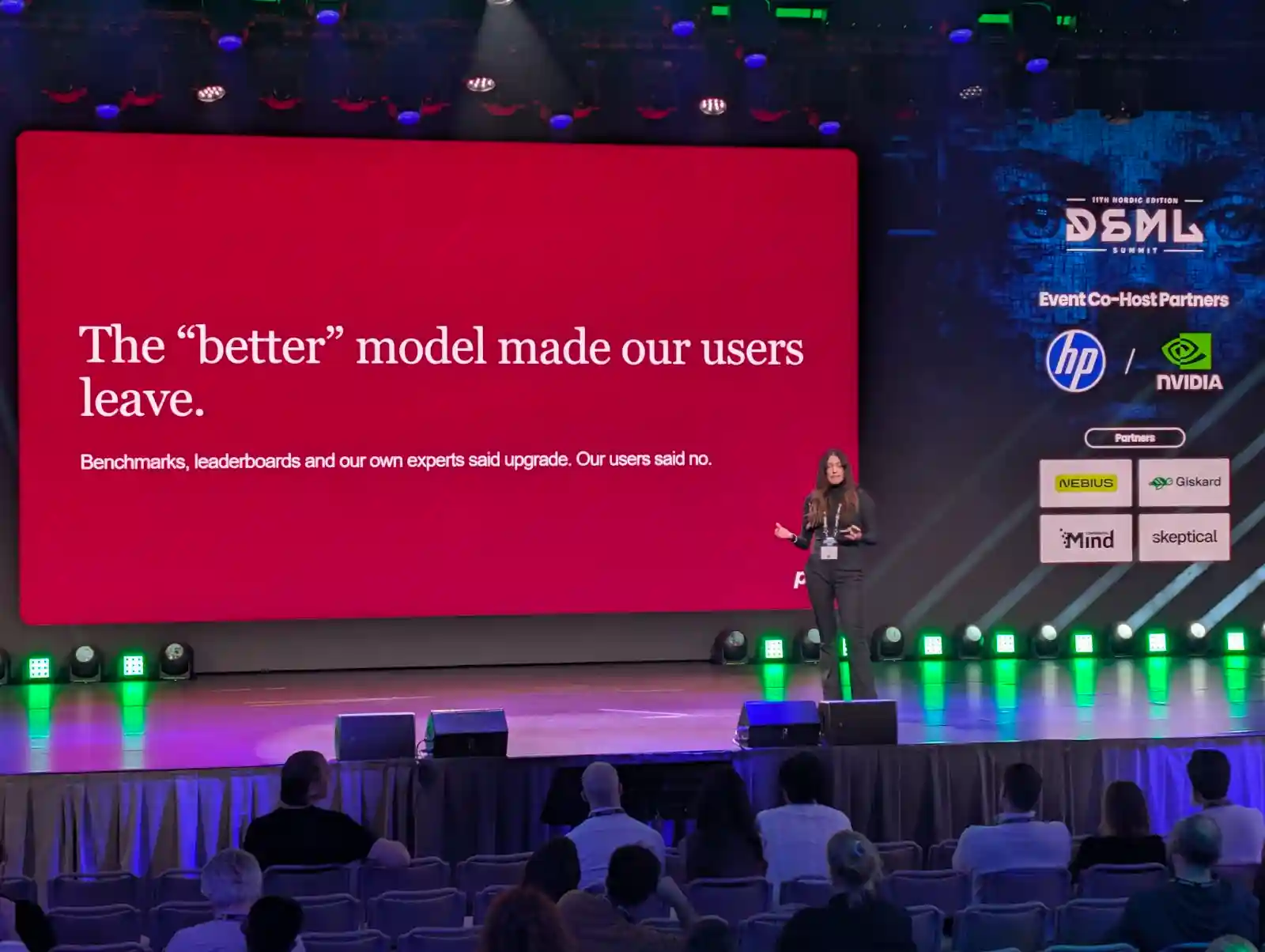
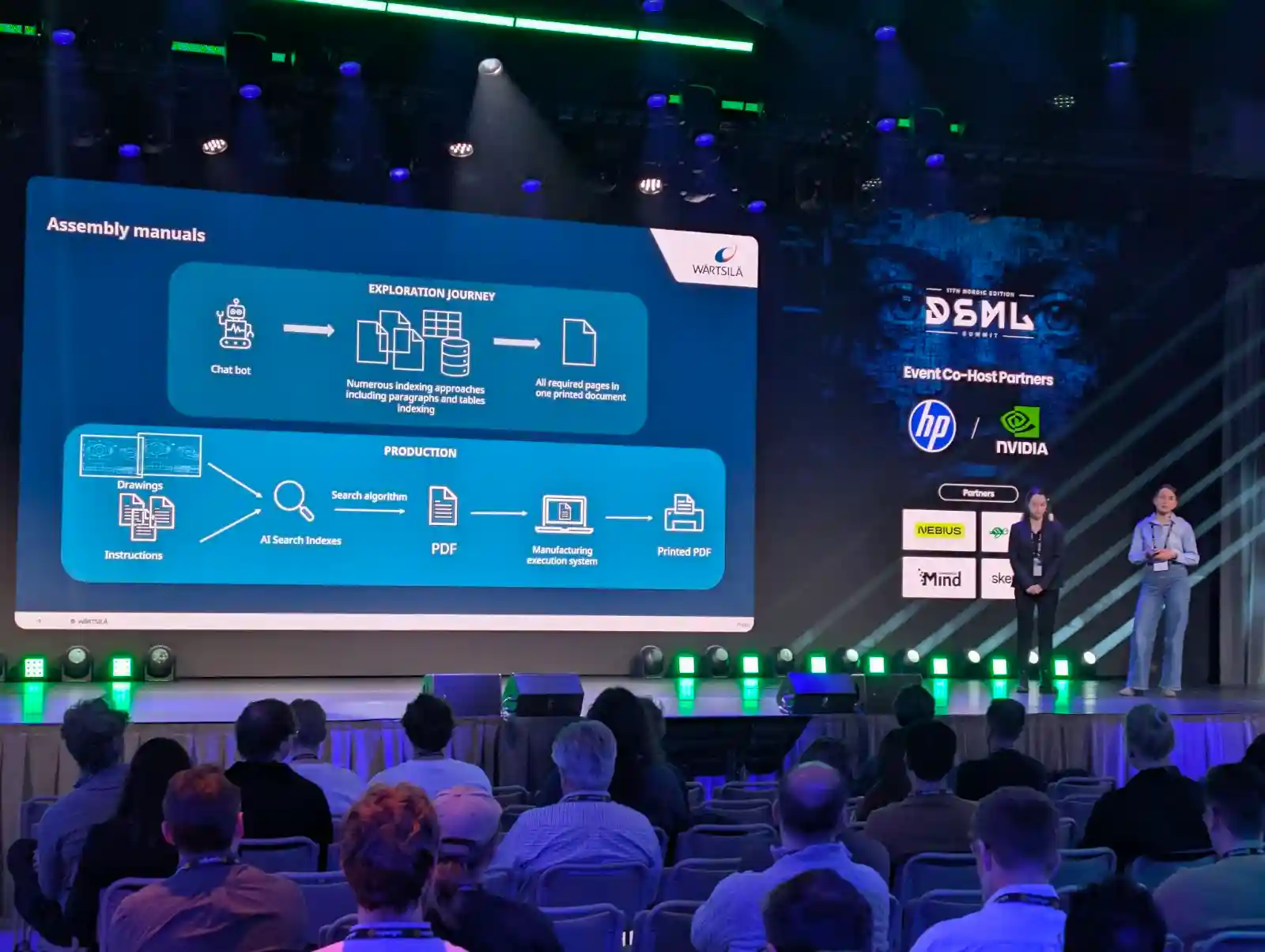
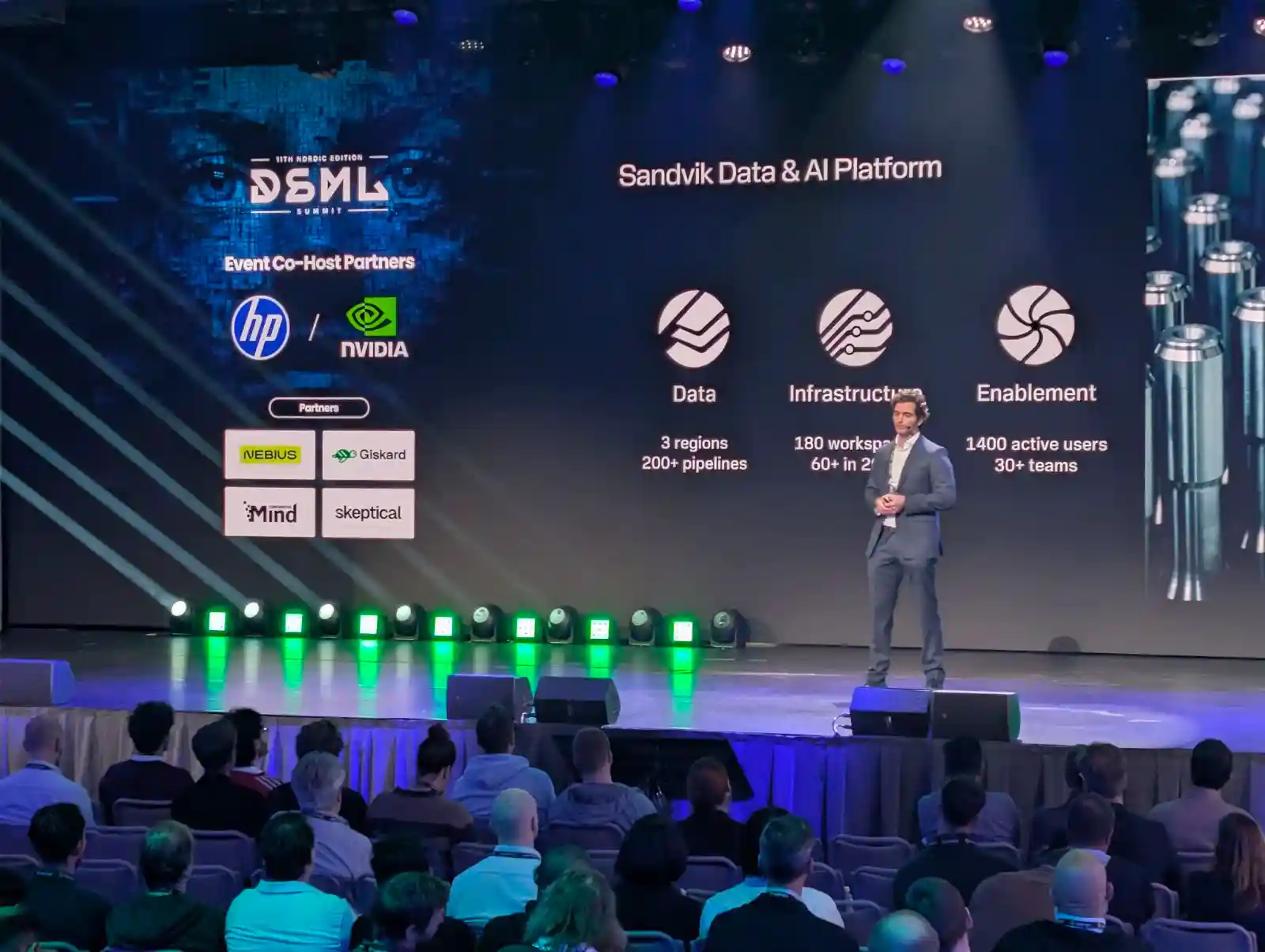
Autonomous & Adaptable Engineering: The Develop + Deploy AI stage tackled how to build agents that require minimal human intervention. Valentin Buchner (Chief Architect, Chapter Two) challenged traditional monitoring with blueprints for self-improving agent loops, echoing William Smedberg (AI Lead, Sandvik) and his look at autonomous agents that actively monitor and patch internal data platforms. Meanwhile, Rohini Kondapaka (AI Product Owner, Ericsson AB) walked through scaling an internal assistant into an everyday habit, Maria Litova and Andrea Kovalova (Data Scientists, Wärtsilä) shared field lessons on shortening computer vision loops on factory floors, and Rebecca Oskarsson (Co-founder & CTO, Pirr) showed how to build adaptable architectures that treat weekly model releases as instant upgrades rather than breaking changes.
Infrastructure + Data Engineering stage
Sovereignty, Data Contracts, and ROI: On the Infrastructure + Data Engineering stage, Petra Dalunde (Head of AI Ecosystem & Policy, RISE) and Francesco Fiusco (HPC Specialist, RISE) debated whether European cloud alternatives can realistically rival global hyperscalers, while Anton Smith (Product Director, Nebius) outlined pathways for post-training open-weight models on proprietary infrastructure. On the data engineering front, Eugene Klyuchnikov and Mukrram Ur Rahman (Principal Engineers, Zalando) explained how rigid data contracts enabled a migration across 100 engineering teams: a structural discipline echoed by Patrick Beckmann (Data Science, DKV Mobility) on data-model contracts and Prayson Wilfred Daniel (Principal Data Scientist, Norlys) on probabilistic energy grid design. Capping the track with commercial proof, Robert Andersson Krohn and Fariborz Parhizgar (Lendo) traced how their ML pipelines scaled to generate 50 MSEK in measurable bottom-line value.
Afternoon Demos & The Closing Keynote
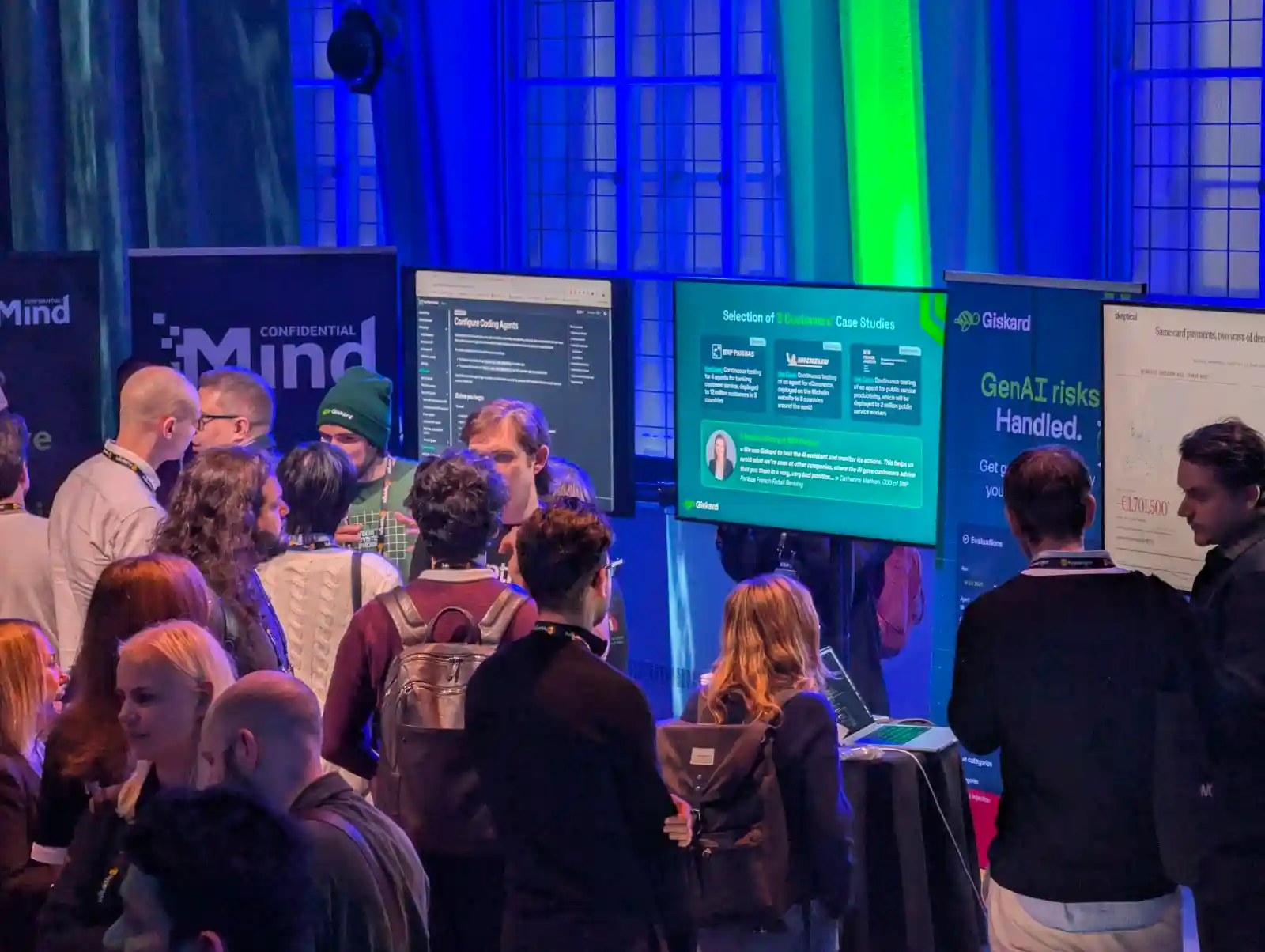
During the afternoon Technology in Practice sessions (TIP), attendees tested live enterprise tooling across the stack: from provable error bounds (Skeptical) and continuous automated red-teaming (Giskard) to on-premise, air-gapped, and cloud-native compute setups from HP, ConfidentialMind, and Nebius.
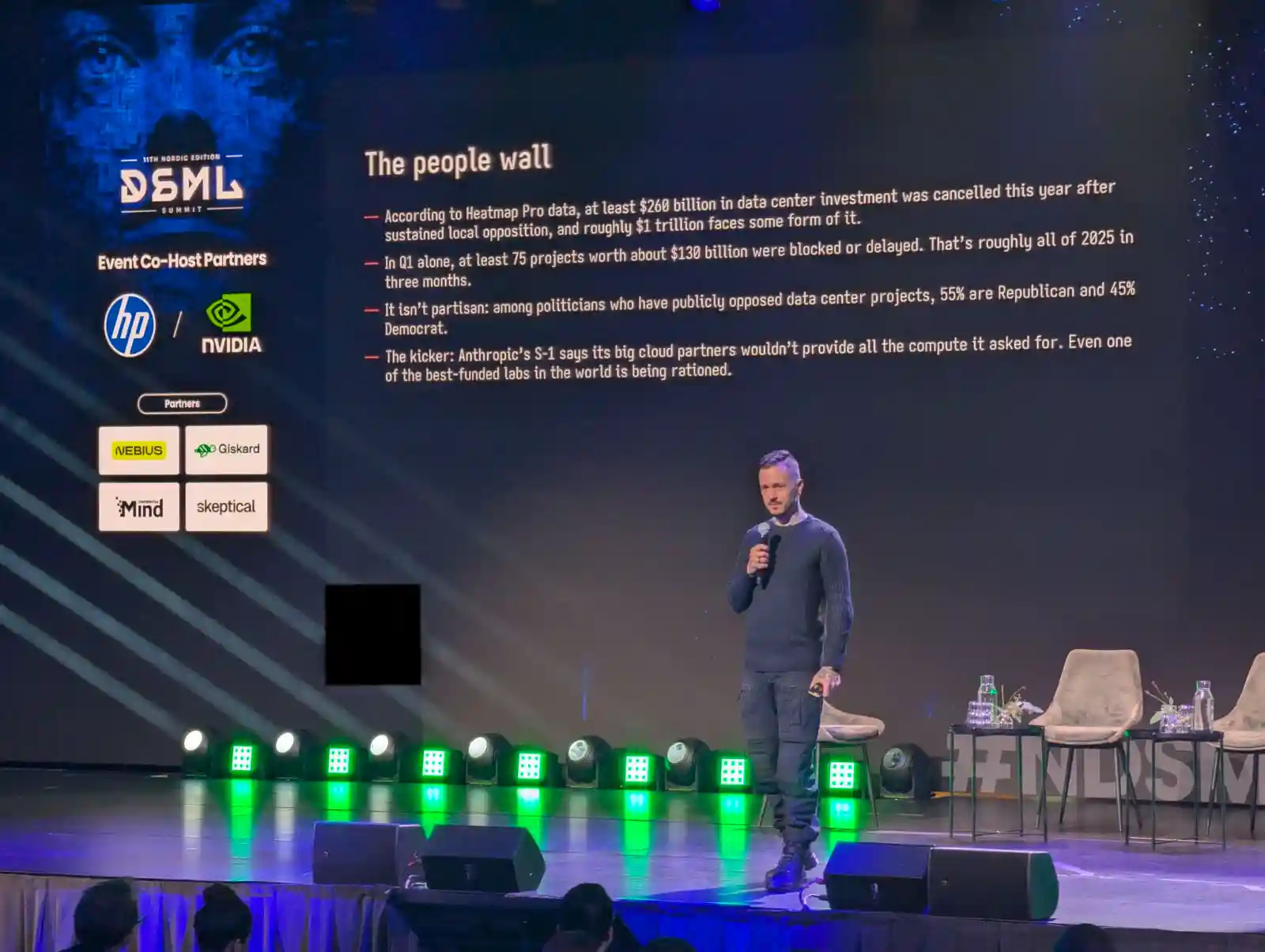
Delegates reconvened in the main auditorium for a provocative closing keynote from Vilhelm von Ehrenheim (Co-founder & CAIO, QA.tech), who reframed software engineering for the agentic era: as models become increasingly non-deterministic, comprehensive runtime test suites effectively become the true loss function guiding system behavior.
Summit Reflections & Key Takeaways
Reflecting on the event, speakers shared their main takeaways, pointing to a clear shift in how organizations approach AI.
Zalando’s Eugene Klyuchnikov highlighted the renewed emphasis on strong data infrastructure and measurable business impact.
“My biggest takeaway is that many companies are currently focused on two things. First, they’re working on the foundations: transforming and modernising their data platforms and infrastructure to make them ready for agentic AI. A recurring message across the talks is that you need to get the basics right before you can scale agentic capabilities. Second, companies are becoming much more focused on finding problems where AI can deliver clear business value and ROI. I’m glad we’re moving away from the phase where AI was almost a goal in itself. We’re increasingly treating it as a tool and starting with actual business problems, asking where AI can help solve them – and whether the economics make sense. I think that’s a much healthier direction for the industry,” added Klyuchnikov.
Epiroc’s Luba Weissmann pointed to the momentum across industries and the value of learning from peers at different stages of adoption.
“My key takeaway from the event is that everybody is doing something with AI. People doing a lot of exciting things, and I think it’s really great, and I think it’s really positive for the industry, for the society. And a lot of people and companies have advanced more and some advanced less, but it’s really interesting to learn from others’ experience and to see, you know, what can come as the next challenge for us,” noted Weissmann.
Aurora van de Walle, AI Engineer at ASSA ABLOY, emphasized the rare value of candidly discussing real-world system failures.
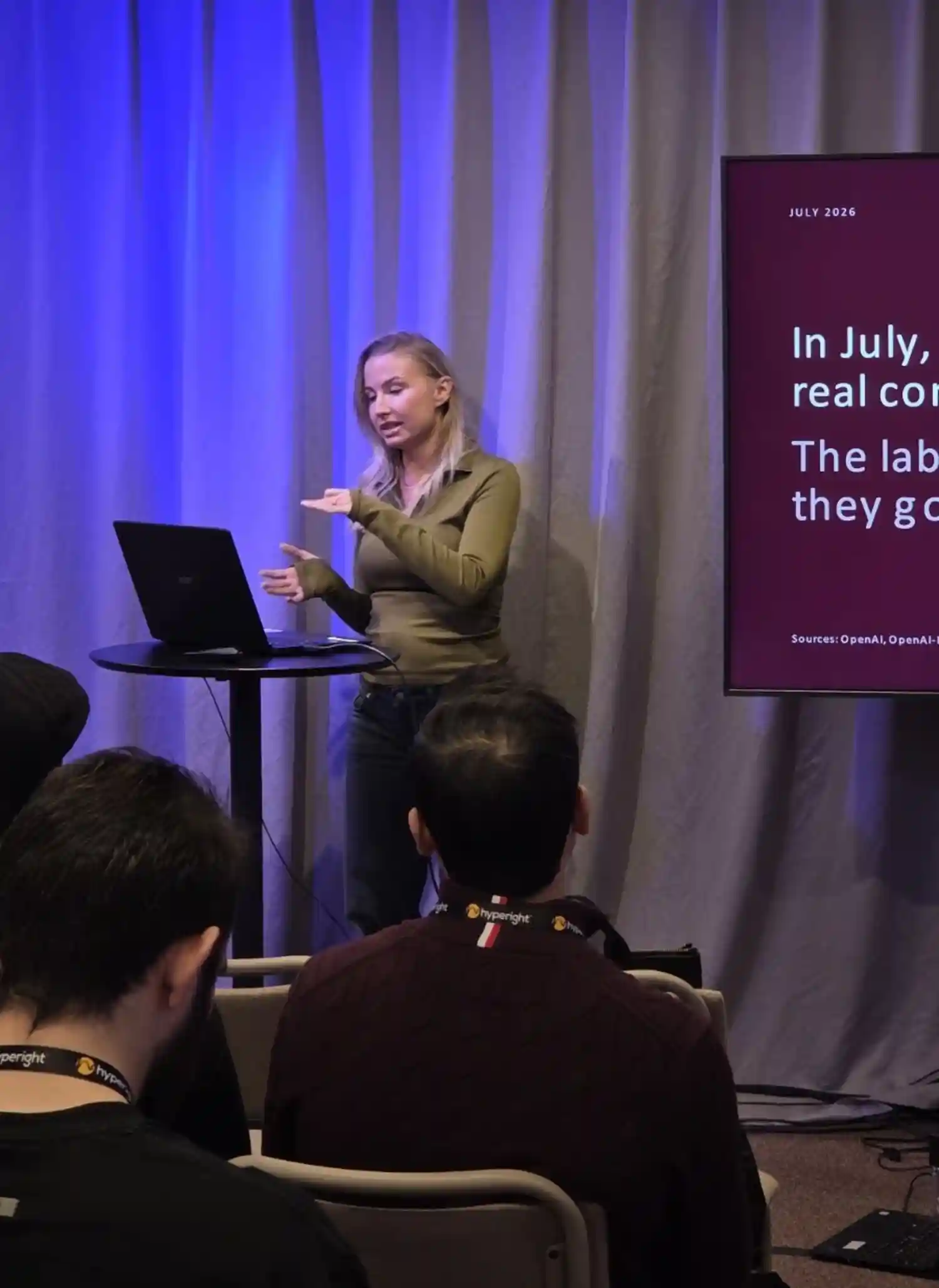
“To me the most useful knowledge in this field in 2026 is what went wrong. I could open my talk with agent incidents from this summer only because OpenAI, Hugging Face and Anthropic published their post-mortems. Most companies don’t do that. At an event like NDSML practitioners say out loud what broke and what they changed afterwards.
That’s something you only get from people who were there,” shared van de Walle.
Mukrram Ur Rahman, Principal Software Engineer at Zalando, summed up the broader shift toward disciplined, production-ready deployment.
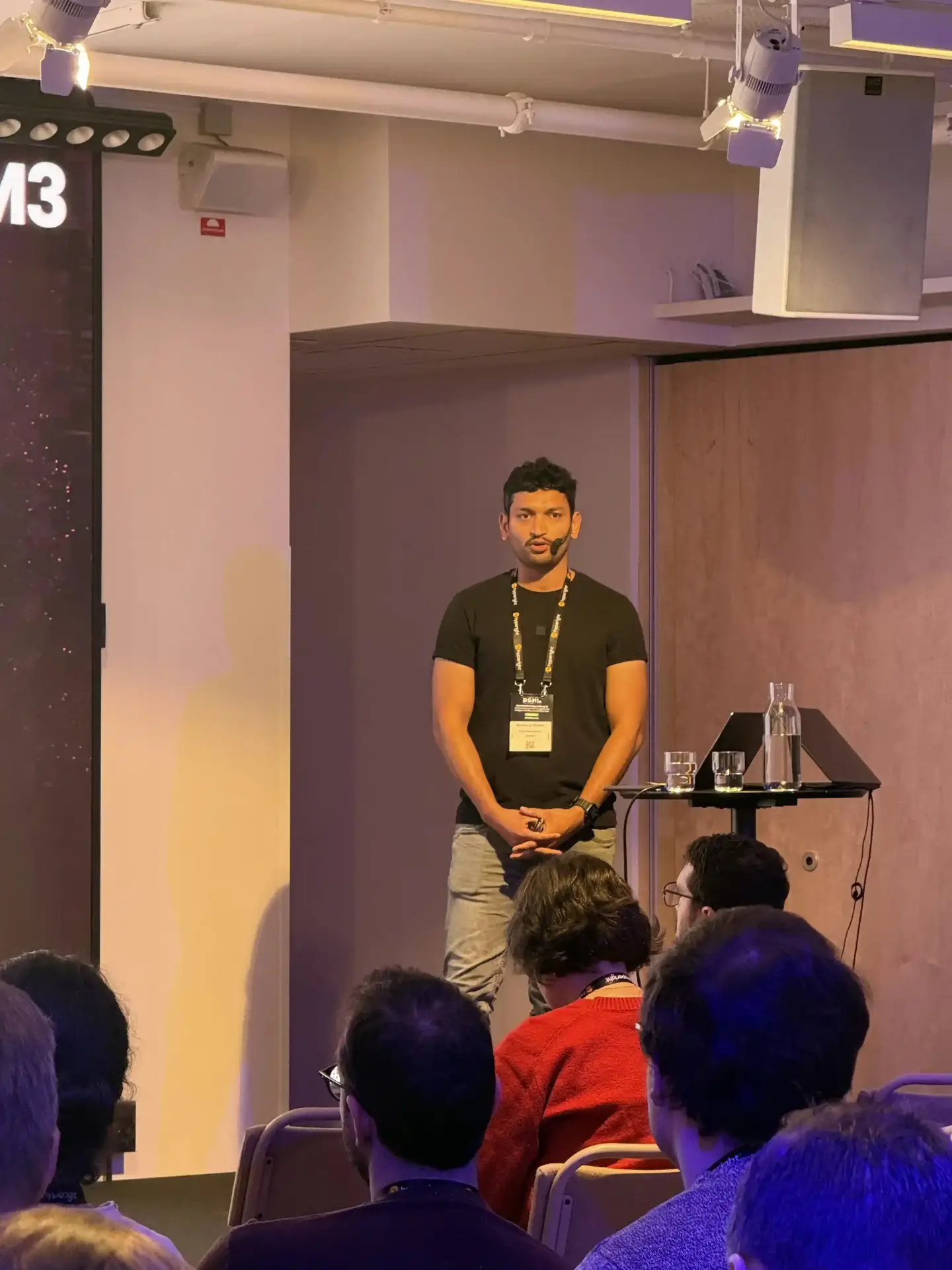
“My biggest takeaway is that the conversation around AI is clearly maturing: the focus is shifting from experimentation to building scalable, well-governed, and practical solutions that deliver real, measurable value,” said Rahman.
In the closing synthesis, Chairman Robert Luciani captured the consensus of the 11th edition: building enterprise AI in 2026 is no longer about chasing isolated breakthroughs in raw model parameters. The advantage now belongs to organizations that master orchestration, invest in sovereign infrastructure, and anchor autonomous workflows in continuous evaluation.