The 11th edition of the Nordic Data Science and Machine Learning (NDSML) Summit opened its doors yesterday at the Hotel Filadelfia Convention Center in Stockholm, welcoming over 400 onsite delegates alongside an international hybrid audience. As the summit continues today into its second day, yesterday’s talks established a consensus across Nordic enterprise tech: the conversation has changed from isolated model experimentation and prompt-tuning sandboxes. The mandate for 2026 is building operational, observable, and autonomous systems capable of executing reliably inside real business workflows.
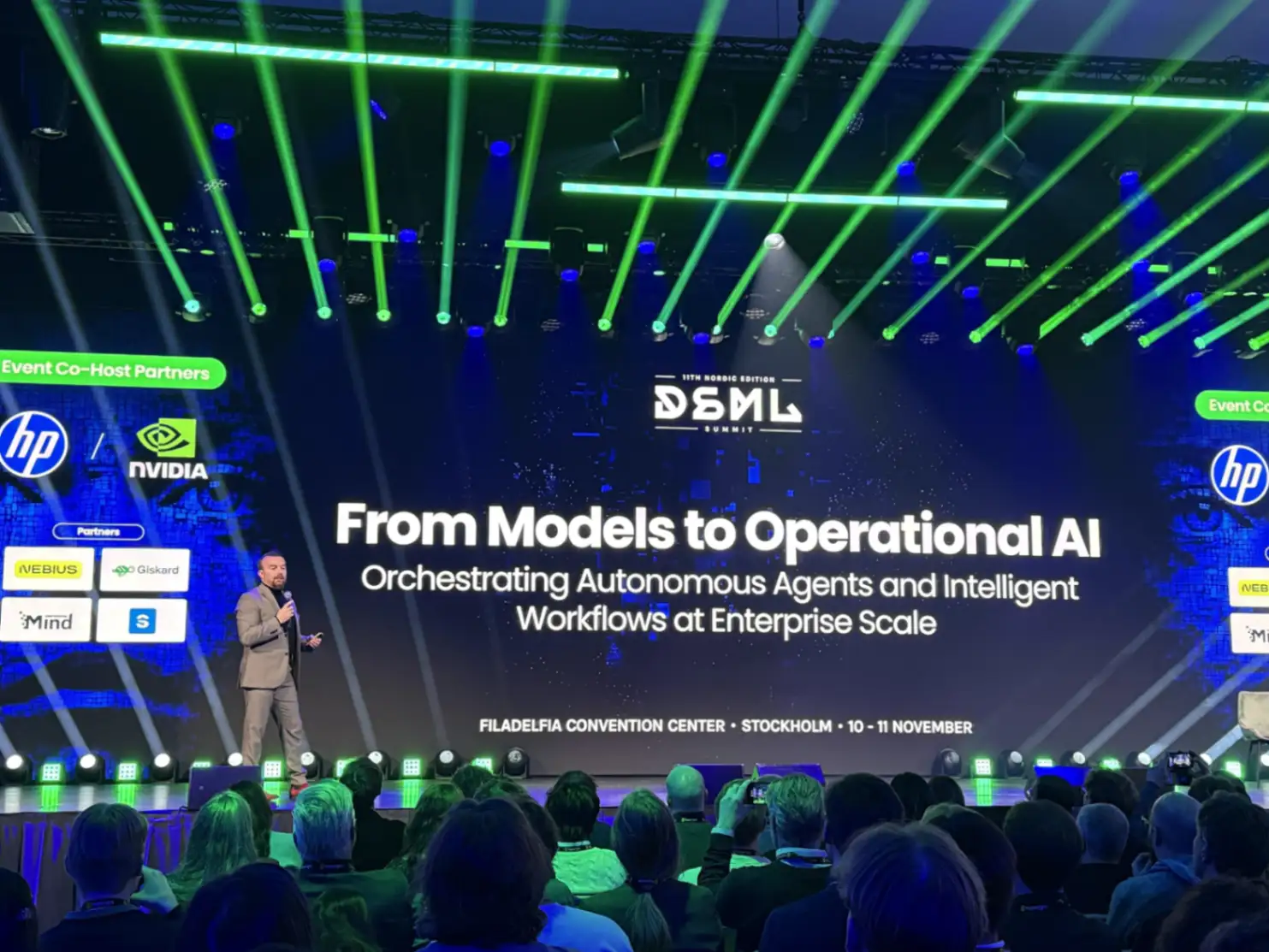
Plenary Foundations: The Shift Toward AgentOps and Sovereign Compute
Opening the summit, Goran Cvetanovski (CEO & Founder, Hyperight AB) and Summit Chairman Robert Luciani (CEO, Nerv Dynamics) framed the core challenge facing modern engineering organizations: operationalizing AI with verifiable trust, robust orchestration, and scalable governance.
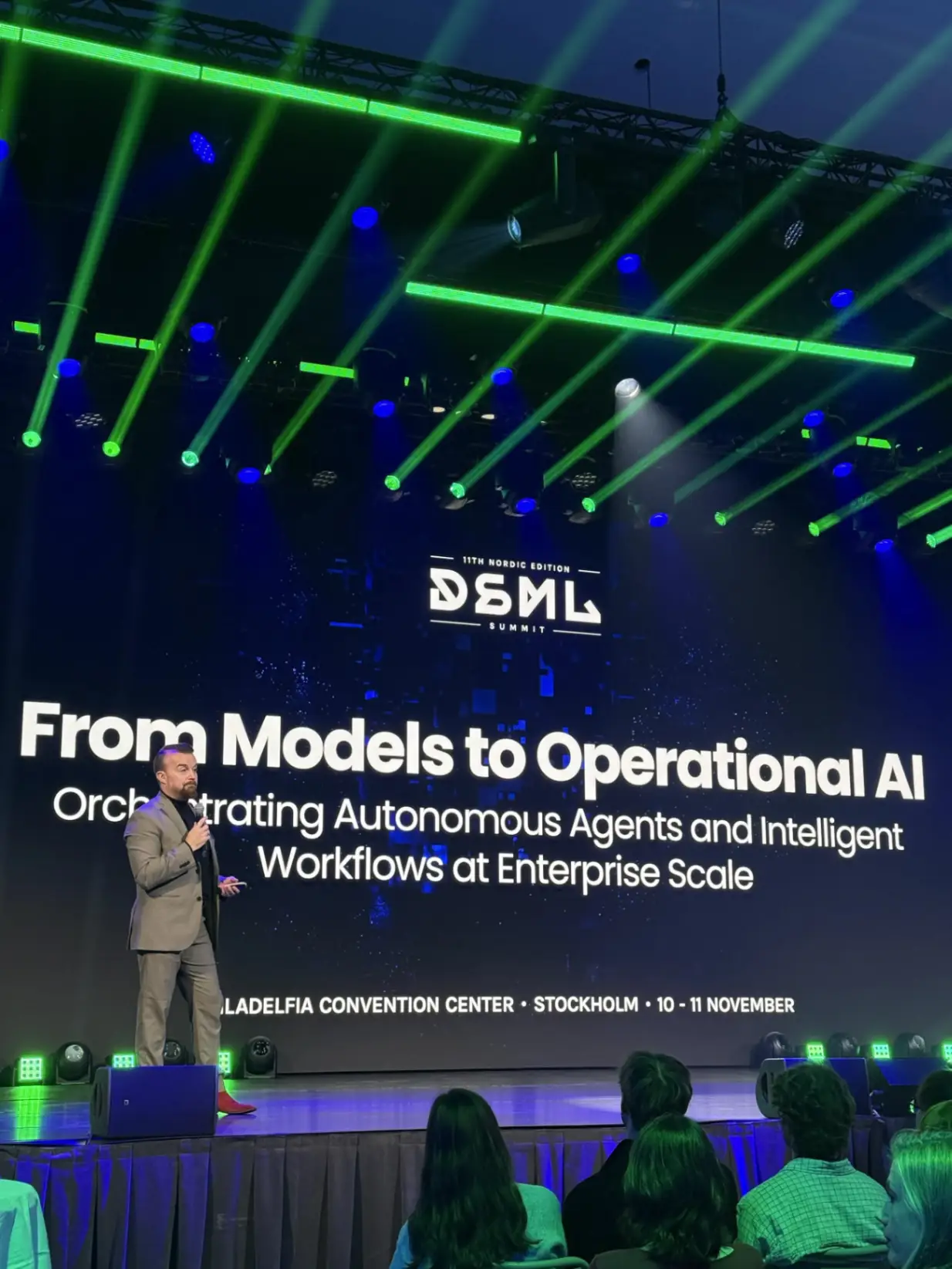
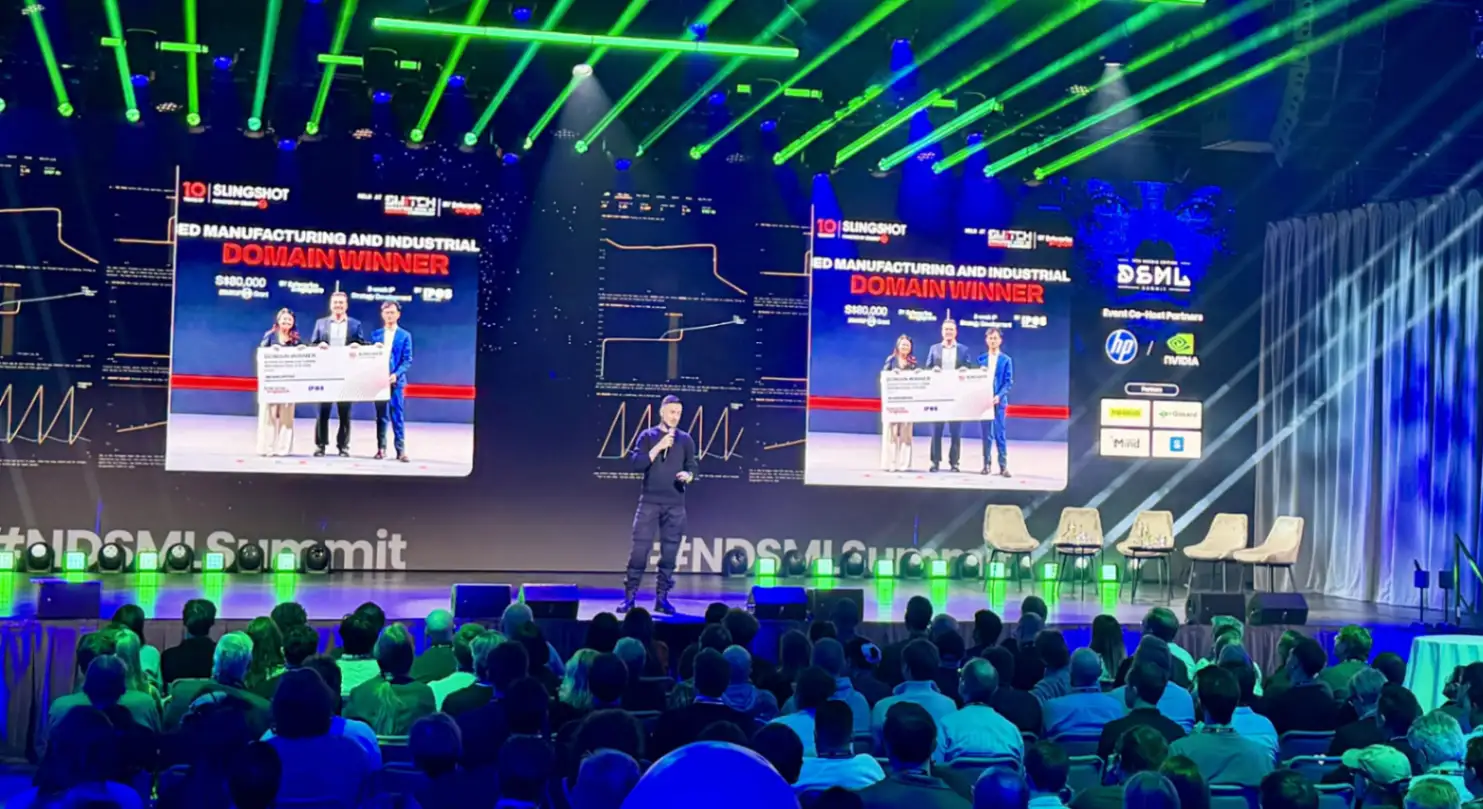
The keynote stage set a practical tone:
- Pragmatic Enterprise Implementation: Martin Körling (Head of AI, Afa Försäkring) delivered the opening keynote, examining the cultural readiness and organizational adaptations required when transitioning core business decisions into automated and hybrid pipelines.
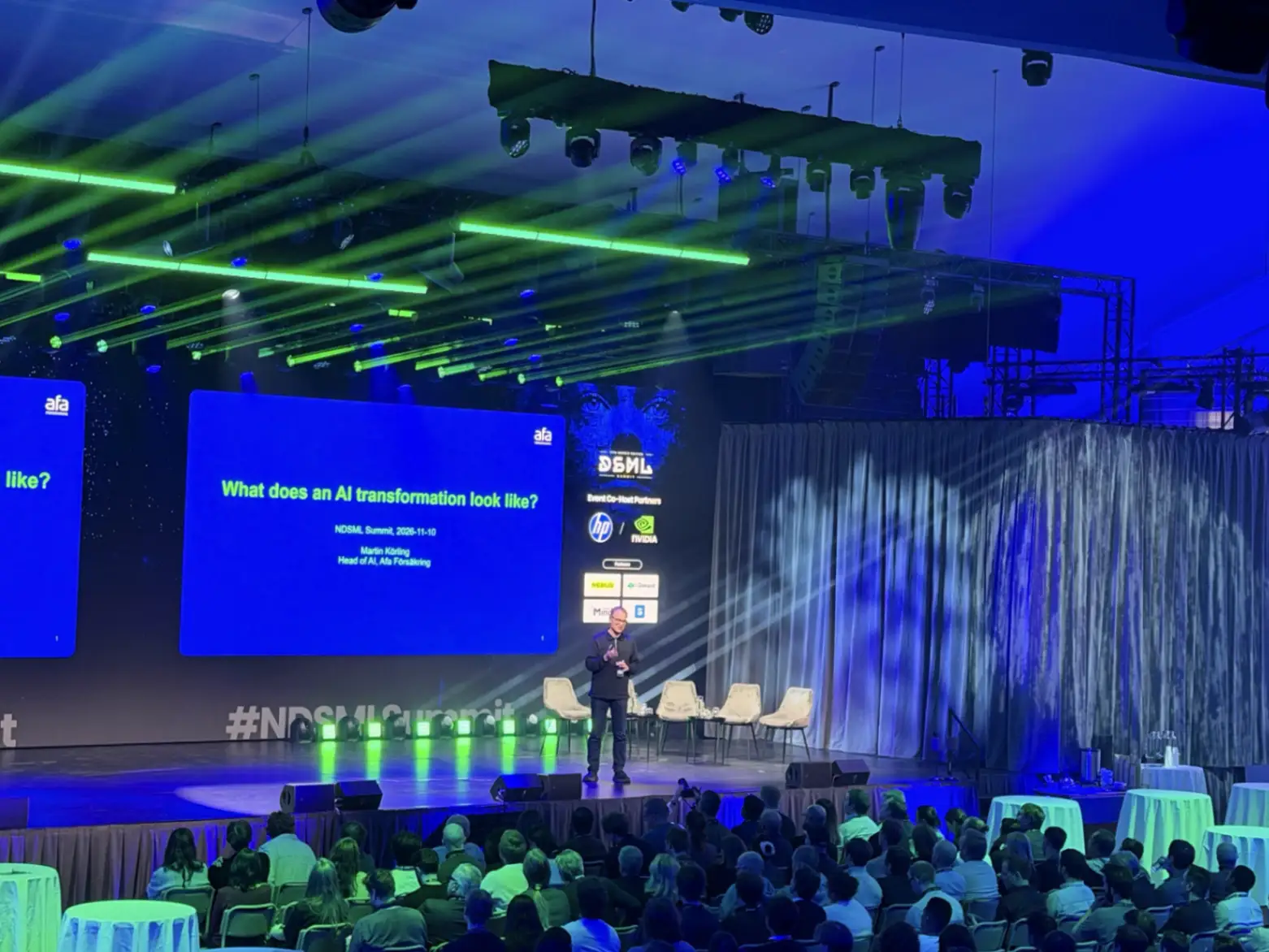
- Sovereignty and Edge Architectures: Albert Bruhner (AI & Data Science Solution Lead, HP) dissected the compute economics of modern workloads, highlighting how fast, sovereign, and cost-optimized inference at the edge is enabling lower latencies while circumventing centralized cloud bottlenecks.
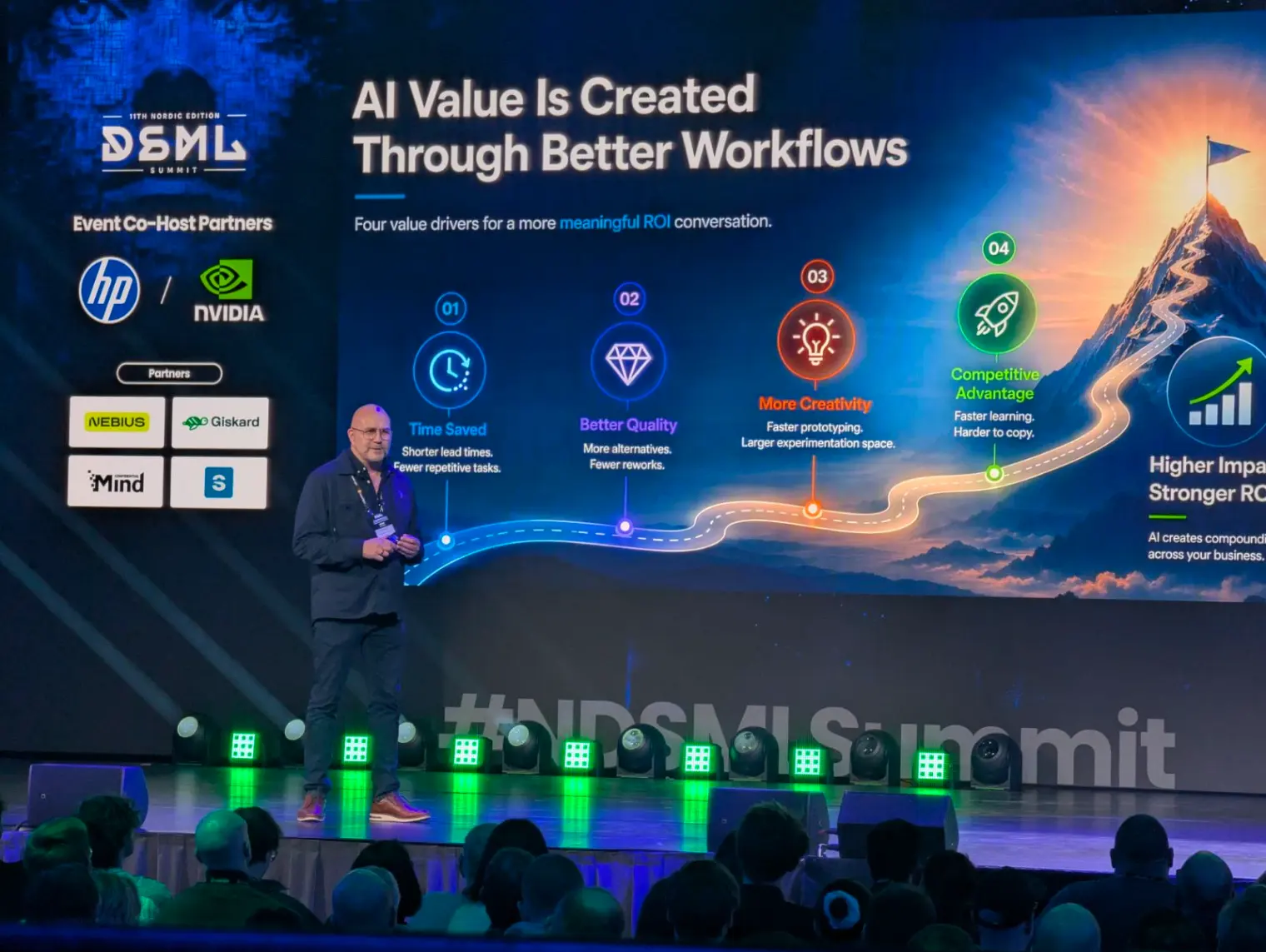
- Panel: From MLOps to AgentOps – How DSML and AI Engineering functions are Evolving for Autonomous Systems: In one of the day’s most anticipated plenary panels, Robert Luciani led an in-depth debate with Daniel Tidström (AI Lead, Codento Sweden), Stefan Wendin (AI Executive & Strategic Advisor, YDKWYK), and Jesper Fredriksson (CTO, Zimply.ai). The discussion examined how legacy MLOps practices fall short when handling non-deterministic multi-agent systems, outlining the emerging operational discipline required to test, monitor, and orchestrate agentic decision layers.
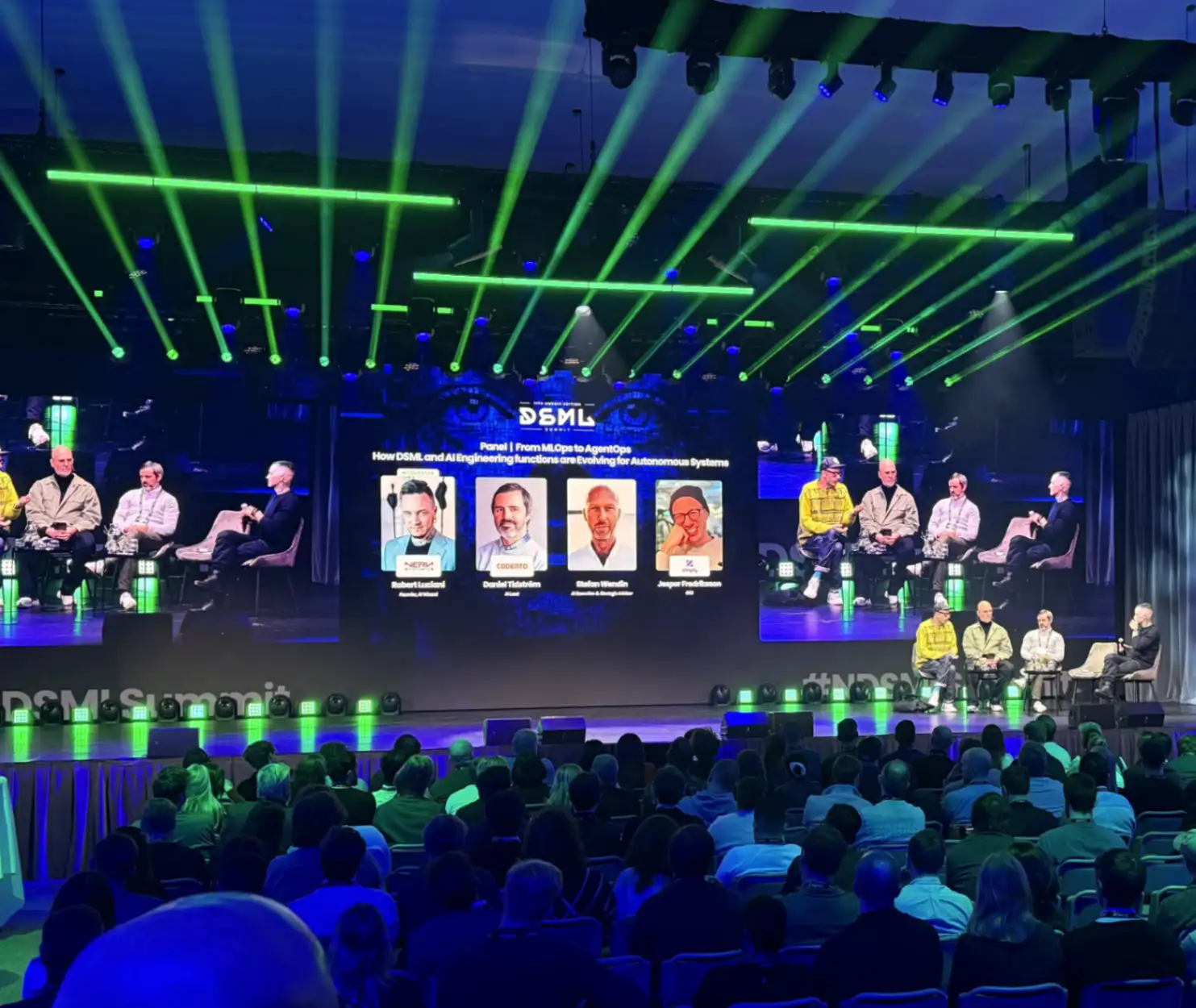
Track Highlights: Strategy, Deployment, and Infrastructure
Across three dedicated breakout tracks, engineering leaders and enterprise practitioners shared blueprints from live production environments.
Manage + Govern AI Stage: Maturity, Trust, and Organizational Velocity
- Filipa Peleja (Director Data & AI Operations, The LEGO Group) opened the track by charting the enterprise maturity journey, presenting practical operational frameworks to evolve workforce capabilities from isolated generative AI assistants to coordinated agentic workflows.
- Love Regefalk (Senior Product Manager AI, Vend) shared lessons from retail automotive deployments in Earning the Right to Act, illustrating how granular, continuous feedback loops are necessary to earn human trust before granting agents operational authority.
- Jonas Alm (Head of Technology and Data, Einride AB) closed the track by exploring how systemic AI enablement reshapes traditional software and hardware product development cycles, accelerating cross-functional engineering velocity.
Develop + Deploy AI Stage: Consumer Scale, Safety, and Hybrid Inference
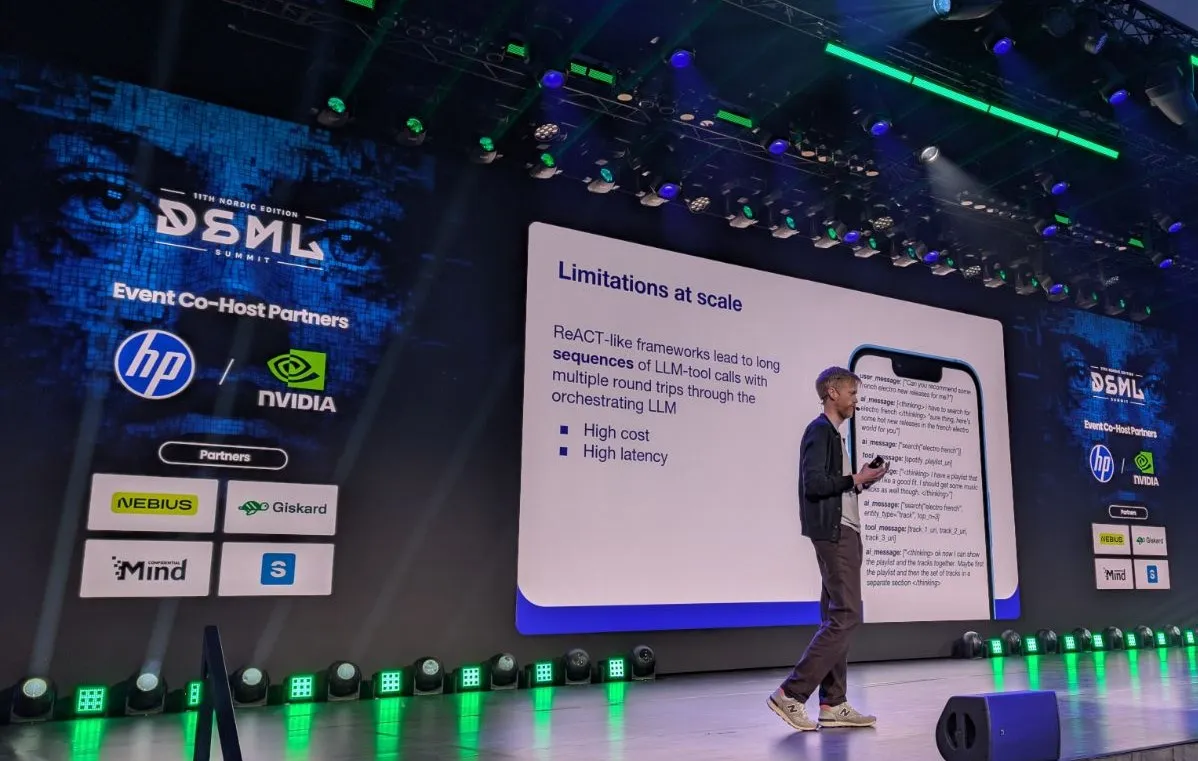
- Anders Nyman (Staff Engineer, Spotify) revealed the engineering patterns powering conversational recommendation engines, focusing on the balance between low-latency context retrieval and natural multi-turn interactions.
- Armin Catovic (Director Data & AI, Funnel) tackled autonomous boundaries in enterprise tooling, detailing the guardrails and safety architectural constraints necessary to build automated internal assistants that remain robust under stress.
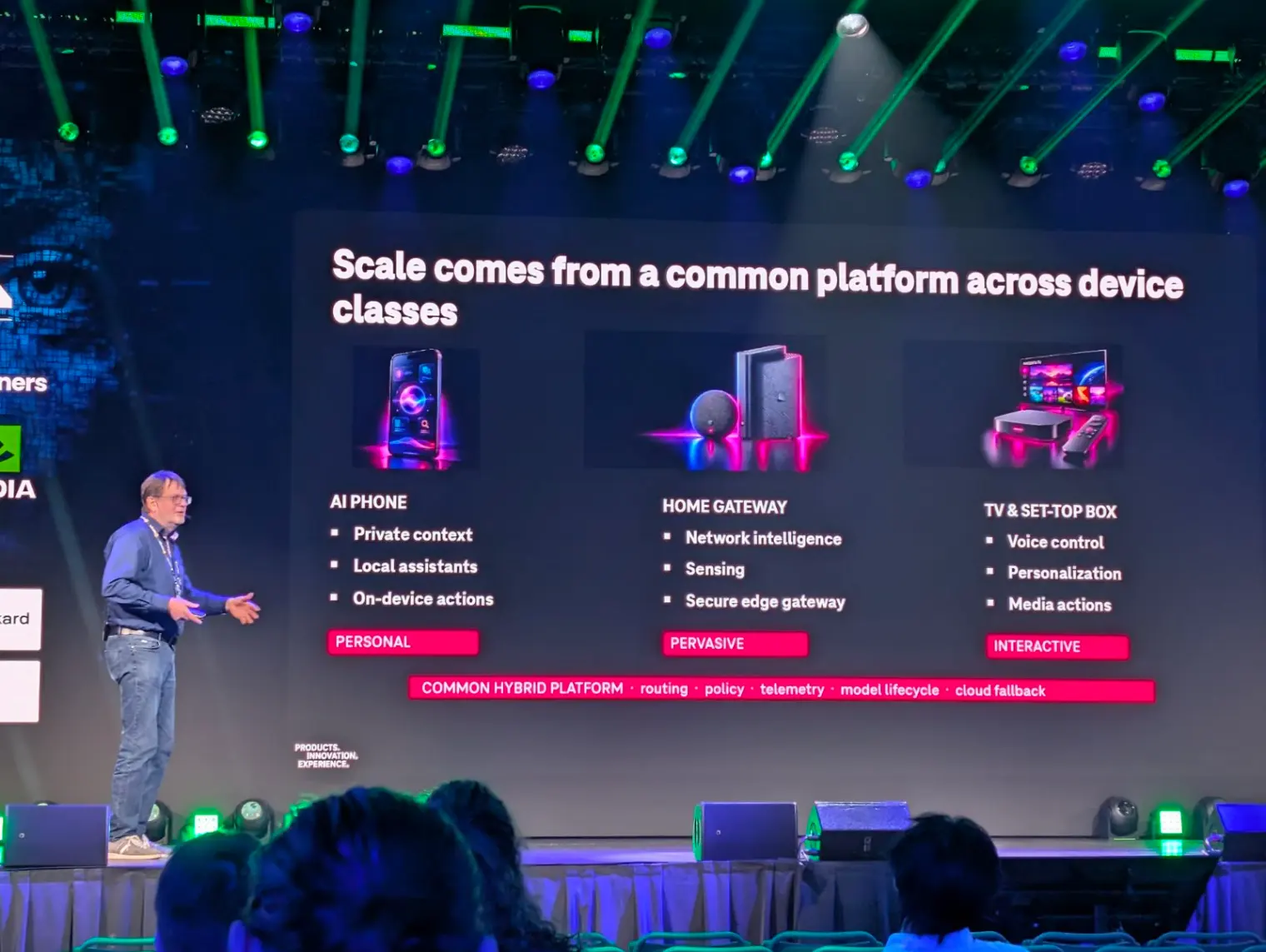
- Joachim Stegmann (Director AI&ML, Deutsche Telekom AG) provided a deep dive into distributed entertainment architectures, breaking down the technical realities of deploying edge and hybrid AI systems across diverse consumer hardware.
Infrastructure + Data Engineering Stage: Real-Time Backbones and Agentic RAG
- Misbah Uddin (Head of Data, AI, & Automation, Intrum Sweden) explored foundational architectural requirements, illustrating how data platforms must evolve from retrospective reporting engines into real-time decision backbones.
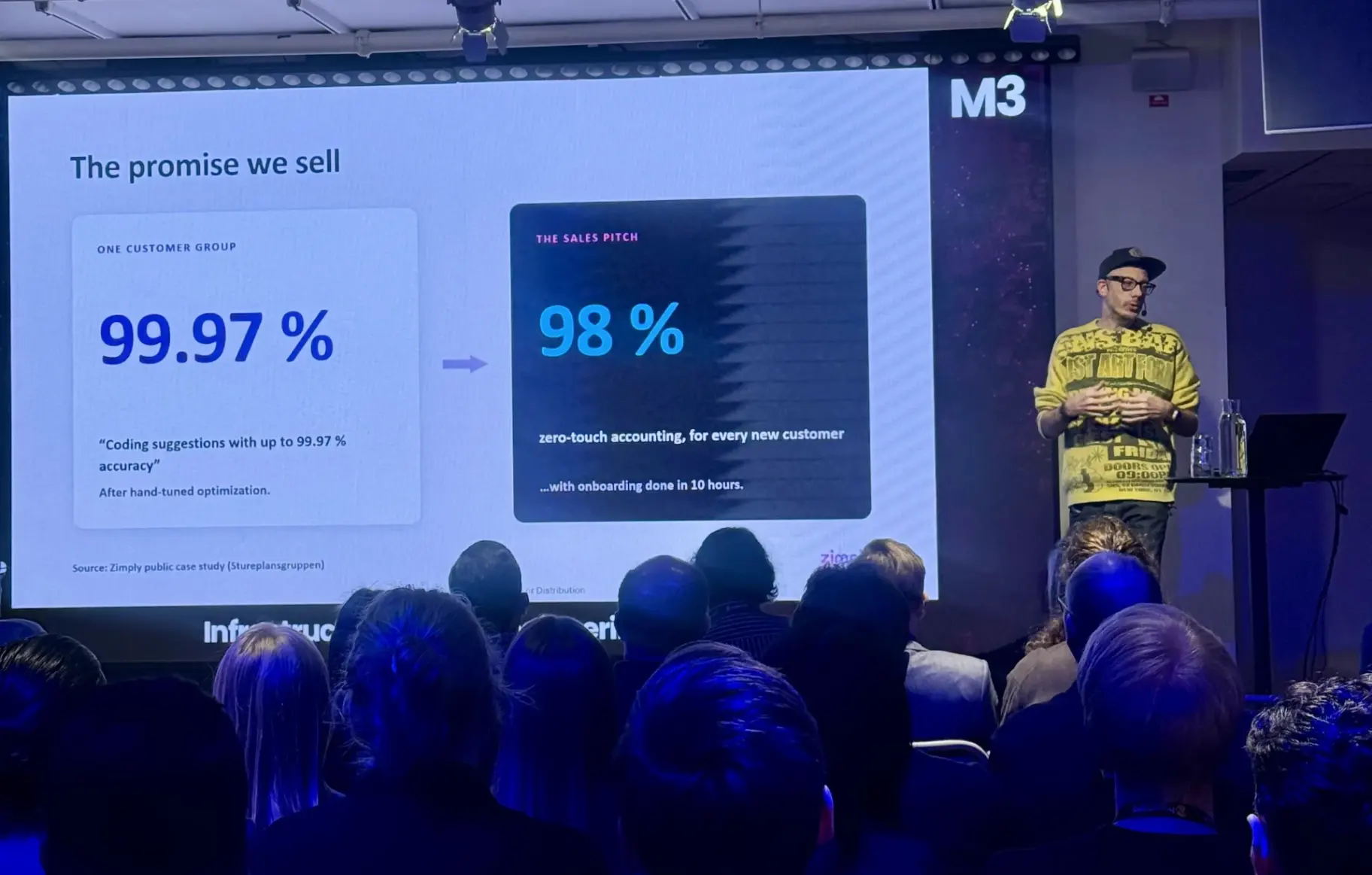
- Jesper Fredriksson (CTO, Zimply.ai) demonstrated how autonomous agents are dismantling traditional operational bottlenecks, presenting production case studies where agents replaced human-intensive manual onboarding workflows.
- John Sinderwing (Agentic AI Enablement Lead, Autoliv) dissected high-precision retrieval architectures, demonstrating how combining enterprise relational SQL schemas with retrieval-augmented generation (RAG) unlocks reliable reasoning capabilities for domain-specific agents.
Unfiltered Insights: The AI Confessions Mingle
The opening day concluded with the signature AI Confessions Mingle: an informal gathering
where delegates, speakers, and enterprise architects to share unfiltered post-mortems on failed pilots, pipeline latency traps, and the hard-won engineering lessons behind scaling AI in practice. 
With foundations firmly laid around governance, orchestration, and infrastructure, the summit moves forward today to examine production MCP implementations, cross-session agent memory, and the decoupling of enterprise truth from technical debt.