What if I’m wrong?
Over the past two years, I’ve written about leadership, innovation, cybersecurity, AI, strategy, military history, trust, and building what I call Unicorn Teams.
I’ve written about servant leadership. About putting people first. About building organizations that outlast any one individual.
Thousands of people have read those articles. Many have agreed. Some have challenged them.
But today, I want to admit something I haven’t said publicly.
There are days when I quietly wonder…
What if I’ve been wrong all along?
Not because I stopped believing in these ideas.
But because I look around the corporate world and sometimes see a very different reality.
I have watched people rise by taking credit for work they didn’t do.
I’ve watched leaders protect themselves instead of their teams.
I’ve watched politics outweigh competence.
I’ve watched people rewarded for visibility instead of contribution.
I’ve watched those who speak the loudest receive more recognition than those who quietly solve impossible
problems.
Sometimes it feels as though the rules I grew up believing simply don’t exist anymore.
It would be easy to conclude that integrity is naïve.
That servant leadership is outdated.
That looking after your people is a luxury reserved for leadership books and keynote speeches.
After all…
History remembers great leaders.
Reality often promotes different ones.
That contradiction has bothered me more than I care to admit.
Perhaps it comes from where I learned to lead.
The military doesn’t spend years teaching you how to get promoted.
It teaches you how to accomplish the mission and bring your people home.
You are taught that your soldiers eat first.
That your responsibility increases with rank.
That leadership is measured not by privilege, but by burden.
Those lessons became part of who I am.
When I entered the corporate world, I carried those beliefs with me.
Sometimes they served me well.
Sometimes they made me the odd person in the room.
Sometimes they probably cost me opportunities.
There have been moments when I asked myself difficult questions.
Should I have spent more time managing upward?
Should I have become better at office politics?
Should I have promoted myself more aggressively?
Should I have protected my own career before protecting others?
These aren’t comfortable questions.
Especially when you see people advancing by playing a game you never wanted to play.
Over time, however, I realized something important.
There isn’t just one game.
Some people are trying to win the next promotion.
Some are trying to win the next bonus.
Some are trying to impress the next executive.
There is nothing inherently wrong with ambition.
But somewhere along the way, I realized I was chasing something different.
I wasn’t trying to build the most impressive résumé.
I was trying to build organizations that would still be strong after I was gone.
Those are not the same objective.
And they rarely reward the same behavior. 
Does that mean I’ve always succeeded?
Absolutely not.
I’ve made mistakes.
I’ve failed people.
I’ve missed opportunities.
There were moments when I could have communicated better, influenced better, or navigated difficult situations with greater wisdom.
Leadership is not perfection.
It is continuous refinement.
The older I become, the less interested I am in pretending I have all the answers.
But if there is one lesson I refuse to surrender, it is this:
Leadership is not about being first.
Leadership is about making sure the people behind you can eventually go farther than you did.
Titles disappear.
Corner offices belong to someone else.
The biggest monitor eventually gets replaced.
The executive parking spot becomes another person’s.
None of those things survive us.
People do.
Cultures do.
The confidence we build in others does.
The opportunities we create for someone else do.
The young engineer who becomes a leader because someone believed in them does.
That is the legacy that remains.
Perhaps I will never become the most politically successful executive.
Perhaps there are careers I could have accelerated by choosing differently.
Perhaps I have paid a price for believing that trust is more valuable than manipulation.
If that is true…
Then it is simply part of the cost of becoming the kind of leader I chose to be.
And surprisingly…
I have made peace with that.
Because when I look back on my life decades from now, I don’t think I’ll remember my performance ratings.
I won’t remember how many direct reports I had.
I won’t remember how large my budget was.
I won’t remember how close my office was to the executive suite.
I will remember the people.
The teams.
The organizations.
The lives that became better because, for a brief moment, our paths crossed.
If I can honestly say that I left people stronger, more confident, and better prepared than when I found them…
Then I will consider my career a success.
Not because I won.
But because we did.
So after everything I’ve written… after every lesson I’ve shared… after every doubt I’ve wrestled
with… this is where I still stand.
I still believe leaders exist to serve.
I still believe trust outlasts politics.
I still believe the strongest organizations are built by people who care more about the mission than the spotlight.
And I still believe that leadership is measured not by how many people work for you, but by how many people succeed because you chose to lead them well.
Maybe that path is slower.
Maybe it costs more.
Maybe it isn’t the easiest way to climb.
But it is the only way I know how to live.
I will continue to put my people before myself. I will continue to put the success of the organization before my own recognition. I will continue to lead as a servant, because when I see my team grow, my followers succeed, and the organizations I leave behind become stronger than when I found them—that is success to me. That is my purpose.
That is a life well lived.
About the author
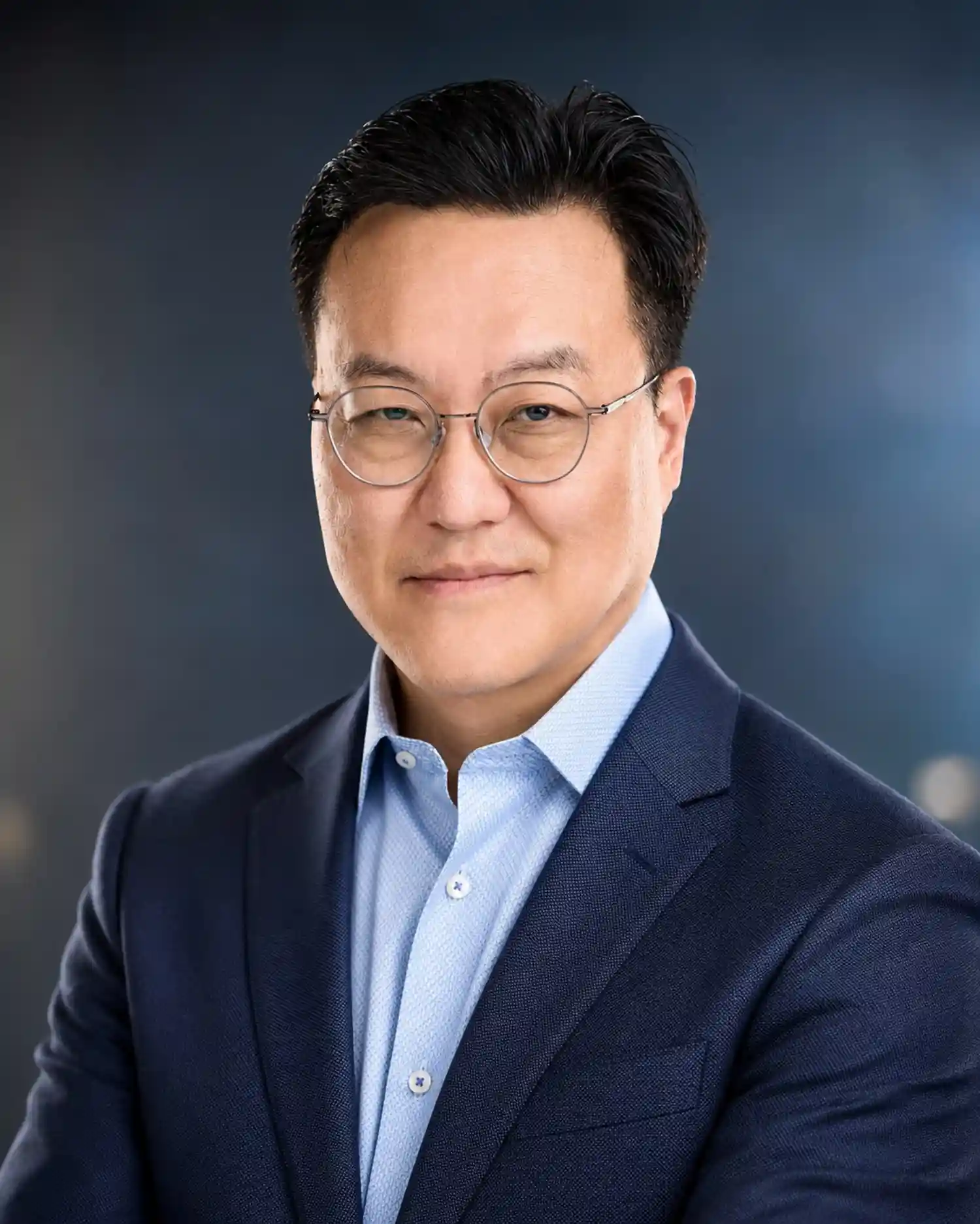
Head of Information Security, Samsung Semiconductor Inc. (Silicon Valley, USA)
Kevin T. Shin is a cybersecurity and technology executive leading global security strategy for Samsung Semiconductor Inc., overseeing protection and resilience across advanced R&D and Sales & Marketing operations throughout the United States. With over two decades of leadership experience spanning defense, risk management, and emerging technologies, Kevin integrates cybersecurity, AI, and business strategy to safeguard innovation and accelerate digital transformation at scale.
A U.S. Army veteran and former Major in the Infantry, Kevin brings a mission-driven mindset to corporate leadership—applying battlefield-tested decision frameworks to complex technology environments. His approach unites resilience, intelligence, and disciplined execution to align security with business outcomes.
Kevin is widely recognized for his thought leadership on the intersection of AI, security, and organizational excellence. He regularly writes and speaks on how trust, governance, and visionary leadership enable enterprises to harness AI responsibly and transform securely in an era defined by intelligent systems.
*The views and opinions expressed by the author do not necessarily state
or reflect the views or positions of Hyperight.com or any entities they
represent.