This week we spotlight Dr. Juha Vesanto, Head of the Quantum and AI Research Centre at OP Pohjola, Finland’s largest financial group. Holding a PhD in Technology, Juha is driven by a fascination with science, stories, and data, and how they connect back to reality to make the world a better place to live in.
For Juha, data science isn’t just about machine learning for its own sake, it’s about understanding the core problems behind questions to improve business outcomes. He spends his days looking into the future of computing, identifying where advanced technology can deliver real-world competitive advantage, and aligning cross-functional teams around a shared vision.
Hyperight.com: What’s the best way to describe your job to someone outside tech?
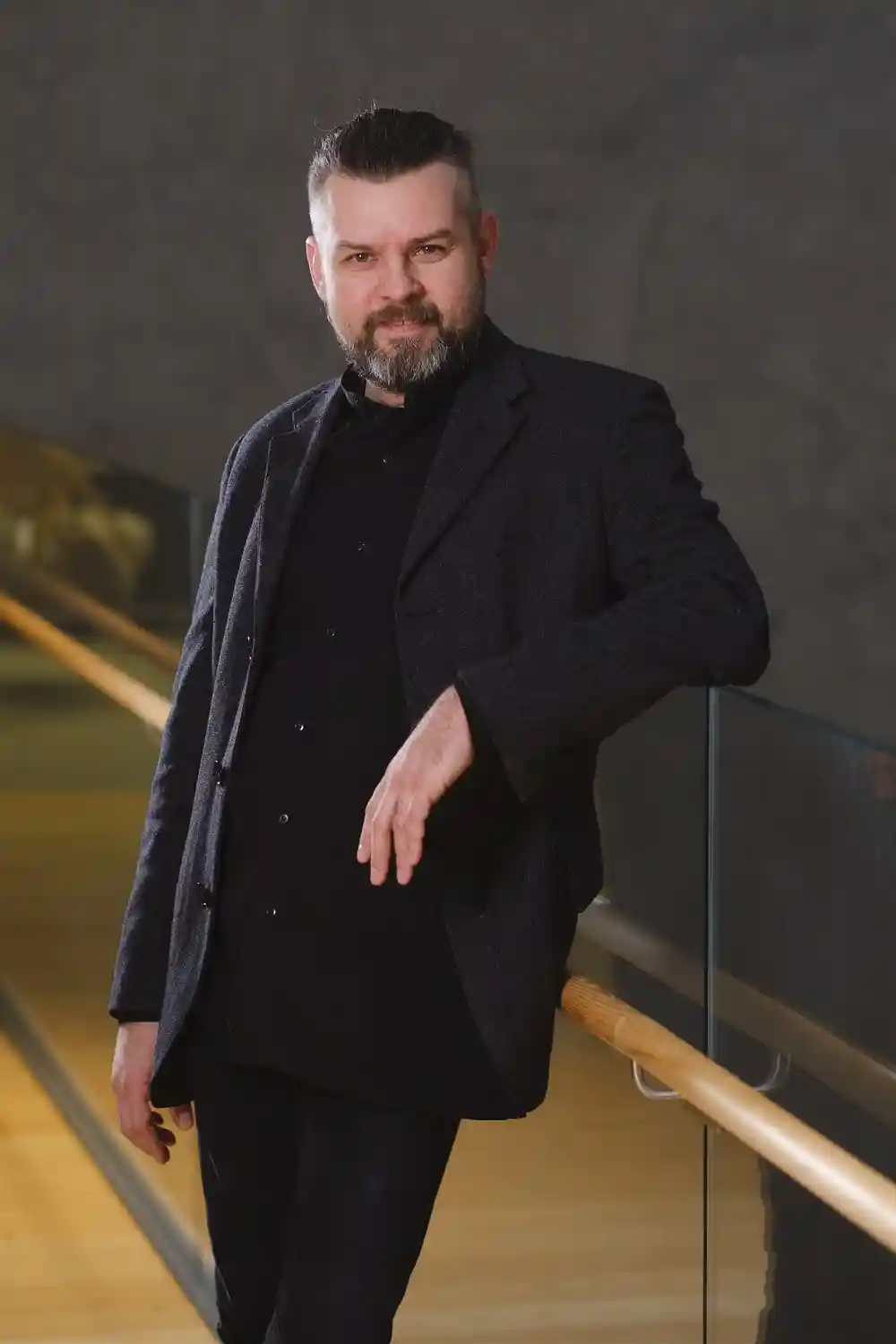
Juha Vesanto: Currently, I’m heading a research unit – the Quantum and AI Research Centre – at OP Pohjola, which is the biggest financial group in Finland. Our mission as a research unit is to look into the future of computing in finance, and how OP Pohjola could benefit from recent advances.
In particular, we are investigating ways to bind quantum computing to OP Pohjola’s business in a meaningful manner by making sure OP Pohjola has the capability to run quantum computing in production, identifying the actual business processes where this is business relevant, and then creating competitive advantage by making it a reality.
In addition to quantum computing, we are also investigating agentic systems and their role in the future of banking. 
Hyperight.com: What originally sparked your interest in AI/data, and what keeps you inspired today?
Juha Vesanto: I initially got interested in data science in my late teens after reading a collection of scientific essays on the topic, in a book I found from a local library. There was an article about the Self-Organizing Map (SOM) algorithm developed by Finnish Academy Professor Teuvo Kohonen. So I applied to study in the university he was doing his research in, nowadays called the Aalto University, and actually ended up doing my PhD on the same algorithm.
I’m really fascinated with how data reflects reality, and what is the relationship between the two. Data is not the reality, but represents it in a distorted manner, and it is really important to understand how those two are connected. And when you do, you also gain an understanding of the reality behind the data.
Hyperight.com: What is one challenge you’re trying to solve, and why does it matter?
Juha Vesanto: The research unit I’m leading has a number of research goals, but the most significant one is to find out how we can use quantum computing in a business relevant way. Our hypothesis is that quantum computing will be essential in terms of expanding the range of what we are capable of in risk estimation and optimization.
On a more general level, we are pushing the boundaries of how solving computationally complex problems can benefit OP Pohjola’s business. Quantum computing offers one way to do this, but it is not the only one, so using traditional computing is equally interesting, either by utilizing high-performance computing (HPC), or in combination with quantum computing.
Hyperight.com: A tool you can’t live without (tech or not)?
Juha Vesanto: Noise-cancelling headphones. With those I can create my own workspace virtually anywhere.
Hyperight.com: What trend in data or AI do you think will shape the Nordic region the most?
Juha Vesanto: Without a doubt, the most important trend at the moment is the agentic workforce. This will completely transform the way we work and interact with our environment. We have barely started the journey, and the outcome will be something nobody can foresee yet. At the same same time, we can affect the outcome, which is why I think it is so important to think ethically about where we want to go with this technology.
Hyperight.com: What’s one piece of advice you’d give to others entering the data and AI field?
Juha Vesanto: Data is not the reality, but a reflection of reality built on measurements. AI is not intelligence, but a reflection of intelligence built on machine learning. Don’t be blinded by the mirage, but use it to understand the reality behind.