Innovation isn’t just discussed at the Data Innovation Summit: it is engineered in real time. At this year’s DIS2026X1 in Kistamässan, the theoretical talk stopped and the high-intensity execution began. The summit played host to a high-stakes Hackathon sponsored by HP and NVIDIA, challenging elite developers to move past slideshows and build something tangible.
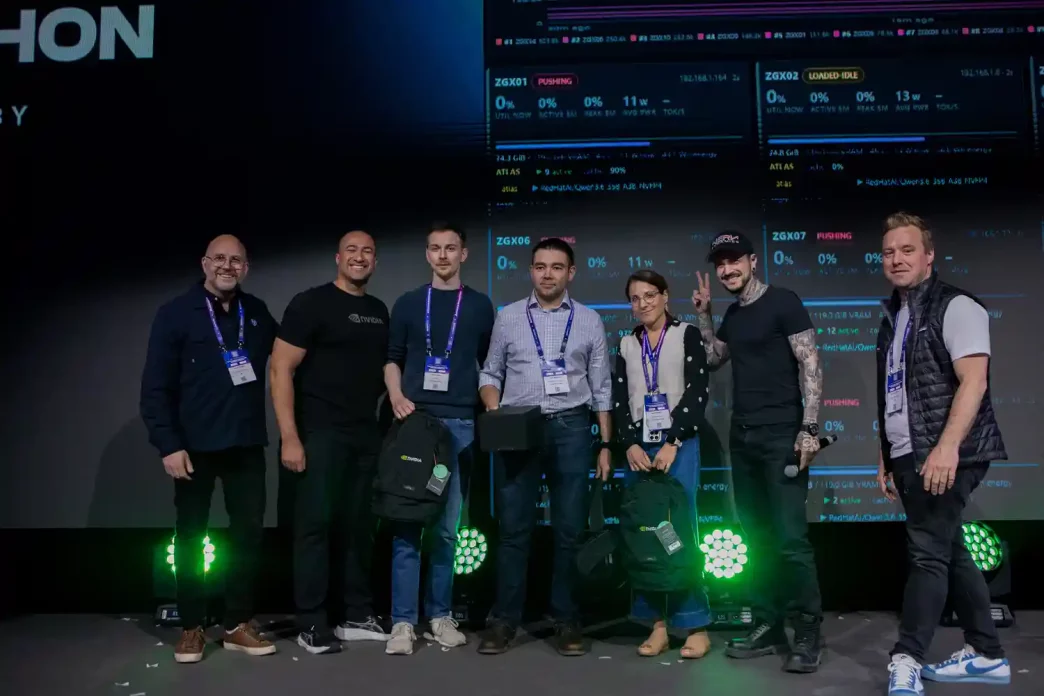
Team Just Build conquered the clock and the hardware, taking home the grand prize: the powerful HP ZGX Nano AI Station.
“It was challenging because the data set was very huge. We were helped by the machine we had to play with”, said Simon Hantz, Data Engineer at Julius Baer Europe.

The Two-Hour Pressure Cooker
The challenge was deceivingly simple but technically challenging: design, build, and deploy an operational AI agent capable of controlling a physical robot system designed for human interaction and creative coding in a strict, two-hour development window.
The compressed format forced the competing teams to bypass overengineering entirely. Teams had to make immediate, high-stakes engineering trade-offs, balancing model size against real-time performance constraints while forcing virtual AI logic to interact with physical hardware.
Cutting-Edge Silicon on the Front Lines
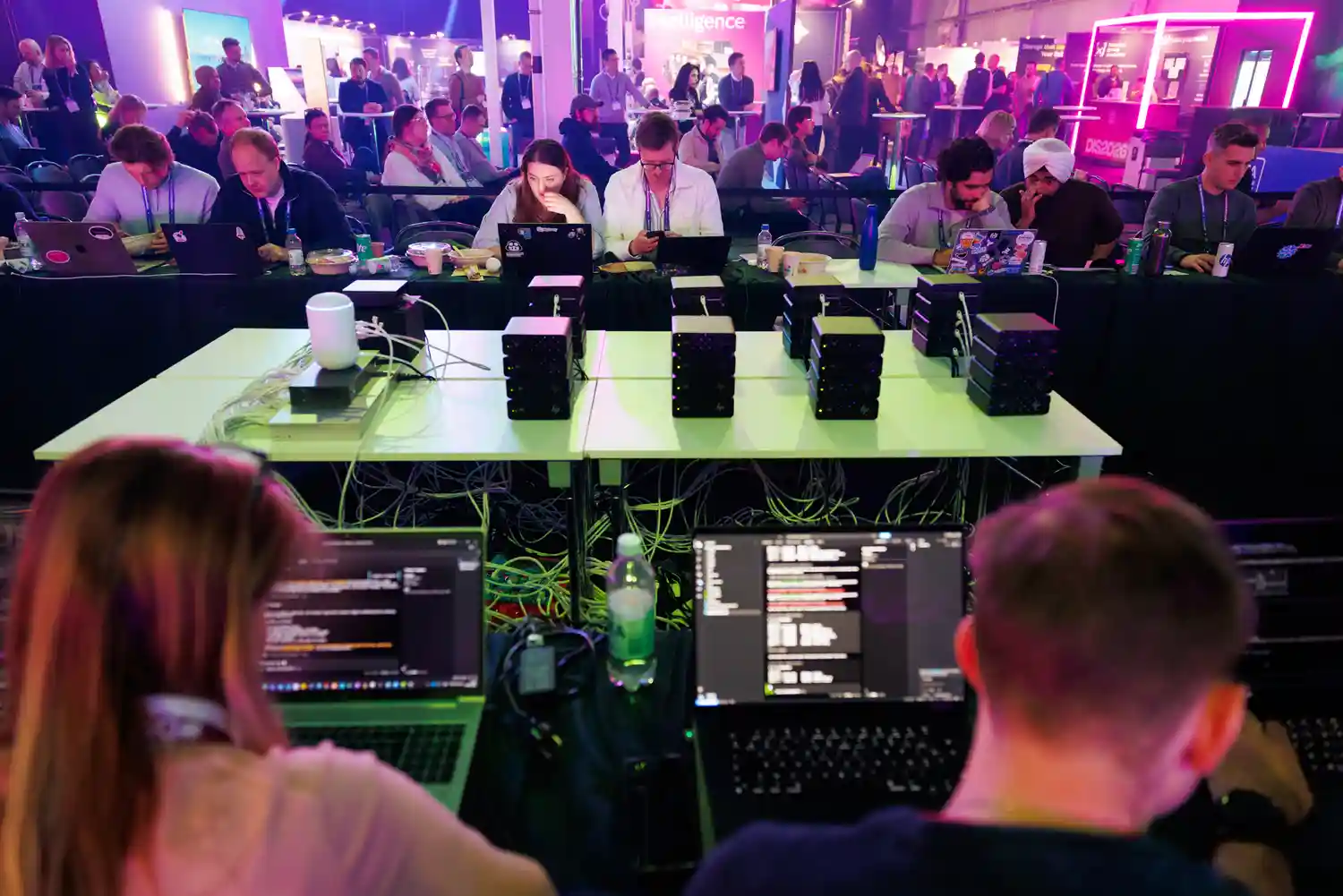
To eliminate setup friction, each team was handed a pre-configured, local powerhouse environment consisting of two HP ZGX Nano AI Stations. These cutting-edge rigs were loaded with elite architecture: 
- NVIDIA® GB10 Grace Blackwell Superchip
- 128 GB LPDDR5x Coherent Unified System Memory
- NVIDIA® ConnectX®-7 SmartNIC
- NVIDIA AI Software Stack
Developers had to wire their agents directly into a physical robot system. The hardware setup supported multimodal inputs, pushing teams to integrate real-time visual and audio signals into their agent’s behavior. The goal was to build a system that didn’t just technically work, but felt responsive, coherent, and intentional.
A Dual-Intelligence Evaluation
Once the grueling two-hour build phase concluded, the submissions faced a rigorous evaluation process. Projects weren’t just graded by humans; they were scrutinized by a hybrid jury composed of industry experts representing HP and NVIDIA, alongside an AI-assisted evaluation component.
Teams were scored across three unforgiving dimensions:
- Hardware Performance: How effectively the team maximized the local Grace Blackwell architecture.
- Sensor Integration: The seamless blending of multiple input modalities (visual and audio).
- Agent Quality: The overall responsiveness, behavioral coherence, and tactile success of the robot’s physical actions.
The DIS2026X1 Hackathon proved that when you strip away the fluff and provide developers with world-class hardware, two hours is all it takes to bring autonomous machines to life.