
Deploying a basic chat interface is no longer a competitive advantage for the modern enterprise. As organizations look to extract real bottom-line value from cognitive systems, the focus has shifted entirely to autonomous agents: software systems capable of evaluating environments, planning multi-step workflows, and making critical decisions without human intervention.
The real friction when moving to autonomous workflows lies in managing algorithmic unpredictability. To successfully transition from simple prompt-and-response interactions to independent execution, engineering teams must replace loose conversational models with strict system evaluation, optimized edge compute, real-time event routing, and bulletproof boundary governance.
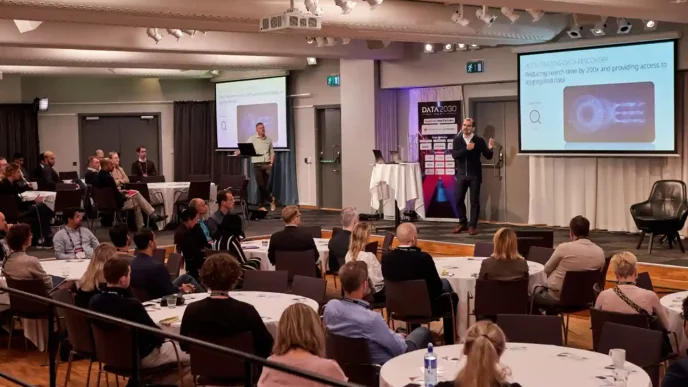
Unlocking a curated selection of premium insights directly from the stages of the Data Innovation Summit (DIS) 2025, a new set of architectural rules is emerging. These five case studies highlight how pioneering engineering teams are designing the infrastructures necessary to support safe, reliable, and self-directing digital systems.
1. Integrating Generative AI into a Broad, High-Impact Data Ecosystem
The widespread obsession with standalone Generative AI tools often blinds enterprise teams to a critical structural reality: language models are just one isolated component of a much larger data landscape. Addressing this implementation gap at DIS, Gernot Klein (Dataiku) outlined the operational blueprints required to move beyond simple, siloed chat experiments. True business value is unlocked only when an organization stops treating GenAI as an independent novelty and begins integrating it directly into its core, traditional data workflows.
Klein’s session detailed how pioneering companies successfully scale their AI initiatives by focusing heavily on technical, strategic, and organizational alignment. By connecting generative capabilities with classic machine learning, structured databases, and automated analytical pipelines, teams can anchor conversational outputs to concrete enterprise metrics. This holistic framework moves AI out of the playground phase and turns it into a measurable engine for enterprise-wide productivity and strategic growth.
2. Engineering Robust Evaluation Frameworks for Operational AI Agents
When an AI agent shifts from a demonstration phase to executing tasks on behalf of an enterprise, standard software tests cannot adequately measure its performance. Drawing on real-world engineering strategies at DIS, Aditya Palnitkar (Meta) emphasized that a rigorous evaluation framework is the ultimate foundation for an agent’s development roadmap. Without highly structured metrics, teams remain entirely blind to behavioral regressions, unable to set concrete engineering goals, and incapable of safely updating production code. 
The session broke down a practical, three-step blueprint for building a trusted evaluation layer. First, engineers must define a representative metric that tracks holistic, conversation-level quality rather than isolated keyword matches. From there, teams must curate a representative evaluation dataset that mirrors diverse, real-world user interactions. Finally, the framework deploys a scalable evaluator – utilizing human oversight, code-based checks, or advanced LLM judges to continuously audit the agent’s behavior and catch flaws before deployment.
3. Engineering Resilient, Constraint-Driven AI for Extreme Environments
When an enterprise software system fails, it logs an error; when an autonomous system fails on the surface of Mars, a billion-dollar mission is permanently lost. Unpacking the rigorous reality of high-stakes automation at DIS, Shreyansh Daftry (NASA Jet Propulsion Laboratory) challenged the industry-wide obsession with simply building larger, more complex models. As machine learning enters safety-critical environments, engineering teams must stop optimizing for general benchmarks and start building for absolute resiliency.
Daftry outlined a rigid operational philosophy built upon four foundational pillars: making AI trustworthy, adaptive, robust, and scalable. To achieve this safely, NASA champions hybrid architectures, wrapping deep learning models in known physical laws and symbolic rules so the system can instantly trigger safe, predictable fallbacks the moment uncertainty spikes. Furthermore, forcing engineering teams to work under strict hardware and weight constraints drives true algorithmic innovation, proving that lean, highly targeted code is the key to building fail-safe software.
4. Harnessing Event-Driven Architecture for Automated Infrastructure Optimization
Managing modern energy infrastructure requires a system that can make massive operational calculations in real time without human intervention. Focus-testing this reality at DIS, Anton Delorme (Ingrid Capacity) showcased how his team designed a fully automated optimization platform built to stabilize energy grids and manage trading for the Nordics’ largest Battery Energy Storage Systems (BESS) portfolio. When dealing with highly volatile utility markets, traditional batch data processing introduces unacceptable delays that risk destabilizing critical physical assets.
The session detailed a scalable, production-ready blueprint leveraging a serverless, event-driven architecture on Google Cloud Platform (GCP). By continuously ingesting data around the clock, the system automates the training of machine learning models and optimizes over thousands of variables simultaneously to execute split-second grid adjustments. Crucially, Delorme highlighted that long-term reliability depends heavily on building deep observability into the underlying automated data flows, allowing developers to track system state changes while simplifying complex back-end operations into a clean user interface.
5. Transforming Border-Scale Decision-Making with Integrated Data Intelligence
The public sector faces a massive challenge in scaling automated analytics: they must process vast quantities of international transactional data while maintaining absolute accuracy, regulatory compliance, and national security. Trygve Kalland (Norwegian Customs) highlighted how a modern nation-state can successfully revolutionize its border control and intelligence processes. To address the increasing threats posed by goods crossing borders, agencies must move away from slow, manual inspection protocols toward unified big data operations.
By harnessing Palantir Foundry AIP, Norwegian Customs successfully integrated diverse, fragmented data streams into a single, cohesive intelligence layer. The framework automates complex control logics to instantly identify and mitigate potential threats, significantly reducing manual investigative backlogs and accelerating physical field decisions. Kalland’s session underscores that modernizing high-impact public infrastructure requires an equal commitment to advanced technology and strict compliance, proving that automated intelligence can dramatically increase operational hit-rates while fully safeguarding data privacy regulations.
The Next Frontier: Ethical Implementation
Moving from basic generative chat to true enterprise autonomy requires a fundamental mindset shift: you are no longer building tools for humans to use, you are building systems that act as independent agents. True operational scale is unlocked only when an organization builds a bulletproof architecture of continuous simulation testing, real-time event infrastructure, and strict operational boundaries.
With autonomous agents taking on increasing levels of operational responsibility, the conversation naturally turns toward compliance and risk mitigation. In our upcoming feature, we will explore the critical parameters of responsible automation, breaking down real-world case studies from Novo Nordisk and Exadel on how to implement safety, privacy, and accountability in the age of tightening global AI regulation. Stay tuned for the next phase of enterprise execution strategy.