For many in the data science community, the name HP evokes images of office laptops and reliable printers. But as the landscape of GenAI shifts from cloud-only experimentation to secure, localized development, a surprising transformation is taking place.
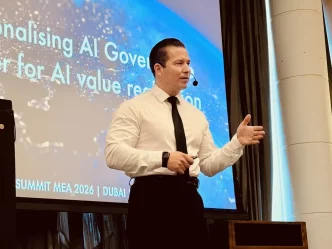
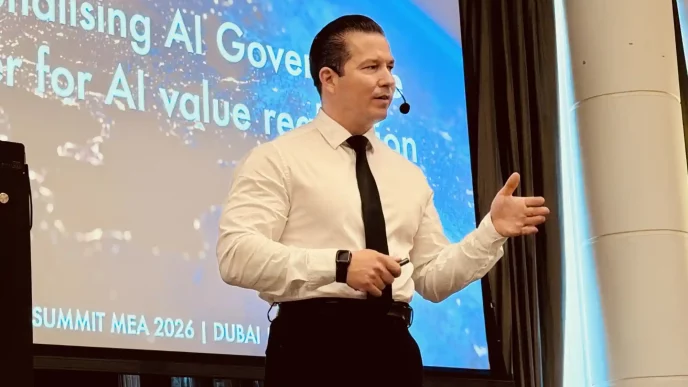
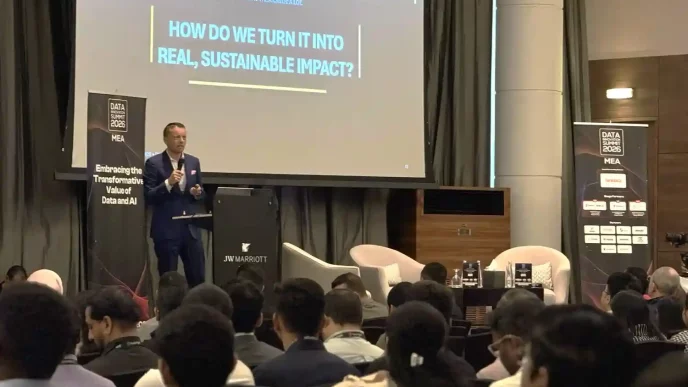
In the keynote from the 10th NDSML, Albert Bruhner, who is HP’s lead for AI initiatives in the region, unpacks why the old guard of Silicon Valley is suddenly the most talked-about name in the room for AI practitioners. If one ever felt the frustration of a locked-down Windows environment or the “waitlist blues” for high-end GPUs, this session will be very helpful.
Why Local is the New Cloud
The talk highlights a significant vibe shift in the industry. While the launch of ChatGPT made AI a household name, it also sparked a conversation around data governance and security. Bruhner noted a growing trend: enterprises are no longer content to simply hand over their proprietary data to third-party cloud models.
The focus has shifted toward AI Creation Centers and the ability to develop, fine-tune, and run models locally on the edge. This means a move away from latency and high cloud costs toward a more sovereign, secure workflow.
Breaking the “Windows Tax”
Perhaps the most relatable moment for any developer is the discussion on OS friction. Everyone has faced it: they need Ubuntu and a pure Linux stack, but their IT department demands a managed Windows environment. 
Bruhner addresses this head-on, detailing how HP is offering solution through:
- WSL2 Collaborations: Deep integration with Microsoft to ensure Linux tools feel native.
- Data Science Stack Manager: A pre-loaded tool that handles the dependency hell of version control and package management.
- Ubuntu-First Hardware: The revelation that users can now order high-end workstations with pure Ubuntu installs straight from the factory.
The “Unicorn” Hardware: CGX Nano and the Blackwell Chip
The highlight of the video and the reason most will want to tune in is the exclusive physical reveal of the HP ZGX Nano AI Station. In a market where Nvidia’s units face a shortage of nearly two million units, HP has introduced its own localized powerhouse.
Bruhner showcases what is arguably the most coveted piece of hardware in Europe right now: a working unit featuring the Nvidia Blackwell chip. With 128 GB of unified memory architecture (enabling roughly 100 GB of RAM), this device allows developers to run models with up to 200 billion parameters on their desk. Even more intriguing, the ability to chain two units to tackle 400-billion-parameter models without ever needing a server rack.
Why You Should Watch
This isn’t just a corporate sales pitch but a roadmap for the next three years of AI hardware.
Whether someone is a solo researcher looking for a $4,000 workstation that can actually handle LLMs, or a Lead Data Scientist trying to convince the IT department to give better tools, this video provides the technical and strategic ammunition that it is needed.
The era of one-size-fits-all cloud AI is ending. The era of the high-performance AI workstation is just beginning.
There is more than just the exclusive reveal, and you can find out all the details in the keynote talk from the NDSML.
Ready to see how the experts are solving the “people problems” of AI? Subscribe now to watch the full 10th Annual NDSML Summit Videos and exclusive session recordings.
This preview is part of our Premium Videos.
Sign up to see the whole Keynote: From AI Consumer to AI Creator: Because renting intelligence is not a strategy
Keynote speaker: Albert Bruhner, HP