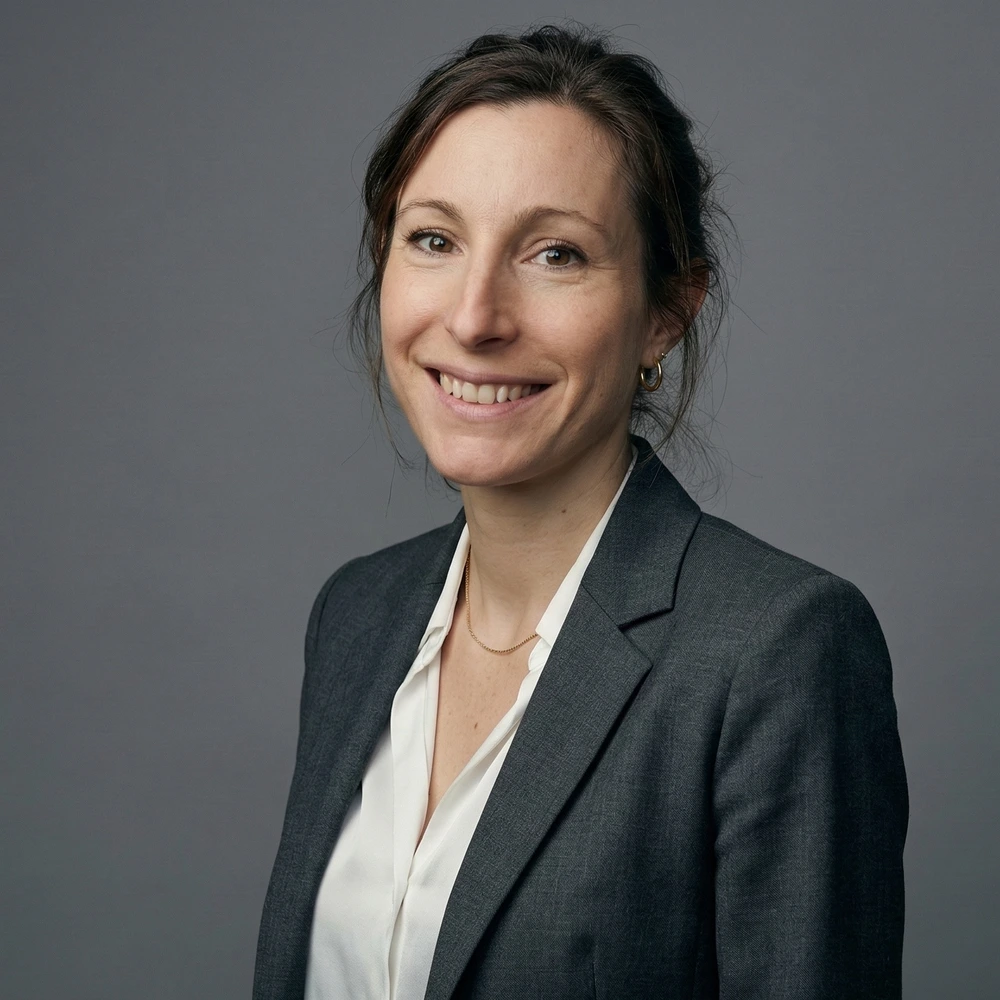
This week, we’re spotlighting Lucie Gattepaille, founder of ePI Digital Solutions in Uppsala. With a PhD in population genetics and a background leading data science at the Uppsala Monitoring Centre (the World Health Organization collaborating centre for drug safety), Lucie is now modernizing healthcare data. As a solo founder, she uses AI-driven workflows to convert static, paper medicine leaflets into structured electronic product information for patients, doctors, and pharmaceutical systems.
Hyperight.com: What’s the best way to describe your job to someone outside tech?
Lucie Gattepaille: I turn the leaflet in your medicine box into data that computers, doctors and patients can actually use.
Hyperight.com: What originally sparked your interest in AI/data, and what keeps you inspired today?
Lucie Gattepaille: Health has always been the red thread. At engineering school, I chose modelling for medicine and biology over finance or logistics. Then came population genetics, then pharmacovigilance, where I built joint vector representations of drugs and adverse reactions, work I presented at NDSML in 2019. I worked with BERT models daily, and yet I did not see ChatGPT coming! That pace is what keeps me inspired: AI gave me the courage to start a company, and it still surprises me every month.
Hyperight.com: What is one challenge you’re trying to solve, and why does it matter?
Lucie Gattepaille: A paper leaflet is often out of date by the time it makes it into patient hands. Safety knowledge keeps evolving, but the paper doesn’t. ePI makes product information structured and interoperable. Patients will scan a QR code, get the current version, and jump straight to what concerns them, such as pregnancy or dosage. Prescribing systems will be able to check contraindications automatically. By my estimate, around 1.2 million ePIs will need to be created in Europe within five years. Our conversion cuts the manual effort by more than 60%, saving many, many hours for labelling professionals.
Hyperight.com: A tool you can’t live without (tech or not)?
Lucie Gattepaille: Claude Code, hands down. It lets me build and run what probably used to take a team, and it lowers my anxiety about the unknown, from software architecture to accounting. I can feel each new model generation change how I work.
Hyperight.com: What trend in data or AI do you think will shape the Nordic region the most?
Lucie Gattepaille: Data sovereignty. Swedish agencies are digitizing fast, but most cloud infrastructure and the AI models everyone relies on belong to a handful of companies, mostly American. As agentic AI takes on more decisions, trusted data, and who controls it, becomes the central question. Sweden has the talent and the startup culture. I’d like the state to take an active role too, rather than leaving it all to the private sector. 
Hyperight.com: What’s one piece of advice you’d give to others entering the data and AI field?
Lucie Gattepaille: Go deep enough in one domain to have something of your own to say. AI writes platitudes; it cannot supply your perspective. At the same time, experiment often: many workflows can already be handed to AI, especially in a small team. And don’t try to know everything. Pick a few sources you trust, learn one thing at a time, and ignore the FOMO.