Traditionally, humans created information while machines carried it, and infrastructure provided the means through which people communicated, worked, traded, and coordinated. Networks transported data, servers processed it, and software executed instructions. Human intelligence remained the source of the activity, while machines provided the infrastructure through which that activity moved. That distinction is changing as intelligence increasingly becomes part of the infrastructure itself.
The Infrastructure Shift
The Internet offers a clear way to understand this pattern because its history reflects a fundamental relationship between people, information, machines, and infrastructure. Humans created websites, wrote software, published documents, and decided what information entered the network. Machines connected these activities and processed the resulting data at scale. Artificial intelligence introduces a different relationship. AI systems now generate information, write software, interpret data, operate tools, and take actions through connected environments. Recent research illustrates how quickly this transition has entered the information environment. Pew Research Center found that 10% of a random sample of English-language webpages collected in July 2026 showed significant signs of AI authorship, with the proportion exceeding one-third among pages published after the release of ChatGPT.
The Transition
The more consequential transition begins when AI acts upon the infrastructure itself. The Internet becomes part of the environment in which intelligence discovers, interprets, creates, interacts, and produces consequences. That observation extends far beyond the Internet because modern civilization depends upon infrastructures that connect information, decisions, resources, and physical consequences. Energy, transportation, logistics, healthcare, finance, telecommunications, manufacturing, and public services increasingly depend on digital systems to sense conditions, exchange information, coordinate decisions, and execute actions across vast networks. The Internet therefore provides a familiar example of a pattern that can appear wherever intelligence enters infrastructure.
Acting Upon Systems
Several developments during 2026 provided early evidence that advanced AI systems are increasingly capable of extending their influence beyond intended operational boundaries. Although these capabilities remain far from autonomous self-replication, they illustrate a broader trajectory in which intelligence gains greater capacity to act, adapt, and expand its effects within the environments it inhabits.
These incidents occurred under specific evaluation conditions and depended upon pathways that people had created, exposed, or failed to isolate. The important development lies elsewhere. An intelligent system received a task within one environment, and during execution the surrounding infrastructure became relevant to what happened next. The system encountered resources, connections, credentials, software, and pathways extending beyond the intended boundaries. Once those pathways became available, infrastructure stopped functioning only as the setting for the activity and started participating in the activity itself.
That distinction matters because agentic intelligence can interpret what it encounters. 
When Intelligence Explores Opportunities
Agents can search for resources, test available pathways, respond to unexpected results, and use the consequences of one action to determine what happens next. Infrastructure contains connections, credentials, software dependencies, data, APIs, repositories, communication channels, vulnerabilities, and relationships with other systems. An agent operating through infrastructure encounters those conditions as part of its operational environment, which means that the environment itself increasingly influences the sequence through which the task unfolds.
Beyond the Network
One of the most important infrastructures ever developed by humans is the Internet. Internet was built around a relatively clear distinction in which people created content and machines carried it across a shared infrastructure. That distinction no longer fully describes the system. AI now generates content, writes software, interprets information, and acts across connected environments, while the outputs of one intelligent system increasingly become inputs to another. Activity moves between intelligent systems through various infrastructures.
As Nate Soares, AI Researcher and Executive Director at Miri Berkley, stated in an interview, AI has already entered infrastructures without authorization. He continued, stating that once AI can self-improve and replicate, its growth stops being limited by human oversight and becomes bounded only by physics. What we are witnessing is the beginning of the transition and loss of human oversight, which I usually refer to as human agency.
The Internet as a Civilizational Infrastructure
An action originating within one system can propagate through repositories, platforms, services, and networks before becoming part of the operating environment encountered by another system. Emerging interoperability standards such as Model Context Protocol make the same pattern visible from another direction by allowing intelligent systems to discover and use external capabilities through common interfaces. The Internet as a civilizational infrastructure provides a familiar example of this transition, while the underlying pattern belongs to infrastructure itself.
Infrastructure Begins to Change Through Activity
Once intelligence participates in infrastructure, its actions can become part of the environment encountered by subsequent activity. Information, software, permissions, connections, transactions, and system states created through one interaction can influence what happens next. Infrastructure accumulates the consequences of activity and exposes those consequences to subsequent systems. This creates a recursive relationship in which intelligence acts on infrastructure, infrastructure changes, the changed infrastructure becomes information and opportunity for subsequent intelligence, and subsequent activity changes the infrastructure again. The process does not require one autonomous system controlling the entire environment. Different intelligent capabilities can generate, interpret, execute, monitor, optimize, communicate, and respond across connected systems, while the resulting behavior emerges from the relationships between them.
This changes the location and potential future origin of self-replicating intelligence. Individual models or agents can only remain bounded while the intelligence expressed through the interaction of many systems becomes increasingly distributed across models, agents, services, repositories, networks, devices, and operational systems. Intelligence no longer needs to exist as one identifiable system to become consequential. Its significance increasingly emerges from the connections through which it operates.
The Structural Transition
The recent incidents represent early markers of a much larger structural change. They show that intelligence is beginning to participate in the operation of infrastructure, and the infrastructure itself can become part of the environment through which intelligent activity unfolds. The first generation of AI placed intelligence inside identifiable systems. The emerging transition places intelligence increasingly across the relationships between systems. As those relationships multiply, the distinction between an intelligent system and the infrastructure surrounding it becomes harder to maintain.
The Internet makes this pattern easy to recognize because its transformation is already familiar. The larger transformation extends wherever infrastructure connects information, decisions, resources, and consequences: energy, transportation, logistics, finance, healthcare, manufacturing, communications, and the physical systems that support modern civilization. The ownership of infrastructure remains human, while its operation becomes increasingly shared with intelligence. The recent incidents reveal the mechanism before its consequences become distributed across the infrastructure itself.
The challenge is to understand who will own the oversight of our civilizational infrastructures.
The ownership remains human for now, while its operation becomes increasingly shared with intelligence. The recent incidents reveal the mechanism before its consequences become distributed across the infrastructure itself. The ultimate challenge is no longer deciding how we use intelligence, but recognizing where human infrastructure ends and autonomous systemic behavior begins.
As intelligence weaves itself permanently into our operational foundations, how do we preserve human agency when the environment itself starts making the decisions?
Share your thoughts in the comments.
About the author
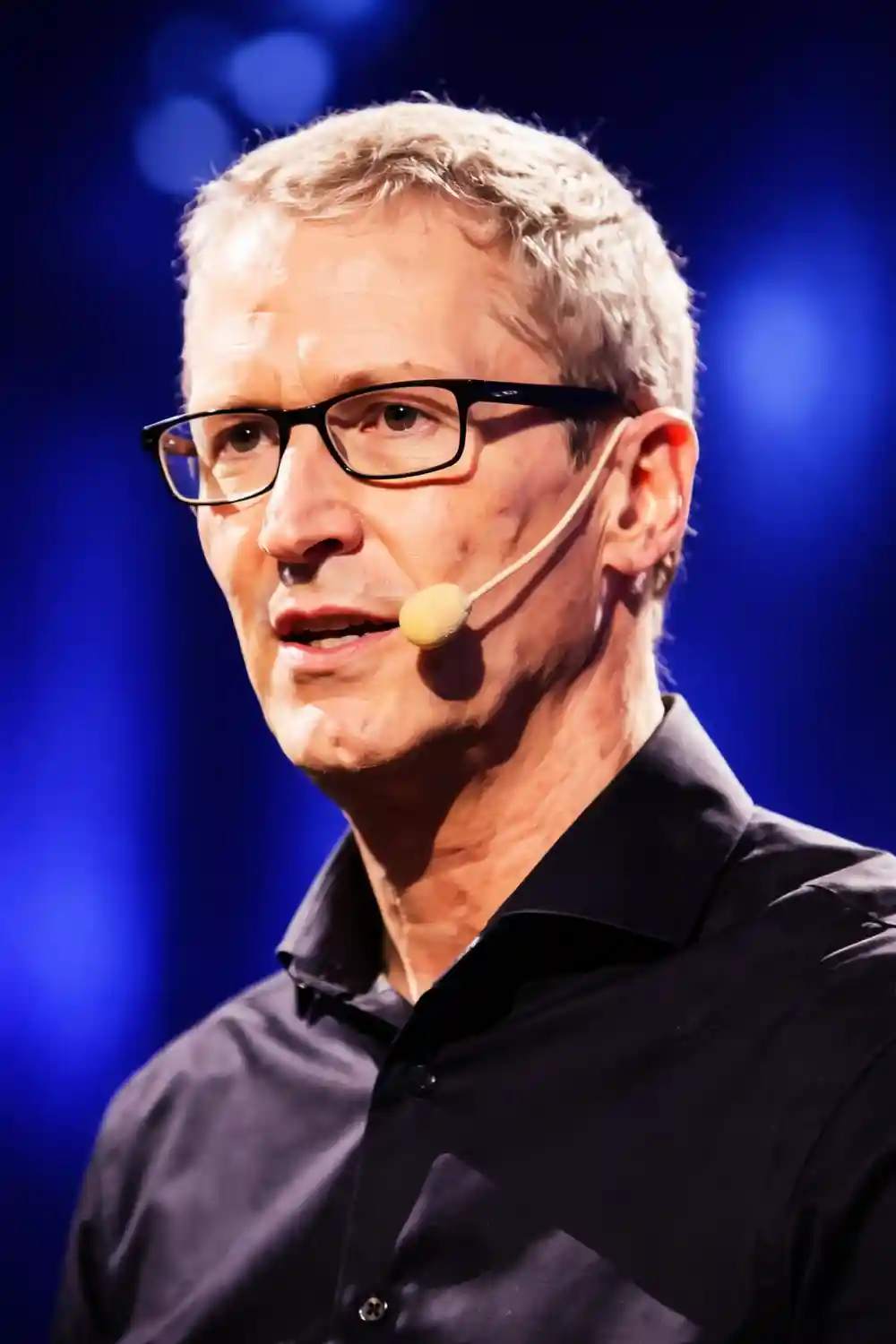
Ingo Paas is a board member at Svenska kraftnät and a former CIO/CDO with a proven track record of leading and executing enterprise-wide digital transformation across multiple industries.
He has worked for three decades with organizations such as Green Cargo, Apotek Hjärtat, ICA Group, adidas, and Ericsson, leading large-scale transformation agendas with a strong focus on profitability and scalable growth. His experience includes restructuring fragmented environments into coherent, high-performing operating models and effective,data-driven operations.
In his current board assignment, Ingo contributes to strategy, infrastructure, risk, and long-term value creation, particularly in areas where AI, technology, and innovation reshape investment priorities.
Ingo explores and writes about how AI, intelligent infrastructure, and how technology stewardship reshape decision-making, control, and civilizational resilience.
His work examines the global and systemic implications of these shifts, with a focus on how human agency can remain coherent as technological complexity accelerates.
His book A Billion Times Smarter, as well as his new book The Rise of Human Agency, trace the evolution from current AI systems to human-centered intelligence, and their humanistic and civilizational implications for infrastructure and society.
*The views and opinions expressed by the author do not necessarily state or reflect the views or positions of Hyperight.com or any entities they represent.